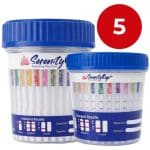
Home Drug Test Accuracy: How Reliable Are Rapid Tests?


Key Takeaways:
- Accuracy Is Conditional: Home drug test accuracy depends on product certification, proper sample collection, and strict adherence to the instructions provided with the test.
- Lines Tell the Story: Even a faint line in the test region of a rapid immunoassay test typically indicates a negative result, making correct line interpretation a critical part of reading home drug test results.
- Screening Is the First Step: Rapid tests are reliable preliminary screening tools, but results used in legal, clinical, or employment contexts should always be confirmed by a certified laboratory for a defensible outcome.
A positive result comes back on a rapid drug test, and suddenly the question is no longer about the test itself but about what to do next. Whether the setting is a workplace, a probation office, a rehab intake, or a family kitchen table, the reliability of that result carries real weight. Yet one of the most common concerns among first-time and experienced users alike is the same: how accurate is a home drug test, really? It is a fair question, and the answer is more nuanced than a simple yes or no.
12 Panel Now is the largest drug test supplier in the United States, with over 15 million products in stock at all times. As the manufacturer of the Serenity Cup brand, the company supplies CLIA-waived and FDA-approved rapid tests to some of the most demanding institutions in the country, including the US Army, federal and state courts, probation offices, jails, rehab centers, and government agencies. That depth of experience across professional and institutional drug testing makes home drug test accuracy a topic the brand is uniquely positioned to address.
This article walks through the key factors that influence at-home drug test accuracy, how to correctly interpret home drug test results, and what steps to take when results need to stand up to scrutiny. Whether testing for personal use or organizational compliance, understanding how these tests work is the first step toward using them with confidence.
What Affects Home Drug Test Accuracy? (Factors You Should Know)
Home drug test accuracy is not a fixed number. While high-quality rapid tests consistently perform at 99% accuracy under the right conditions, several variables can influence whether a result truly reflects what is in a sample. Understanding those variables helps users get the most reliable read possible.
The most common factors include how the test is stored, how the sample is collected, and whether the instructions are followed precisely. Tests exposed to extreme heat, humidity, or direct sunlight can degrade before they are ever used. Similarly, a sample collected too early in the morning, diluted by excessive water intake, or contaminated during collection can affect the outcome. Timing also matters. Each substance has a detection window, and testing outside that window, either too soon or too long after use, can produce results that do not reflect actual consumption.
Product quality plays a significant role as well. Not all rapid tests are manufactured to the same standard. CLIA waived, and FDA-approved tests are held to strict performance benchmarks, which is why institutional buyers consistently choose certified products over unverified alternatives. For anyone relying on home drug test results to make informed decisions, starting with a properly certified test is the most important step. Exploring the full range of available drug test cups can help you identify the right configuration for your specific screening needs.

How To Read Home Drug Test Results The Right Way
Knowing how to interpret home drug test results correctly is just as important as the test itself. Rapid test accuracy means little if the result is misread or acted on incorrectly. Here is a breakdown of the three most important things to understand when reading a rapid test result:
Understanding What The Lines Mean
Most rapid drug tests use a line-based system that can be counterintuitive at first. A single line in the control region without a line in the test region indicates a positive result. Two lines, even if one is faint, typically indicate a negative result. Always refer to the instruction sheet included with the specific test being used, as line interpretation can vary slightly by product format.
Why Faint Lines Still Count
One of the most frequent sources of confusion in at-home drug test accuracy is the faint line. A faint line in the test region is still a line, and in most rapid immunoassay tests, it reads as a negative result. Dismissing a faint line as inconclusive or positive is a common misreading that can lead to inaccurate conclusions. When in doubt, the instructions provided with the test are the authoritative reference.
When To Confirm With A Laboratory
Rapid tests are designed as preliminary screening tools, not definitive diagnostic instruments. If a result will be used in a legal, clinical, or employment context, confirmation through a certified laboratory is strongly recommended. For alcohol-specific screening, it is also worth reviewing How Accurate ETG Rapid Tests Are Up to 80 Hours Later to understand their detection window. How reliable is a home drug test in high-stakes situations depends largely on whether a confirmatory test follows, as lab analysis provides the legally and medically defensible result.

Final Thoughts
Rapid drug tests are a proven and practical screening tool when used correctly. Their reliability comes down to three things: the quality of the test itself, how the sample is collected, and whether the result is read and acted on appropriately. For most screening purposes, a properly certified rapid test delivers results that are both fast and dependable.
For anyone who needs consistent, accurate results across personal or professional settings, sourcing from a trusted supplier matters. 12 Panel Now offers a wide range of CLIA waived and FDA-approved rapid tests built to perform under real-world conditions. Regardless of the setting, understanding how home drug test accuracy works puts users in a far stronger position to make informed, confident decisions.
Frequently Asked Questions About Rapid Test Kits
How accurate are home drug tests compared to lab tests?
CLIA waived, and FDA-approved rapid tests typically perform at 99% accuracy for preliminary screening. Laboratory testing remains the gold standard for confirmed, legally defensible results.
Can medications cause a false positive on a home drug test?
Yes. Certain over-the-counter and prescription medications can trigger a false positive. Any positive result in a high-stakes setting should be sent to a certified laboratory for confirmation before action is taken.
How long do drugs stay detectable on a home drug test?
Detection windows vary by substance, frequency of use, and individual metabolism. Always reference the specific detection window listed for each panel on the test being used.
Does drinking a lot of water before a test affect results?
Excessive water intake can dilute the urine sample, potentially dropping a substance below the test’s cutoff threshold. Most testing protocols flag unusually low creatinine levels as a sign of dilution.
What is the difference between a screening test and a confirmatory test?
A rapid test provides a fast preliminary result. A confirmatory lab test identifies specific substances with greater precision and is recommended whenever results carry legal or clinical consequences.
Can a home drug test expire?
Yes. Most rapid drug tests carry a 24-month shelf life. Using an expired test can compromise reagent integrity and reduce accuracy. Always check the expiration date before use.
Are home drug tests effective for all substances?
Tests are available in configurations that screen for a wide range of substances, including fentanyl, kratom, opioids, and more. Selecting the right panel for the substances in question is key to getting a useful result.