How to Pass a Mouth Swab Test for THC: What Actually Works, Detection Times, and Common Myths

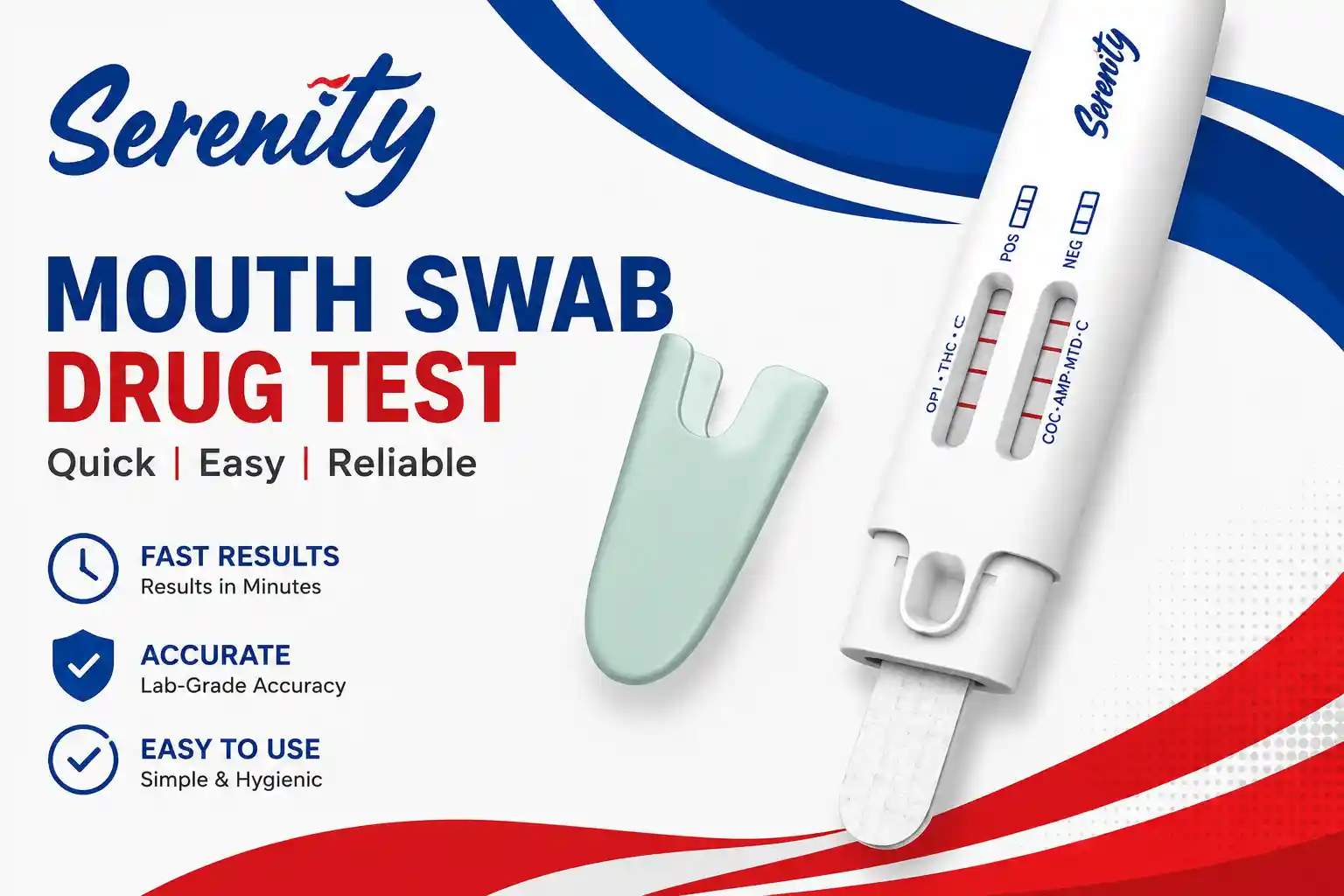
The short answer is this:
There is no scientifically proven way to instantly “beat” or bypass a THC mouth swab test. Oral fluid drug tests are specifically designed to detect recent cannabis use, and the most dependable way to avoid a positive result is allowing sufficient time after last use before testing.
Many websites promote quick fixes such as mouthwash, hydrogen peroxide, chewing gum, sour candy, or detox products. However, there is little high-quality scientific evidence showing these methods can reliably change the outcome of a properly administered laboratory oral fluid test.
Instead of relying on myths, it’s more useful to understand:
- how oral fluid drug testing actually works,
- why THC appears in saliva,
- how long THC usually remains detectable,
- what factors influence detection,
- how employers interpret results, and
- what happens if a screening test is positive.
This guide explains each of these topics using current evidence and employer testing practices.
What Is a Mouth Swab Test for THC?
A mouth swab test, also called an oral fluid drug test or saliva drug test, is a drug screening method that analyzes saliva collected from inside your mouth.
Unlike urine or hair testing, oral fluid testing primarily detects recent cannabis exposure, making it popular for workplaces that want to identify recent impairment rather than cannabis use weeks ago.
During the collection process, a trained collector places an absorbent swab between your cheek and gum or under your tongue for several minutes until enough oral fluid has been collected.
The sample is then:
- analyzed immediately using a rapid screening device, or
- sent to a certified laboratory for confirmation testing if needed.
Because collection is directly observed, oral fluid testing is considered difficult to tamper with compared with some other testing methods.
Why Employers Use Oral Fluid Drug Tests
Many employers have moved toward saliva testing because it offers several practical advantages.
Faster Collection
No restroom is required.
Testing can often be completed in just a few minutes.
This makes oral fluid testing ideal for:
- pre-employment screening
- random workplace testing
- reasonable suspicion testing
- post-accident investigations
- return-to-duty programs
- safety-sensitive occupations
Detects Recent Drug Use
One major advantage of oral fluid testing is that it focuses on recent exposure.
While urine testing may identify cannabis metabolites long after any impairing effects have ended, saliva testing is generally intended to detect cannabis used within the more recent past.
This helps employers evaluate whether drug use may have occurred shortly before work.
Reduced Tampering Risk
Since the sample is collected under direct observation:
- sample substitution is difficult,
- dilution is less likely,
- chain-of-custody procedures are easier to maintain.
This increases confidence in workplace drug testing programs.
How Does a THC Mouth Swab Test Work?
Understanding the science behind oral fluid testing helps explain why timing is such an important factor.
After cannabis is smoked or vaporized, tiny THC-containing particles remain inside the mouth.
THC can temporarily coat the:
- tongue
- cheeks
- gums
- teeth
- oral mucosa
Some THC also enters oral fluid through the bloodstream after absorption.
Modern laboratory tests analyze saliva for THC using validated screening methods with established cutoff concentrations. If an initial screen is positive, some programs perform confirmatory laboratory testing using highly specific analytical techniques.
The purpose is to reduce false positives while accurately identifying recent cannabis exposure.
Active THC vs. THC Metabolites
One of the biggest misconceptions involves THC and THC metabolites.
These are not the same thing.
| Active THC | THC Metabolites |
|---|---|
| Psychoactive compound | Breakdown products created by the body |
| Commonly detected in oral fluid | Commonly detected in urine |
| Indicates relatively recent exposure | Can remain detectable much longer |
| More relevant for saliva testing | More relevant for urine testing |
This explains why someone may test negative on a mouth swab while still testing positive on a urine drug test days or even weeks later.
What Drugs Can a Mouth Swab Test Detect?
Many oral fluid drug tests screen for multiple substances.
Common testing panels include:
- THC (Cannabis)
- Cocaine
- Amphetamines
- Methamphetamine
- Opiates
- Opioids
- PCP
- Benzodiazepines (some panels)
- MDMA (certain panels)
Different employers may use:
The exact substances included depend on the testing program.
What Happens During the Testing Process?
A typical oral fluid drug test follows these steps:
Step 1: Identity Verification
The testing administrator verifies the individual’s identity.
Step 2: Sample Collection
A sterile collection device is placed inside the mouth.
The collector waits until sufficient saliva has been absorbed.
Step 3: Initial Screening
The sample is screened using either:
- an on-site testing device, or
- laboratory instrumentation.
Step 4: Confirmation (If Necessary)
If the initial screening result is non-negative, many organizations perform laboratory confirmation before reporting a verified positive result.
This additional step improves accuracy and helps distinguish true positives from potential screening errors.
Key Takeaways So Far
- Mouth swab tests primarily detect recent cannabis use, not long-term history.
- THC is detected differently in saliva than in urine.
- Employers prefer oral fluid testing because it is fast, convenient, and difficult to tamper with.
- Laboratory confirmation improves the reliability of positive screening results.
- Understanding how oral fluid testing works is more valuable than relying on unsupported internet myths.
How Long Does THC Stay Detectable in a Mouth Swab Test?
One of the most common questions people ask is “How long does THC stay in saliva?” The answer isn’t the same for everyone.
Unlike urine or hair testing, oral fluid drug tests are designed to identify recent cannabis exposure. Detection depends on several variables, including how often cannabis is used, the product consumed, and the sensitivity (cutoff level) of the test.
Rather than focusing on a single number, it’s more accurate to think of a detection window—a range of time during which THC may still be detectable in oral fluid.
Typical THC Detection Windows in Saliva
The table below summarizes commonly reported detection ranges. These are approximate and can vary depending on the laboratory, testing method, and individual factors.
| Cannabis Use Pattern | Approximate Detection Window* |
|---|---|
| One-time or occasional use | About 12–24 hours |
| Moderate use | Up to 24–48 hours |
| Frequent or heavy use | Up to 72 hours or longer in some cases |
*These are general estimates, not guarantees. Individual results vary based on the testing protocol, the laboratory’s cutoff concentration, and personal factors.
Why Detection Windows Vary
No two people process THC in exactly the same way. Several factors influence how long THC remains detectable in oral fluid.
1. Frequency of Cannabis Use
This is often the biggest factor.
People who use cannabis occasionally generally have shorter detection windows than those who use it regularly. Frequent use can increase the likelihood that THC remains detectable for a longer period.
2. THC Concentration
Cannabis products vary widely in potency.
Products with higher THC concentrations may result in greater oral exposure immediately after use, although individual detection times still vary.
Examples include:
- High-potency cannabis flower
- THC vape cartridges
- Cannabis concentrates
- Hash
- THC oils
3. Method of Consumption
The way cannabis is consumed may influence oral fluid testing because some methods leave more THC residue in the mouth than others.
Common methods include:
- Smoking
- Vaping
- Edibles
- Tinctures
- Concentrates
Smoking and vaping expose the oral cavity directly to THC-containing aerosols or smoke, while edible products involve different absorption pathways. However, detection depends on multiple variables, and no method guarantees a shorter or longer detection time.
4. Individual Biology
Every person’s body is different.
Factors that may contribute to variability include:
- Natural saliva production
- Oral health
- Age
- Body chemistry
- Overall health
- Individual metabolism
These factors can influence how quickly THC levels decline, although they don’t produce predictable outcomes for any specific individual.
5. Laboratory Cutoff Levels
A key concept many articles overlook is the cutoff concentration.
Drug tests do not simply report whether any THC is present. Instead, they compare the measured amount against a predefined threshold.
If the concentration is below the cutoff, the result is generally reported as negative.
If the concentration is at or above the cutoff, additional evaluation or confirmation testing may be performed depending on the testing program.
Different laboratories and testing protocols may use different validated cutoff levels.
Why Oral Fluid Tests Focus on Recent Cannabis Use
Oral fluid testing differs from urine testing because it primarily detects recent exposure rather than long-term cannabis history.
That’s why many employers choose saliva testing for:
- Random workplace testing
- Post-accident investigations
- Reasonable suspicion testing
- Safety-sensitive occupations
- Return-to-duty programs
The goal is often to identify more recent use rather than exposure that occurred weeks earlier.
How Accurate Are THC Mouth Swab Tests?
Modern oral fluid drug tests are considered reliable when properly administered and interpreted.
Testing programs typically involve two stages:
Initial Screening
The first stage is a screening test designed to quickly identify samples that may contain THC above the established cutoff concentration.
Most screening results are available relatively quickly, depending on whether testing is performed on-site or in a laboratory.
Confirmatory Testing
If the initial screening is non-negative, many employers, laboratories, and regulated testing programs perform a confirmatory laboratory analysis.
Confirmation uses more specific analytical methods to verify the presence of the target substance before reporting a verified positive result.
This two-step approach helps improve accuracy and reduces the likelihood of reporting incorrect results.
Can Mouth Swab Drug Tests Produce False Positives?
Although uncommon, no screening test is perfect.
A non-negative screening result may occasionally require confirmation to rule out analytical or procedural factors.
Potential reasons a result may need additional review include:
- Cross-reactivity during an initial screening test
- Sample handling issues
- Laboratory quality-control procedures
- Certain medications or products that require confirmation
This is one reason confirmatory laboratory testing is considered an important part of many workplace drug-testing programs.
Can Mouth Swab Tests Produce False Negatives?
False negatives are also possible in some circumstances.
Examples may include:
- Testing after THC levels have declined below the cutoff concentration
- Improper sample collection
- Insufficient oral fluid volume
- Technical limitations of an initial screening device
Again, these situations depend on the specific testing method and laboratory procedures.
Mouth Swab Test vs. Urine Test vs. Blood Test vs. Hair Test
Understanding how different drug tests compare helps explain why employers choose one method over another.
| Feature | Mouth Swab Test | Urine Test | Blood Test | Hair Test |
| Sample Collected | Oral fluid | Urine | Blood | Hair |
| Detects Recent Use | Yes | Limited | Yes | No |
| Detects Long-Term History | No | Yes | No | Yes |
| Collection Method | Non-invasive | Private collection | Medical procedure | Non-invasive |
| Common Workplace Use | Very common | Very common | Less common | Specialized |
| Tamper Resistance | High | Moderate | High | High |
| Typical Turnaround | Rapid to laboratory | Rapid to laboratory | Laboratory | Laboratory |
Each testing method serves a different purpose, and employers choose the one that best fits their workplace policies or regulatory requirements.
What Happens If a Mouth Swab Test Is Positive?
A positive screening result does not always mean the testing process is complete.
Depending on the employer, testing provider, or applicable regulations, the next steps may include:
- Review of the screening result.
- Confirmatory laboratory testing, if required.
- Review by a qualified medical professional or designated review process.
- Employer notification according to company policy.
- Follow-up procedures based on workplace rules or applicable regulations.
Policies vary among employers and jurisdictions, so the exact process may differ.
Key Takeaways
- THC detection in saliva depends on multiple factors, not a single fixed timeline.
- Frequency of cannabis use, product potency, route of administration, and laboratory cutoff concentrations all influence detectability.
- Oral fluid tests are intended to identify recent cannabis exposure, making them different from urine or hair testing.
- Modern testing programs often use a two-step process consisting of an initial screening followed by confirmatory laboratory analysis when appropriate.
- Understanding how oral fluid testing works provides a clearer picture of what results mean than relying on generalized timelines alone.
Frequently Asked Questions About THC Mouth Swab Tests
A mouth swab test, also called an oral fluid drug test or saliva drug test, collects a saliva sample from inside the mouth to screen for the recent use of certain drugs. Because the collection process is simple, quick, and non-invasive, it is commonly used for workplace, clinical, and law-enforcement drug testing.
A THC mouth swab test looks for tetrahydrocannabinol (THC)—the primary psychoactive compound in cannabis—in oral fluid. Unlike urine tests, which often detect THC metabolites, saliva tests are primarily intended to identify more recent cannabis exposure.
Detection windows vary depending on several factors, including how frequently cannabis is used, the potency of the product, and the laboratory’s testing method. Occasional users generally have shorter detection windows than frequent or heavy users.
Many employers choose oral fluid testing because it:
- Is quick to administer
- Doesn’t require a restroom collection
- Can be directly observed
- Helps identify more recent drug exposure
- Supports workplace safety programs
These characteristics make saliva testing especially useful in safety-sensitive industries.
When properly administered and interpreted, modern oral fluid drug tests are considered reliable for detecting recent drug exposure. Many testing programs use an initial screening followed by laboratory confirmation when needed to improve accuracy.
A confirmation test is a more specific laboratory analysis performed after an initial non-negative screening result. Its purpose is to verify the presence of the target substance before a final result is reported.
Yes. Some employers include saliva drug testing as part of post-accident investigations, especially in safety-sensitive work environments.
Some medications or supplements may require additional review if they influence an initial screening result. This is one reason many organizations perform confirmatory testing before making employment or clinical decisions.
Casual, incidental exposure is generally unlikely to produce a confirmed positive oral fluid test. However, testing outcomes depend on the specific circumstances, the testing method, and the laboratory’s established cutoff concentrations.
No. Different testing panels screen for different substances.
Common panels include:
- 5-panel
- 10-panel
- 12-panel
- 14-panel
The substances included depend on the employer, testing provider, or applicable regulations.
Depending on the testing panel, oral fluid drug tests may screen for:
- THC
- Cocaine
- Amphetamines
- Methamphetamine
- Opiates
- Opioids
- PCP
- Benzodiazepines (selected panels)
- MDMA (selected panels)
Neither test is universally better. Each serves a different purpose.
Saliva testing is often preferred when recent drug exposure is the primary concern, while urine testing may detect drug metabolites for a longer period after use.
Sample collection usually takes only a few minutes. Depending on the testing method, results may be available rapidly on-site or after laboratory analysis.
Many organizations follow a structured review process that may include confirmatory laboratory testing before reporting a verified positive result.
Yes. Many employers use oral fluid testing during the hiring process because it is convenient, efficient, and easy to administer.