Navigating the Regulatory Pathways of Drug Testing: Why 510(k) and CLIA-Waived Status Are Your Ultimate Risk Mitigation Assets

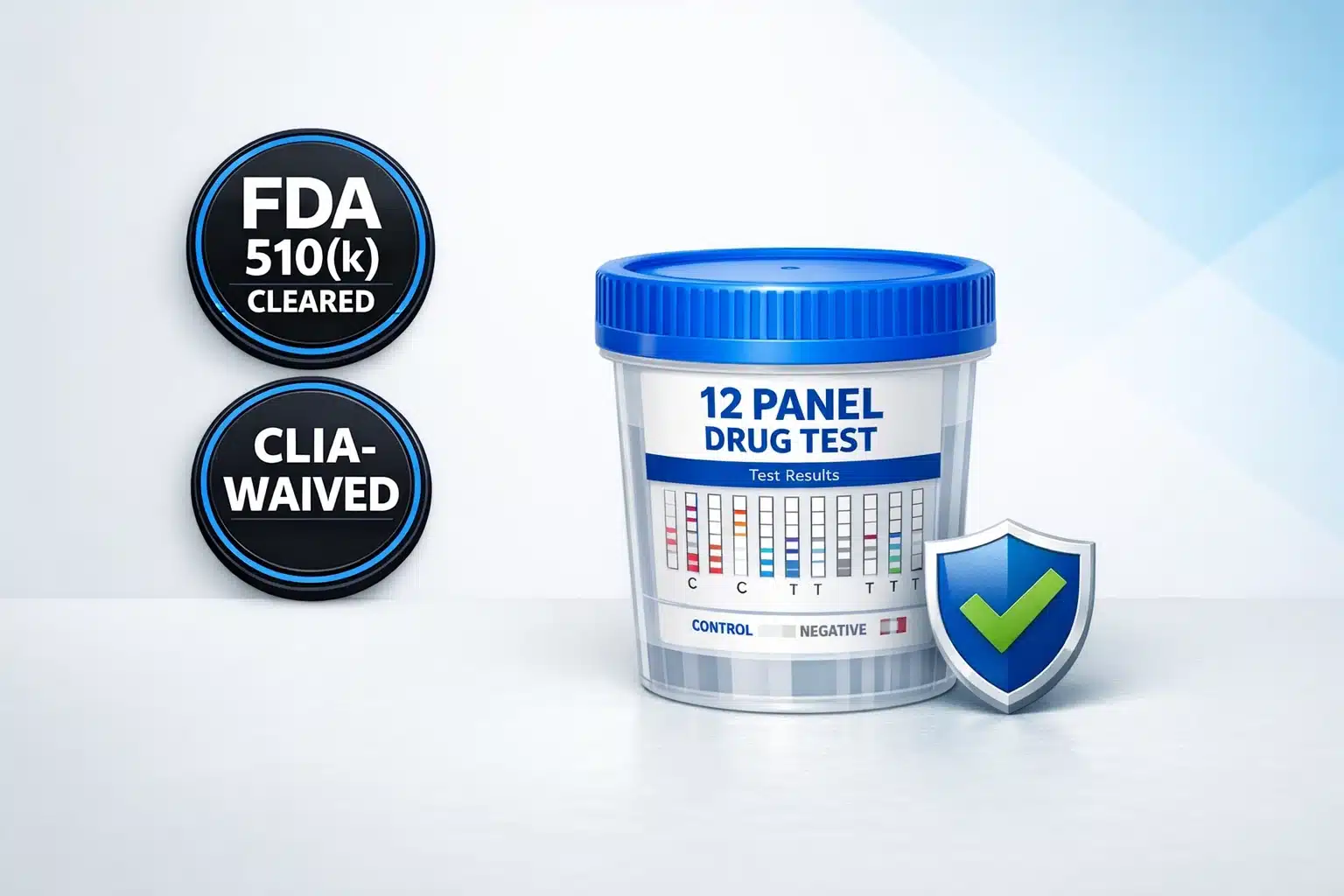
If you are evaluating workplace drug testing solutions in 2026, the landscape looks drastically different than it did just two years ago. Between the sweeping implementation of the DOT’s 2024/2025 Oral Fluid Rule, the integration of SAMHSA’s 2025 Fentanyl inclusion mandates, and expanding state-level THC protections across states like California and New York, enterprise HR and safety directors are facing a complex new reality.
You aren’t just buying a testing commodity anymore. You are investing in a risk mitigation asset.
When decision-makers at high-stakes organizations—think defense contractors like Raytheon or financial institutions like Fidelity—evaluate point-of-care (POC) drug tests, their primary, often unspoken question isn’t just about cost per unit. It’s about legal defensibility: “Will this test kit expose us to litigation if we terminate an employee based on a false positive?”
To answer that, we have to look past the marketing brochures and dig into the rigorous product development and regulatory pathways that separate a vulnerable, generic test from a compliance-grade solution.
The Anatomy of FDA 510(k) Clearance: Understanding the 15% Edge
The foundation of a legally defensible drug testing policy begins with FDA 510(k) clearance. But what does that actually mean for your organization?
A traditional 510(k) submission requires a manufacturer to prove “Substantial Equivalence” to an existing, legally marketed predicate device—typically a highly sophisticated laboratory instrument. It is an exhaustive auditing process of clinical accuracy, analytical sensitivity, and cross-reactivity.
Many buyers assume that gaining FDA clearance is a standard checkbox for manufacturers. The data tells a very different story.
Currently, approximately 33% of FDA 510(k) submissions receive a “Refuse to Accept” (RTA) hold at least once, almost entirely due to poorly constructed Quality Management Systems (QMS). Even more telling, roughly 15% of devices fail the clearance process entirely.
When you choose 12 Panel Now products, you are benefiting from what we call “The 15% Edge.” Our stringent adherence to ISO 13485:2016 medical device manufacturing standards ensures our products don’t just pass regulatory review—they establish a benchmark for reliability. This precise engineering is why our cups and dip cards achieve a 99% reliability rate, giving HR professionals the confidence that the device itself will hold up under strict scrutiny.
CLIA-Waived: Decentralizing the Lab Without Increasing Risk
For years, organizations believed they had to choose between the rapid affordability of onsite testing and the ironclad accuracy of lab-based analysis. The “Dual Path”—combining FDA 510(k) clearance with a CLIA Waiver—has effectively eliminated that compromise.
The Clinical Laboratory Improvement Amendments (CLIA) regulate laboratory testing. When a point-of-care test is granted a “CLIA Waiver,” the FDA has determined that the test is so simple and accurate that the risk of erroneous results is negligible.
For an onsite safety supervisor managing a fleet of transportation workers or a construction site, a CLIA-waived 12-panel drug test allows non-laboratory personnel to execute screening protocols instantly. This decentralizes the lab, drastically reducing the operational downtime of sending employees off-site while maintaining a legally sound chain of custody.
The Science of Defensibility: Adulterants, Contamination, and Detection Windows
A major vulnerability in corporate drug testing policies is the use of non-cleared kits that fail to accurately detect specific metabolites or flag adulterated samples.
Let’s look at the science of Methanol metabolism as a prime example. Methanol metabolizes into Formate, which remains detectable in urine for 4 to 10 days. Generic, low-cost commodity kits frequently lack the engineering sensitivity to detect these specific metabolites within that extended window. They also routinely fail to identify sophisticated adulterants (like synthetic urine or household chemicals) designed to mask illicit substances.
Precision-engineered, 510(k)-cleared testing supplies are specifically calibrated to identify these anomalies. Built-in adulterant strips monitor pH, specific gravity, and oxidants, providing an immediate defense against sample tampering. If an employee attempts to contest a positive result, your documentation of using a device cleared for specific metabolite windows and adulteration safeguards is your first line of institutional defense.
Enterprise Compliance Templates: Building Your Gold Standard Policy
As you evaluate your internal testing infrastructure, mapping the right product to your specific corporate policy is critical. An enterprise policy template in 2026 demands testing solutions that account for:
- Current Federal Mandates: Utilizing oral swabs for immediate, post-accident impairment testing as aligned with the latest DOT updates.
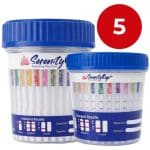
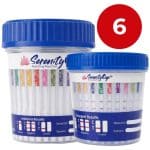
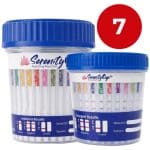
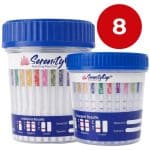
- Comprehensive Screening: Deploying 12-panel urine cups to reliably screen for newly mandated substances, including SAMHSA’s recent fentanyl testing requirements.
- Audit Readiness: Utilizing only ISO 13485-backed, dual-pathway (510(k) + CLIA-waived) products to ensure that your testing records stand up to internal audits and potential legal challenges.
At 12 Panel Now, we supply high-volume users—from rehabilitation centers to major corporate campuses—with products that fit seamlessly into these rigid compliance frameworks, offering tests that screen for over 30 different substances with unquestioned integrity.
Frequently Asked Questions (FAQ)
How does ISO 13485 certification impact the drug testing supplies I purchase?
ISO 13485 is the international gold standard for Medical Device Quality Management Systems. It ensures that every cup and oral swab manufactured follows incredibly strict, repeatable quality controls. For you, this means preventing the false negatives or faulty adulterant strips that commonly plague non-regulated commodity tests.
Why do FDA 510(k) submissions face high Refuse to Accept (RTA) rates, and why does it matter to me?
Roughly one-third of 510(k) submissions face an RTA hold due to poor manufacturing or clinical documentation. Purchasing products from a provider whose inventory holds full clearance proves that the devices have bypassed these rigorous technical hurdles, establishing “Substantial Equivalence” to laboratory-grade technology.
If a product is FDA 510(k) cleared, does it still need to be CLIA-waived?
Yes, if you want non-medical personnel to administer it onsite. FDA 510(k) clearance verifies the device’s accuracy and safety, while a CLIA Waiver grants your staff the legal ability to use it in a point-of-care setting without requiring a complex laboratory license.
Can high-quality, legally defensible tests actually be affordable?
Absolutely. 12 Panel Now has disrupted the market by proving that regulatory-grade integrity does not have to come with enterprise pricing. By optimizing our proprietary operations and offering direct-to-customer pricing, we provide fully cleared 12-panel drug test cups for as low as $1.69 each.
Next Steps: Upgrading Your Testing Infrastructure
Upgrading your drug testing protocols from basic compliance to active risk mitigation requires partnering with a supplier who understands the regulatory pressures your organization faces in 2026. You need a solution that bridges the gap between technical manufacturing standards and real-world employer consequences.
12 Panel Now’s complete ecosystem of CLIA-waived, FDA-cleared urine analysis cups, dip cards, and oral swabs gives you the exact tools needed to protect your workplace, your budget, and your legal standing.
Ready to implement a testing strategy that prioritizes accuracy and defensibility? Explore our comprehensive suite of regulatory-grade testing supplies to secure the gold standard in workplace risk mitigation.