CLIA Waived Rapid Screens vs Lab Confirmation Costs

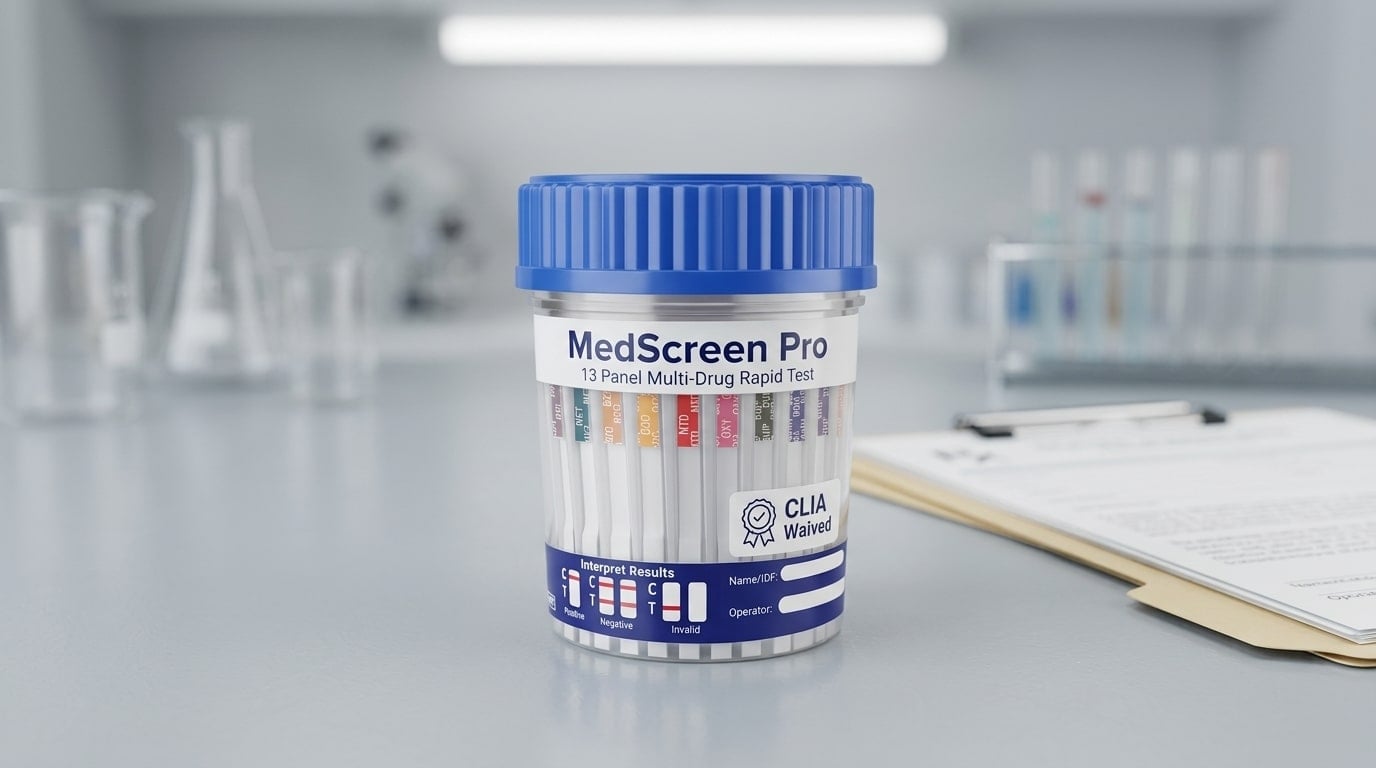
If you run drug screens at work, in a clinic, or in a monitoring program, you have probably asked the same question: why pay lab-level pricing at the first step when a rapid screen delivers reliable results for most samples? This article explains where rapid screening fits, when lab confirmation is necessary, and how to manage cost without lowering standards.
What is the real difference between a rapid screen and lab confirmation?
A CLIA waived rapid screen gives you an initial result on-site in minutes. You collect the sample, run the test, and read the result without sending it to a laboratory. That speed matters when you need to make a same-day decision about hiring, return to duty, clinical intake, or routine monitoring.
Lab confirmation serves a different purpose. A laboratory uses more advanced methods to verify a non-negative result. That extra step matters when a result could affect employment status, legal action, treatment plans, or any other high-stakes decision. Put simply, rapid screening sorts samples quickly, and lab confirmation verifies the smaller group that needs a closer look.
Are you paying too much if you send every sample to the lab?
In many programs, yes. Sending every specimen for full lab testing at the start means paying the highest price across the entire testing pool, even though many samples will be negative. It also slows down your workflow.
A rapid screen changes that equation. If the screen is negative, many programs stop there. If the screen is non-negative, the specimen goes to the lab for confirmation. This two-step model cuts costs because lab fees are reserved for the smaller share of cases that actually need them.
Why this matters in day-to-day screening
- Employers reduce pre-employment and random testing costs
- Clinics get faster intake information
- Probation and monitoring programs can act the same day
- High-volume buyers avoid paying lab fees on negative samples
What does “99% reliability” really mean for initial screening?
When buyers hear a figure like 99% reliability, they want to know whether a rapid screen is dependable enough to use first. For initial screening, the answer is usually yes, provided the test comes from a credible source and staff follow instructions correctly. The key point is straightforward: a quality rapid screen is designed to separate likely negatives from samples that need further review.
That does not make rapid screening a replacement for confirmation in every situation. It makes it an effective gatekeeper. If most of your tested population is negative, a reliable on-site screen keeps you from sending the entire batch to a lab. That is where the savings show up.
What rapid reliability does and does not mean
- It supports initial screening with a high level of confidence
- It helps rule out many negatives without delay
- It does not eliminate the need to confirm non-negative results in formal programs
- It depends on proper collection, timing, storage, and result reading
When should you still use lab confirmation?
Lab confirmation still matters in clear, high-stakes situations. If a rapid test shows a non-negative result and the outcome could trigger serious action, confirmation protects both the program and the person tested. A lab also helps resolve disputed results and creates formal documentation for regulated or legal settings.
Use confirmation when policy, contract terms, or legal standards require it. Use it when a result could lead to job loss, court action, or major treatment changes. Use it when the result conflicts with known prescription use and exact identification is needed.
Common cases that call for confirmation
- Non-negative pre-employment results
- Post-accident or reasonable suspicion testing
- Court, probation, or child custody matters
- Treatment plans that depend on verified substance findings
- Disputed results where final accuracy must be documented
How much can a CLIA waived rapid screen save?
The exact amount depends on your testing volume and positive rate, but the pattern is simple. A rapid cup costs far less than full lab processing. If your program screens 100 people and only a small percentage show non-negative results, the rapid-first model avoids lab charges for the much larger negative group.
Those savings grow in programs with repeat testing. Employers with random testing pools, rehab programs with weekly monitoring, and probation offices with routine checks tend to feel the difference quickly. The lower your non-negative rate, the more money you keep by screening on-site first.
A simple cost logic example
- Screen all samples on-site with a CLIA waived cup
- Clear negatives at the point of care
- Send only non-negative samples for confirmation
- Pay lab rates only where they add value
This model keeps the process faster and the budget tighter.

Does CLIA waived status matter when choosing a rapid screen?
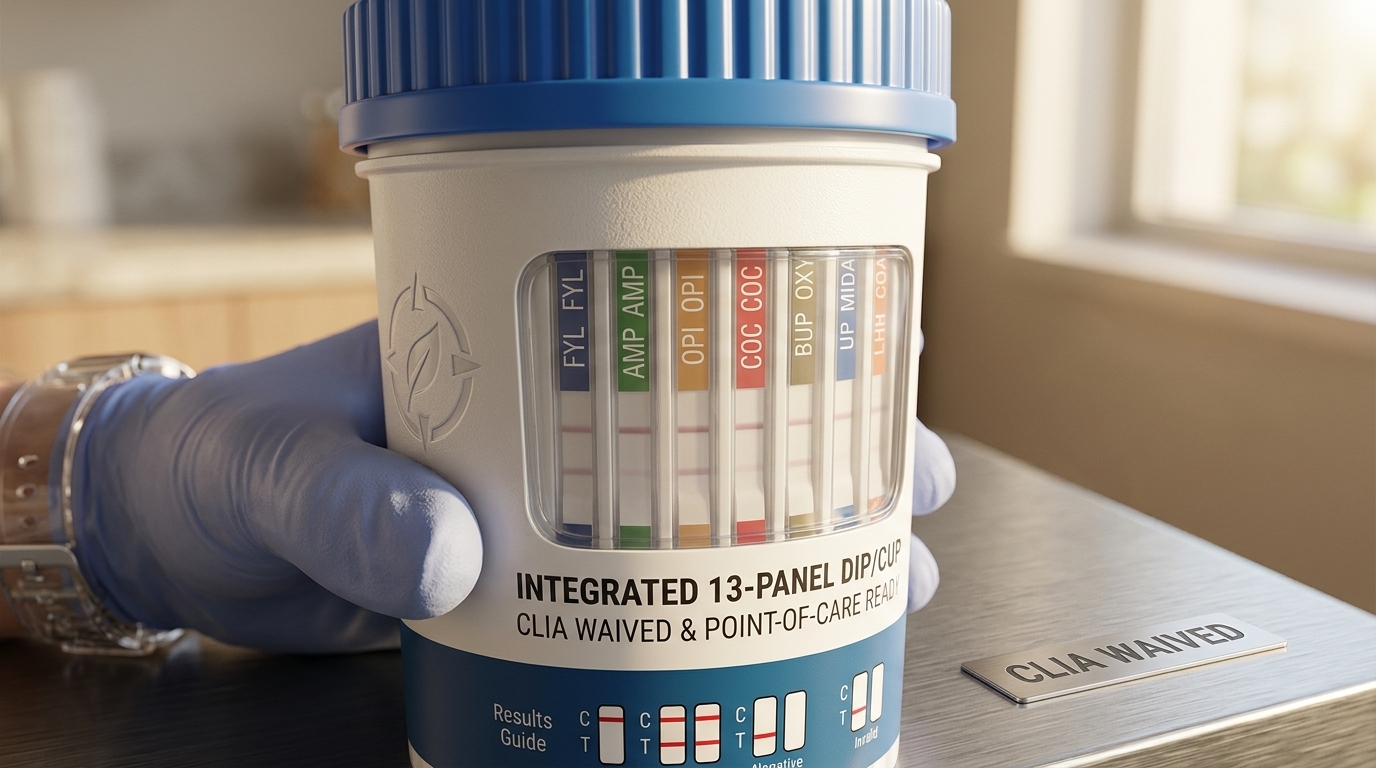
Yes. CLIA waived status matters because it supports use in settings that do not have full laboratory staff. That is important for employers, clinics, treatment programs, and public agencies that need a practical testing workflow. It also signals that the test fits point-of-care use under a recognized regulatory path.
For buyers, CLIA waived status answers a practical question: can my staff use this test without turning my site into a lab? In many screening programs, that answer affects staffing, training, and cost. A product that is CLIA waived and easy to use reduces friction from the start.
What should buyers look for in a rapid test cup?
Buyers should focus on trust, speed, and fit for the substances they need to screen. A cheap test that misses key panels or creates workflow issues does not save money. A better test helps staff collect the sample, read the result quickly, and make the next decision with confidence.
For many programs, panel breadth matters more now than it did a few years ago. Standard panels still matter, but fentanyl screening has become a top concern in many clinical and workplace settings. If one cup can screen for a broad range of substances in a single step, ordering and daily use become much simpler.
Use this checklist before you buy
- Certification: Look for CLIA waived status and FDA approval
- Speed: Fast results support same-day action
- Panel coverage: Make sure the cup includes the drugs you need to monitor
- Ease of use: Staff should be able to run it without heavy training
- Cost per test: Compare pricing against your testing volume
- Shipping and bulk options: These matter for repeat buyers
Is a rapid screen good enough for employers and clinics?
For initial screening, yes. Employers use rapid cups to support pre-employment, random, and post-incident workflows. Clinics use them for intake, monitoring, and fast patient assessment. The advantage is speed and cost control up front, while keeping lab confirmation available when a result needs verification.
The strongest programs do not treat this as rapid screen versus lab. They use both in the right order. Rapid screening handles the first pass. Confirmation handles the smaller group of non-negative or disputed cases. That approach gives you a practical balance of reliability, speed, and cost.
So, are you paying too much for initial screening?
If you rely on full lab testing for every specimen, there is a good chance you are spending more than necessary. A high-quality CLIA waived rapid screen gives most programs a better first step. It answers the main question quickly, clears many negatives on-site, and sends only exceptions to the lab.
That is the core idea: use the lab where the lab adds value, not where a reliable point-of-care screen already does the job. For high-volume testing programs, that shift can improve turnaround time and reduce waste without lowering standards.
FAQ
Can a CLIA waived rapid drug screen replace lab confirmation?
No. A rapid screen is an initial screening tool. A lab should confirm non-negative results when policy, legal standards, or the stakes of the decision require verification.
Why do many buyers choose a rapid cup first?
Because it delivers results in minutes and lowers costs on negative samples. That setup keeps the process simple and reduces the number of specimens sent to the lab.
Is fentanyl screening worth including in a multi-panel cup?
Yes. Many programs now want fentanyl included because exposure risk has increased. A cup that includes fentanyl can reduce the need for separate screening steps.
Conclusion
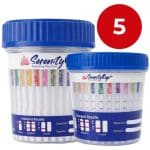
Initial screening does not need the highest-cost option every time. A strong rapid test helps you move faster, spend less on negative samples, and reserve lab confirmation for results that need proof. If you want a practical first-line option, CLIA Waived 13 Panel Drug Screen Test Cup from 12 Panel Now is a smart place to start.