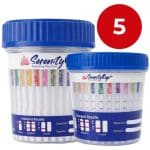
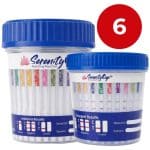
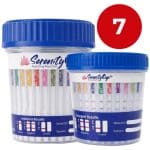
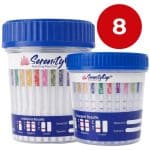
Drug Testing Solutions for Treatment Centers: Enhancing Patient Care

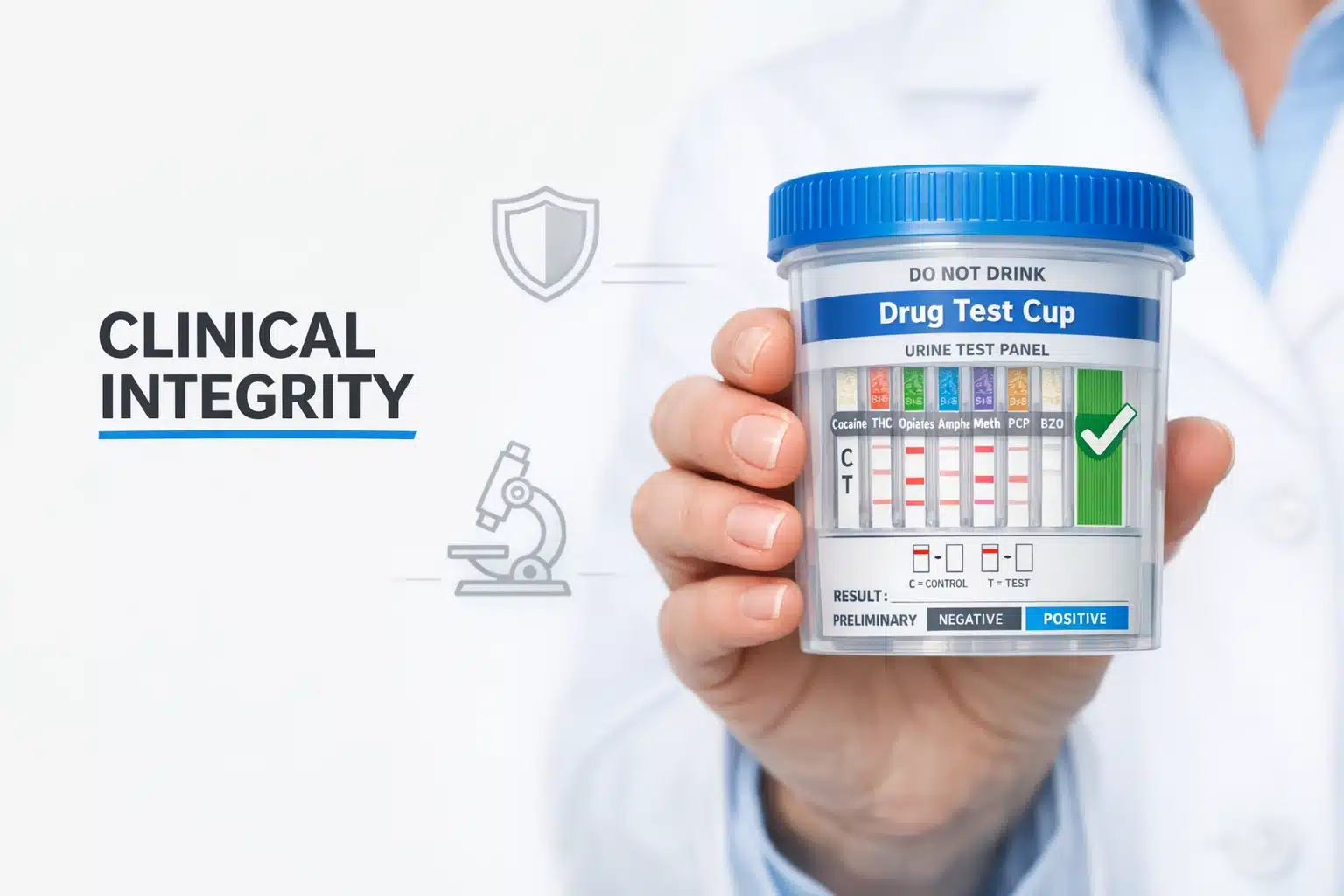
For clinical directors and facility administrators, the tension is palpable every single day: You are balancing the therapeutic alliance—which requires trust—against the absolute necessity of program integrity—which requires verification.
In the current landscape of addiction recovery, that balance has never been harder to maintain. The street supply has evolved faster than federal guidelines, introducing threats like Fentanyl and Xylazine that standard protocols often miss. Simultaneously, the “detox kit” economy has armed patients with sophisticated methods to subvert testing.
When you are evaluating drug testing solutions, you aren’t just looking for a cup. You are looking for a clinical integrity shield. You need a tool that protects your license, satisfies CLIA compliance, and, most importantly, prevents the tragedy of a missed relapse.
Here is a comprehensive framework for evaluating drug testing solutions through the lens of modern clinical realities.
The “Synthetic Gap”: Why Standard Panels Are Failing
If your facility is still relying on the standard 5-panel or even 10-panel tests defined decades ago, you are likely flying blind to the primary drivers of today’s overdose crisis.
According to recent data, federal mandatory guidelines (SAMHSA) lag behind street chemistry. While the core panel covers opiates, amphetamines, and cocaine, it often fails to mandate testing for synthetic opioids in the primary screen. This creates a dangerous “Synthetic Gap.”
The Fentanyl and Xylazine Threat
The CDC has identified Xylazine-adulterated Fentanyl as an emerging threat that complicates overdose reversal and withdrawal management. Yet, many standard cups do not include strips for these substances.
When a patient tests negative on a standard panel but exhibits clear signs of intoxication or withdrawal, the clinical team is left in a bind. Is it a false negative? Is it a mental health episode? Without the right data, your hands are tied.
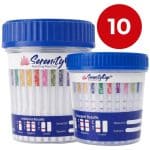
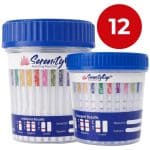
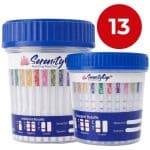
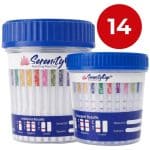
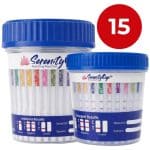
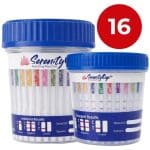
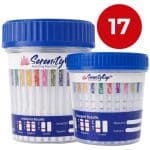
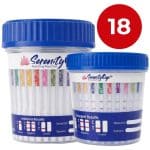
The Solution: Transitioning to 14, 18, or even 28-panel cups is no longer a luxury—it is a clinical necessity. Modern testing solutions from providers like 12 Panel Now are designed to close this gap by including specific assays for Fentanyl (FYL), Buprenorphine (BUP), and Tramadol (TRA), ensuring that a “negative” result actually means the patient is substance-free.
The Anatomy of Subversion: Countering the “Cheat” Economy
One of the most frustrating aspects of managing a treatment program is the “Subversion Arms Race.” A quick search online reveals an entire industry dedicated to helping patients beat your tests. Search volume for terms like “best detox for drug test” and “synthetic urine” has skyrocketed, indicating that patients are entering your facility armed with misinformation and “cleansing” products like Yogi Detox Tea, Sonne #7, or Quick Fix synthetic urine.
As an administrator, your testing solution must do more than detect drugs; it must detect deception.
Utilizing Adulterant Strips
The most effective defense against subversion isn’t stricter observation (which can damage the patient relationship), but smarter chemistry. High-quality multi-panel cups now come equipped with built-in adulterant strips that test for:
- Creatinine: Low levels indicate diluted urine (internal dilution via excessive water intake).
- pH: Abnormal levels suggest the addition of household chemicals or acidic “detox” drinks.
- Specific Gravity: Helps confirm the sample is actually human urine and not a synthetic substitute.
By training your staff to read these strips as part of the standard intake or random testing protocol, you effectively neutralize the “detox kit” economy. You can spot a “dilute negative” instantly, allowing for an immediate conversation about honesty and recovery barriers rather than waiting 48 hours for a lab confirmation that comes too late.
Right-Sizing Your Solution: Which Panel Depth Do You Need?
Not every facility needs the same level of coverage. A sober living home has different risk profiles than an acute detox center. However, under-testing is a liability.
When evaluating vendors, look for flexibility. You shouldn’t be forced into a “one-size-fits-all” contract. 12 Panel Now offers custom configurations ranging from 5 to 28 panels, allowing you to match the tool to the clinical need.
The Selection Matrix
- The 12-14 Panel (The New Baseline): Ideal for outpatient programs (IOP) and probation compliance. Covers core drugs plus Fentanyl and Buprenorphine.
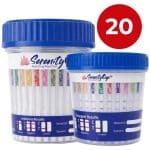
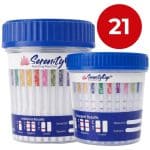
- The 18-21 Panel (The Clinical Standard): Recommended for Detox and Residential Treatment (RTC). This range catches a wider variety of benzodiazepines and prescription opioids that are often abused but missed on smaller panels.
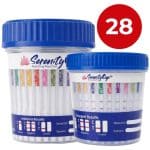
- The 28 Panel Ultra (The Comprehensive Shield): Best for high-acuity facilities seeing complex poly-substance abuse. This detects Kratom, EtG (alcohol metabolite), and a broad spectrum of synthetic compounds.
Cost is always a factor, but the cost of a missed overdose or a compromised license is infinitely higher. With competitive bulk pricing often under $2.00 per unit for comprehensive cups, the ROI on program integrity is undeniable.
Beyond the Cup: The “Family-Owned” Service Advantage
In the B2B landscape of medical supplies, you often deal with two extremes: massive, cold corporate entities where you are just an account number, or sketchy discount sites with zero support.
For a treatment center, neither is acceptable. You need a partner who understands that if you run out of tests on a Thursday, you cannot wait until next Tuesday for a shipment.
Why “Warm and Diligent” Matters in Clinical Operations
12 Panel Now, a family-owned business established in 2017, bridges this gap. The philosophy is simple: Diligence as a service.
- Same-Day Shipping: Orders placed before the cutoff ship the same day. This supports “Just-in-Time” inventory management for your facility.
- Accessible Support: You aren’t routing through a call center abroad. You are dealing with a team based in Boynton Beach, Florida, that understands the urgency of your work.
- Regulatory Confidence: All cups are FDA approved and CLIA waived. This is critical for billing and liability. Note that 12 Panel Now focuses strictly on supply—we are not a laboratory. This specialization allows us to keep costs low (starting as low as $1.69) and quality high (99% reliability rate).
Conclusion: Restoring Trust in the Process
The goal of drug testing in a treatment setting isn’t to catch people doing wrong—it’s to create an environment safe enough for them to get well. By closing the “Synthetic Gap” with comprehensive panels and partnering with a supplier that prioritizes diligence and speed, you allow your clinical staff to stop playing detective and start focusing on recovery.
Evaluate your current panels. If they don’t catch Fentanyl, Xylazine, or adulterants, it’s time to upgrade your program’s integrity.
FAQ: Common Questions for Administrators
Q: Are CLIA Waived tests reliable enough for clinical decisions?
A: Yes. CLIA Waived tests from reputable providers like 12 Panel Now boast a 99% accuracy rate. While positive results should traditionally be confirmed by a lab (GC/MS or LC/MS) for legal defensibility, the CLIA Waived point-of-care test is the industry standard for immediate clinical decision-making and privileging within the facility.
Q: Why should we test for EtG (Alcohol) in a urine cup?
A: Alcohol metabolizes quickly, often leaving the system within hours. EtG (Ethyl Glucuronide) is a metabolite that can be detected for up to 80 hours after consumption. Including this in your panel (available in our 16, 18, and 28 panel configurations) closes the “weekend loophole” where patients drink and detox before returning to the facility.
Q: Can we detect “fake pee” or synthetic urine?
A: Yes, but only if you use cups with adulterant strips. Synthetic urine often fails the Specific Gravity or pH checks. Training your staff to read these strips on every single test is the most cost-effective way to stop subversion.