Fentanyl Sensitivity in Multi-Panel Drug Test Cups

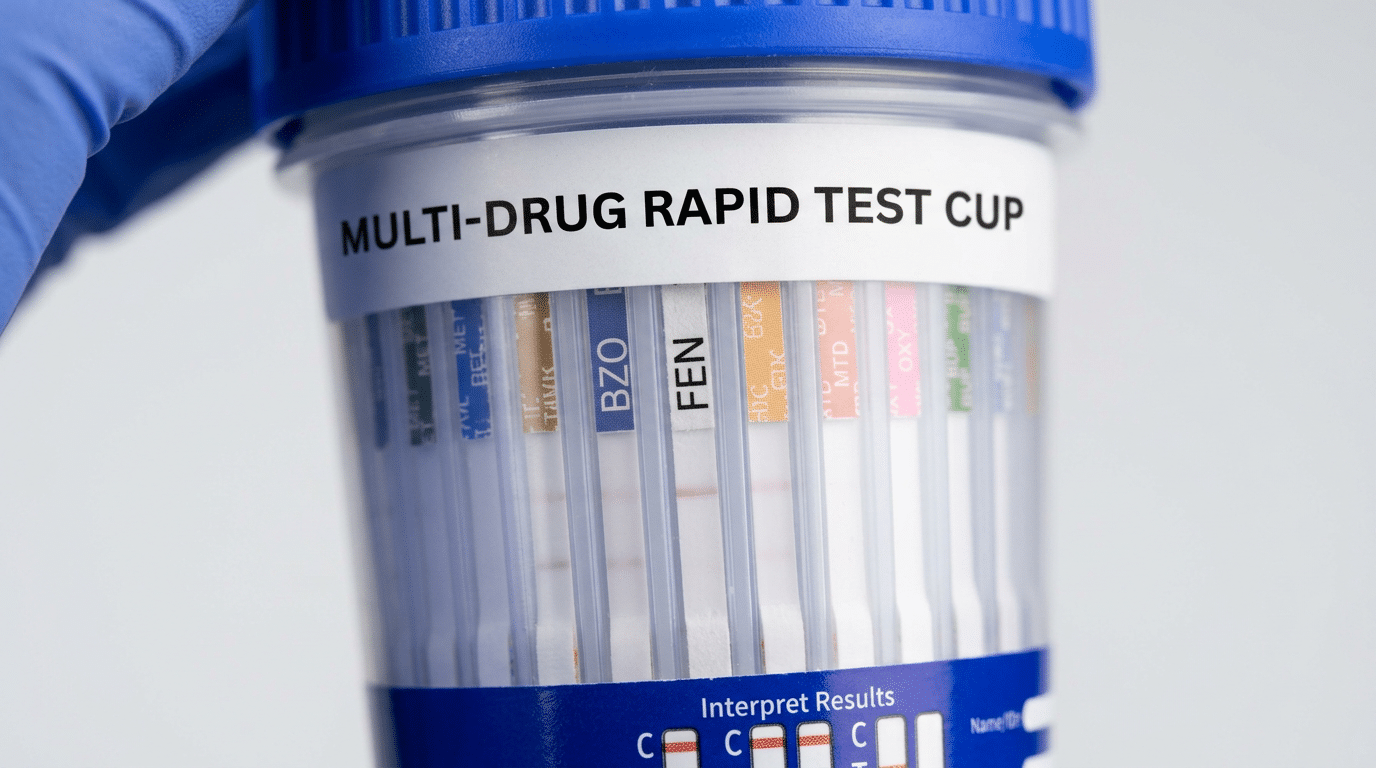
Fentanyl screening sounds straightforward until you get to “sensitivity.” Most people really want one answer: Will this cup catch fentanyl at a low enough level to matter? Below is what fentanyl sensitivity means on a multi-panel drug test cup, what cutoff levels actually tell you, what can affect results, and how to read the FEN strip without overthinking it.
What does “fentanyl sensitivity” mean on a drug test cup?
On rapid urine cups, “sensitivity” typically refers to the cutoff concentration that triggers a positive screening result. The cup doesn’t report an exact fentanyl level the way a lab instrument can. It’s a threshold test: if the urine is at or above the cutoff, the FEN panel reads positive; if it’s below, it reads negative.
This matters because two cups can both “test for fentanyl” but use different cutoffs. A lower cutoff flags fentanyl at a lower concentration. A higher cutoff requires more fentanyl in the sample before it turns positive.
What cutoff level should I expect for fentanyl on a multi-panel cup?
Many point-of-care urine fentanyl immunoassay screens use low ng/mL cutoffs (often single-digit to low double-digit). But there’s no universal standard across brands—or even across different versions from the same brand. The cutoff should be listed on the product page, package insert, and/or printed on the cup.
Set expectations correctly: a multi-panel cup gives you a fast screening threshold, not a forensic measurement. If your policy depends on a specific fentanyl cutoff, verify the stated FEN cutoff for the exact cup you plan to buy and use.
Why cutoff level matters more for fentanyl than for many other panels
Fentanyl is extremely potent, and exposure can range from trace contamination to heavy use. A cutoff that works for routine monitoring can still miss very low-level exposure. Cutoffs also shape how you handle edge cases like early use, late elimination, or diluted urine.
If you’re looking for “any trace whatsoever,” a urine screening cup won’t function that way. It answers a narrower question: Is fentanyl (or the test’s target) present at or above the cutoff today?
Does a fentanyl urine test detect fentanyl itself or norfentanyl?
This comes up because fentanyl is metabolized, and many lab methods focus on metabolites. Rapid fentanyl panels may target fentanyl and/or a key metabolite (often referenced as norfentanyl), depending on the assay design. That target choice can affect when the test turns positive and how long it can stay positive.
Because targets vary by product, the safest approach is simple: use the cup as a screening tool. If you need a defensible result for clinical, legal, or disciplinary action, follow any non-negative screen with confirmatory lab testing.
How soon after use can a fentanyl panel turn positive?
A urine screen won’t turn positive immediately after use. The body needs time to process the substance and excrete detectable amounts into urine. Timing depends on dose, route of use, metabolism, and hydration. Fentanyl can become detectable within a relatively short window, but real-world results vary from person to person.
Test too early and you may get a negative result even if use occurred. If timing is critical, plan a follow-up test later instead of relying on a single early screen.
What causes “false negatives” in fentanyl cup testing?
Most “false negatives” in screening trace back to a few common issues:
- Testing too soon after use, before enough target reaches the urine.
- Urine dilution from heavy fluid intake.
- Low dose exposure that never rises above the cutoff.
- Test handling errors such as reading outside the proper time window or running an invalid test.
If you’re aiming for maximum practical sensitivity, build a process that includes smart timing, repeat screens when needed, and a clear path to confirmation for disputed or high-stakes results.
How long does fentanyl stay detectable in urine at typical cutoffs?
There isn’t one reliable number. Detection windows depend on dose, frequency of use, and individual biology. In general, fentanyl is more likely to clear sooner after a single exposure than after repeated exposure, since ongoing use can extend detectability.
Cutoff level also shapes the window. A lower cutoff typically extends the detection period, while a higher cutoff shortens it.

How do I read the fentanyl (FEN) lines on a cup correctly?
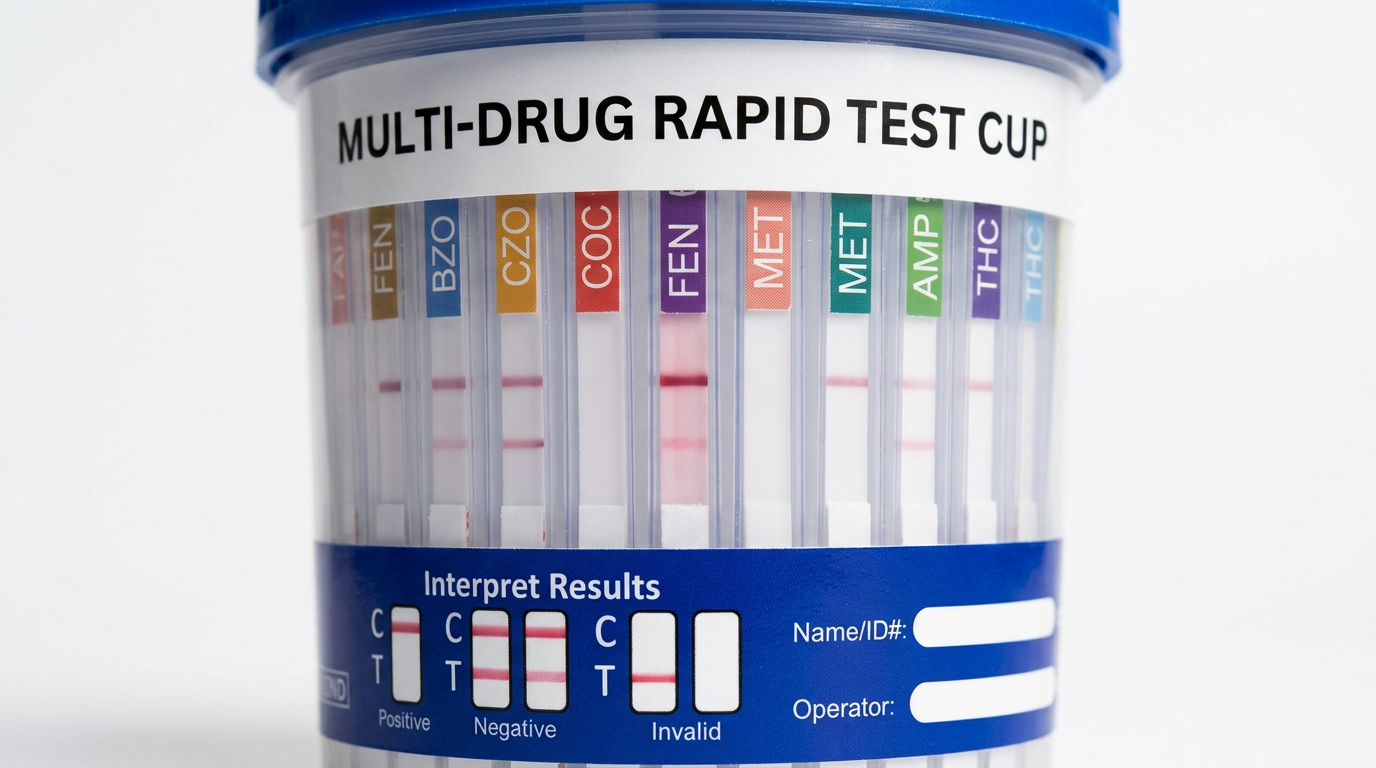
Most multi-panel cup strips use the same rule: two lines usually mean negative (even if the test line is faint) and one line usually means positive. The control line confirms the test ran. The test line reflects the screening result around the cutoff.
Only read results within the stated time window. Read too early and you can misjudge a line that’s still developing. Read too late and evaporation marks can muddy the result.
Does a faint line on the fentanyl panel mean a “little fentanyl”?
No. Line intensity is not a concentration scale. These strips don’t work like a thermometer. Lighting, urine color, and timing can all change how dark a line appears.
A practical rule for most cup formats: any visible test line within the correct read window counts as negative, as long as the control line is present. If the result needs to hold up to scrutiny, confirm through a lab method.
How reliable is fentanyl screening in a multi-panel cup?
Rapid urine drug screens are solid front-line tools, especially for quickly ruling out negatives. But immunoassays can produce cross-reactivity and borderline calls near the cutoff. That doesn’t make the test unreliable—it defines its role: screen first, then confirm when the outcome matters.
Workplaces, treatment programs, and family monitoring setups tend to get the most consistent results when they pair the cup with standardized collection steps and a written plan for responding to non-negative screens.
What can cause a false positive fentanyl screen?
False positives can occur when the assay reacts to a different compound with a similar structure, or when sample conditions and testing errors interfere with the process. A cup screen alone does not prove fentanyl use. If your program requires certainty, send any non-negative result for confirmatory testing (such as mass spectrometry) through a certified lab.
What should I look for in a multi-panel cup if fentanyl sensitivity is my top concern?
It’s easy to compare cups by panel count, but if fentanyl is the priority, focus on consistency and clarity. You want a cup that makes collection and interpretation straightforward across different testers.
- Clear stated FEN cutoff so you can match it to your policy.
- Easy-to-read results window so different users reach the same call.
- Built-in specimen integrity checks to quickly flag temperature issues or suspicious samples.
- A panel set that matches your real risks, since fentanyl exposure may overlap with other substances.
Why people choose a cup that includes both FEN and ETG
Many monitoring situations involve more than fentanyl. Families, programs, and employers often track alcohol use too, since alcohol can signal relapse risk or policy violations even when other drug panels stay negative.
A cup that includes both FEN and ETG reduces the need for separate tests and separate collections. In practice, that often improves compliance because the process is simpler for everyone.
Optional FAQ
Do multi-panel fentanyl cups detect all fentanyl analogs?
Not always. Immunoassays differ in cross-reactivity. Some analogs trigger the panel strongly, while others may trigger weakly or not at all. If analog detection is a requirement, confirm what the assay claims and keep lab confirmation as your backstop.
Should I confirm every positive fentanyl cup result with a lab test?
If the result affects employment, legal status, medical decisions, or program standing, confirm it. A rapid cup provides a screen, not a final determination.
What should I do if the fentanyl panel looks invalid?
If the control line is missing or the strip appears damaged, treat the result as invalid. Retest with a new cup and follow your normal chain-of-custody and documentation steps.
Conclusion
On a multi-panel cup, fentanyl “sensitivity” comes down to the cutoff level that flips the FEN panel from negative to positive. You’ll get the most useful results when you match the cutoff to your needs, test at the right time, and treat any non-negative screen as a reason to confirm. If you want fentanyl and alcohol visibility in one collection, 12 Panel ETG & FEN Cup offers a practical option from 12 Panel Now.