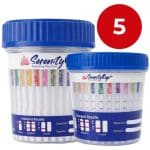
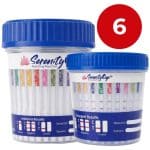
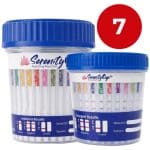
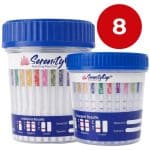
Maximize Your Drug Testing Budget: Pricing & Cost-Effective Solutions

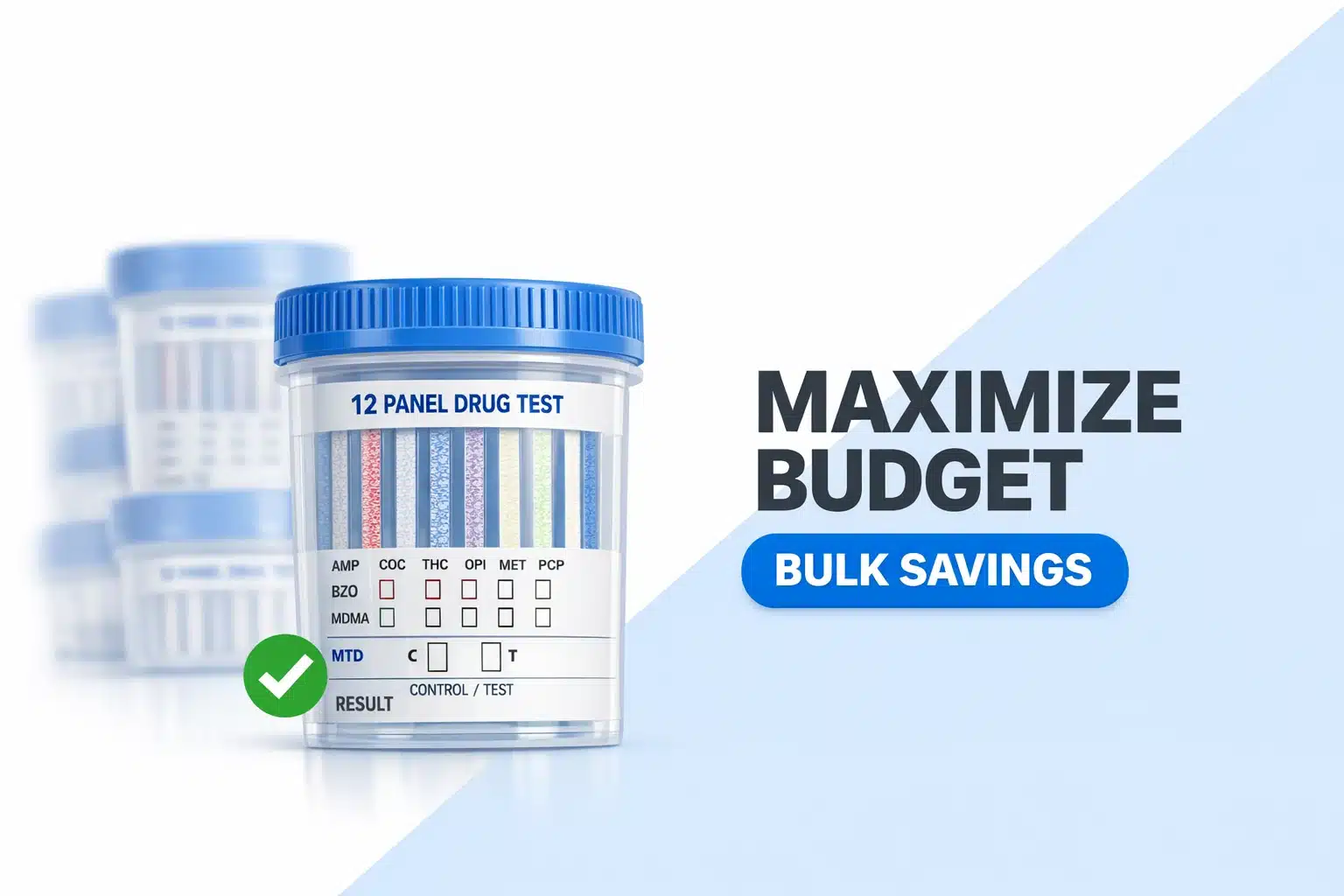
If you are managing a procurement budget for a treatment center, staffing agency, or healthcare clinic, you know that the “price per cup” is often the first number everyone looks at. It’s natural. When you are buying thousands of units a year, a difference of ten cents seems massive.
But if you have been in this industry long enough, you also know that the lowest sticker price doesn’t always equal the lowest total cost.
We often speak with administrators who secured a “bargain” on urine analysis cups, only to find their budget bleeding out through hidden shipping fees, high rates of invalid tests, or—worst of all—boxes of expired inventory sitting in a warehouse.
To truly maximize your budget, you need to move beyond simple price comparisons and look at the Total Cost of Ownership (TCO) of your drug testing program. This guide will walk you through how to evaluate bulk pricing structures, the financial impact of shipping logistics, and how to maintain a lean, cost-effective inventory without sacrificing quality.
The “Price vs. Value” Fallacy: Beyond the Sticker Price
In the hyper-competitive drug testing market, it is common to see “As Low As” pricing that looks too good to be true. Often, it is. The unit price is just the tip of the iceberg. To understand your actual expenditure, you have to factor in the hidden variables that drain budgets.
Recent industry data suggests that operational inefficiencies, such as managing false positives and logistics for offsite testing, can inflate testing costs by 30-70% [1, 6]. If you buy a cheap cup that has a high failure rate, you aren’t just losing the cost of that cup; you are paying for the administrative time to re-test, the potential cost of a more expensive confirmation test, and the operational delay.
The Three Pillars of TCO
When analyzing a supplier’s quote, calculate these three factors:
- Reliability Rate: A 99% accuracy rate (standard for CLIA-waived and FDA-approved tests) is non-negotiable. Anything less creates liability and unnecessary secondary testing costs.
- Shipping Transparency: Does that low unit price come with a hefty freight charge? Suppliers who offer free shipping or transparent flat rates often come out cheaper per unit once the product lands at your door.
- Customer Service Efficiency: Time is money. If you have a question about a lot number or a shipping delay, being able to reach a diligent, family-operated support team immediately is valuable. Waiting 48 hours for a callback from a massive, faceless call center halts your operations.
The Hidden Killer of Budgets: Inventory Expiration
One of the most overlooked aspects of budgeting is shelf life risk.
To get the absolute lowest price, many organizations fall into the trap of “over-buying.” They purchase a 12-month supply to hit a bulk discount tier. However, drug test kits have strict expiration dates. If your testing volume fluctuates—a common occurrence in detox facilities and probation departments—you might end up throwing away 15% of your stock because it expired before use.
Research highlights that maintaining “lean” inventory is critical for ROI. Stockpiling leads to waste [3].
The Solution: “Just-in-Time” Ordering
This is where Same-Day Shipping becomes a financial strategy, not just a convenience.
When you partner with a supplier like 12 Panel Now that guarantees same-day shipping on orders placed before the cutoff, you don’t need to hoard boxes. You can order a 2-month supply, knowing you can restock instantly. This keeps your cash flow liquid rather than tied up in a closet full of plastic cups, and it ensures you are always using fresh, compliant inventory.
Bulk Pricing Tiers: How to Calculate True Savings
Understanding how to navigate bulk pricing tiers is essential for procurement optimization. Most suppliers structure their pricing to reward volume, but the “sweet spot” varies.
For example, you might see significant price breaks at 25, 100, 500, and 1,000 units. The goal is to align your purchasing cadence with these tiers.
Optimizing Your Panel Count
Another way to maximize budget is ensuring you aren’t paying for detection you don’t need.
- Workforce Environments: Often only need a standard 5-panel or 10-panel cup.
- Pain Clinics & Treatment Centers: May require comprehensive 12-panel to 28-panel configurations to detect synthetic opioids or specific prescription abuses.
Buying a 14-panel cup when a 12-panel covers your requirements is a subtle budget leak. Utilizing custom configurations allows you to tailor the test to your specific industry risks—whether that is DOT compliance or clinical monitoring—ensuring every dollar spent contributes to necessary screening.
Evaluating Suppliers: A Decision Matrix
As you evaluate potential partners, you need a framework to compare apples to apples. The global workplace drug testing market is projected to reach over $8 billion by 2031 [3], leading to a flood of new, unverified sellers.
Use this checklist to vet your supplier’s value:
- Compliance: Are the cups FDA Approved and CLIA Waived? (This is mandatory for legal defensibility).
- Speed: Do they actually ship same-day, or do they just “process” same-day?
- Inventory Depth: Do they have the stock on hand? A “backorder” notification can shut down your intake process.
- Accessibility: Can you call them and speak to a human? (Look for family-owned businesses that prioritize relationships over transaction volume).
Your Next Steps: Building a Cost-Effective Program
Maximizing your drug testing budget isn’t about finding the cheapest plastic cup on the internet. It is about building a supply chain that is reliable, fast, and transparent.
By leveraging bulk discounts effectively, utilizing same-day shipping to reduce inventory waste, and selecting the right panel configurations for your specific needs, you can significantly lower your cost per test while improving the quality of your program.
Frequently Asked Questions
Does “As Low As” pricing mean I have to buy thousands of units?
Not necessarily. While the deepest discounts (e.g., $1.69 per cup or $0.49 per dip card) are reserved for larger quantities, reputable suppliers offer tiered savings that start with much smaller batches, such as 25 or 50 units. Check the product page for the specific breakdown.
How does shipping affect the cost per test?
Shipping is often a hidden fee that distorts the unit price. A supplier might offer a cup for $0.10 less but charge $50 for ground shipping. Always calculate the “landed cost” (Item Price + Shipping / Quantity). At 12 Panel Now, we offer competitive bulk pricing with free shipping options to ensure your landed cost remains the best in the industry.
Can I mix and match products for bulk discounts?
This depends on the supplier. However, many organizations find value in ordering a mix of urine drug test cups for standard screening and oral swabs for specific use cases. Custom configurations are also available for those needing specific panel combinations (up to 28 panels).
What is the shelf life of bulk drug tests?
Most urine drug tests have a shelf life of 12 to 24 months from the date of manufacture. This is why “Same-Day Shipping” is crucial—it allows you to buy fresh stock as you need it, rather than risking expired inventory.
Are cheap tests less accurate?
Price does not always dictate accuracy, but certification does. Always ensure your bulk tests are CLIA Waived and FDA Approved. These certifications guarantee the device meets rigorous standards for accuracy (typically 99%) regardless of the price point.