Drug Testing Cups: Detect Fentanyl, EtG, Kratom for Emerging Trends

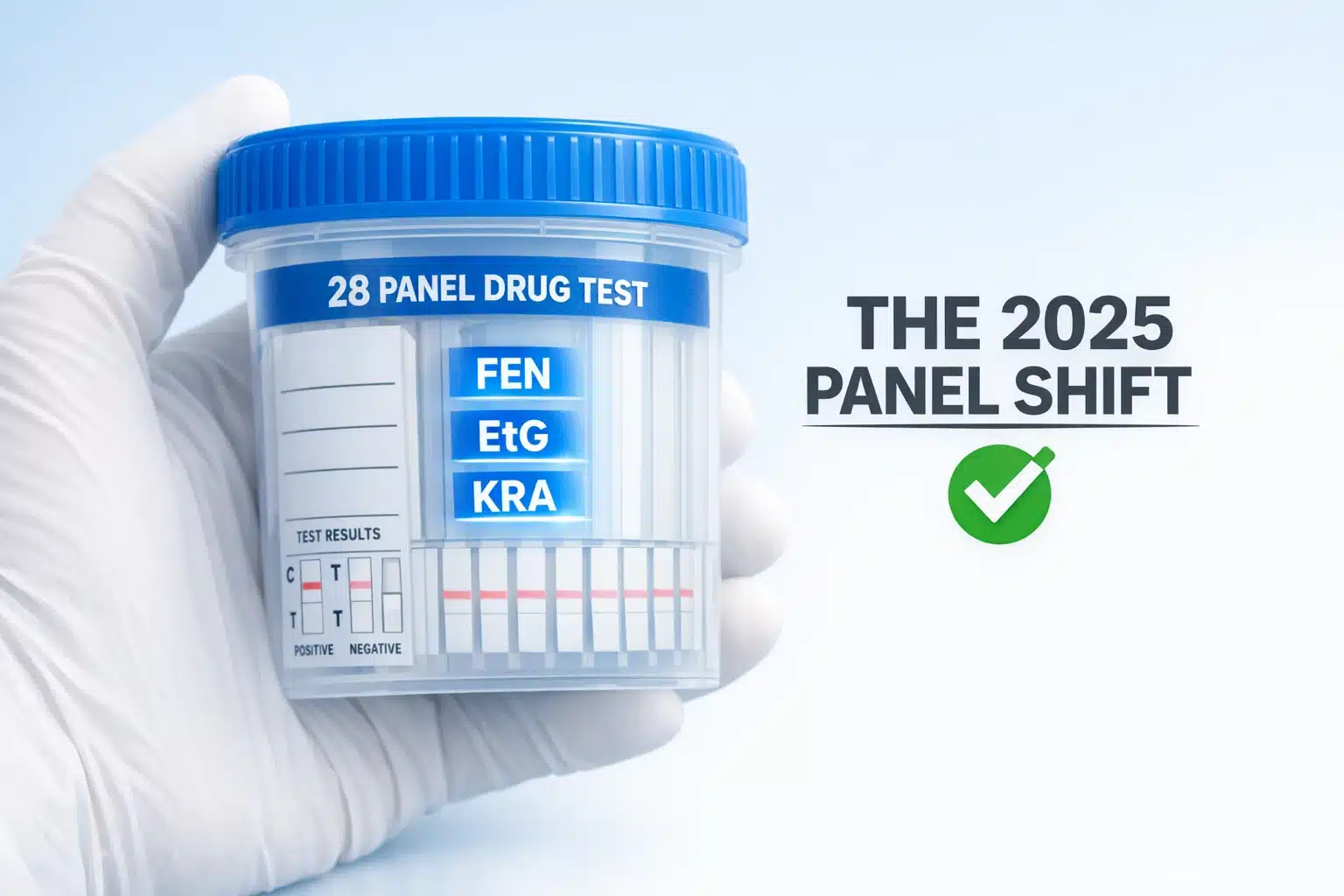
If you manage a testing program—whether for a rehabilitation center, a staffing agency, or a correctional facility—you’ve likely noticed that the “standard” 12-panel drug test is no longer the safety net it used to be. The substance landscape has shifted beneath our feet.
With the proliferation of synthetic opioids and the increasing accessibility of “legal highs” like Kratom, relying on legacy panel configurations is a liability. You aren’t just buying plastic cups anymore; you are buying risk mitigation.
The market is currently undergoing what industry experts call a “Panel Evolution.” This shift was accelerated by the January 16, 2025, HHS/SAMHSA mandate, which explicitly added Fentanyl to federal workplace testing panels. This regulatory change signals a broader truth: if you aren’t testing for Fentanyl (FEN), Ethyl Glucuronide (EtG), and Kratom (KRA), your monitoring program has significant blind spots.
To help you navigate these changes, we have developed a selection framework to ensure your testing protocols match the current reality of substance abuse.
The 2025 Federal Panel Shift: Why Fentanyl is No Longer Optional
For years, Fentanyl was considered a “specialty” test, often requiring a separate dip card or an expensive lab upgrade. That era is over. The 2025 federal update established initial urine cutoffs for Fentanyl at 0.5 to 2 ng/mL, formally recognizing it as a primary workplace threat.
This change trickles down to every industry. If federal agencies mandate Fentanyl testing, private insurance and liability carriers for rehab centers and sober living homes will inevitably follow suit.
The “Gas Station Heroin” Threat
The urgency isn’t just about Fentanyl in isolation; it’s about what is being mixed with it. Recent DEA reports indicate a rise in “Gas Station Heroin” (Tianeptine) and Xylazine being used as additives. As Fentanyl purity decreases due to mixing, the window for detection narrows.
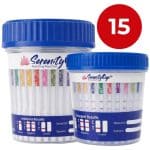
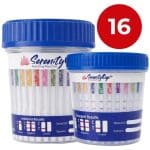
The Strategic Choice: You need a cup that integrates Fentanyl screening directly into the main panel. Upgrading from a 12-panel to a 14-Panel or 16-Panel Cup that includes FEN eliminates the need for secondary testing supplies, streamlining your process while closing the liability gap.
Selection Framework: Matching Panels to Risk
When evaluating drug test cups, you must move beyond price-per-unit and look at “coverage-per-risk.” A cheaper cup that misses a relapse isn’t cost-effective—it’s a lawsuit waiting to happen.
We’ve seen a surge in demand for high-panel configurations (14 through 28 panels) because they solve the logistical nightmare of managing multiple testing strips.
The Matrix of Emerging Threats
Use the following framework to determine if you need to upgrade your inventory:
- Baseline Compliance: 12-Panel (Standard DOT look-alikes).
- Enhanced Safety: 14 to 16-Panel (Adds Fentanyl, Tramadol, or K2).
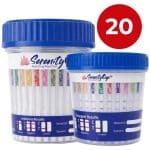
- Total Compliance: 18 to 28-Panel (Adds EtG, Kratom, Gabapentin, and Fentanyl).
The EtG Advantage: Alcohol Monitoring and Cross-Reactivity
Alcohol remains the most abused substance, yet standard urine tests only detect ethanol for a few hours. This is why Ethyl Glucuronide (EtG) is critical for zero-tolerance environments like probation and addiction recovery. EtG extends the detection window up to 80 hours.
However, integrating EtG comes with technical nuances that you must understand to avoid false-positive anxiety.
Managing the Hand Sanitizer Variable
One of the most common questions we receive is, “Will hand sanitizer trigger a positive EtG?” The answer lies in the chemistry.
Research indicates that propanol-based hand sanitizers can theoretically cause false positives for EtG if the cutoff is too low, persisting for up to 6 hours after intensive use. This is due to propyl glucuronide cross-reactivity.
The Solution:
- Select Appropriate Cutoffs: Ensure your EtG panels use industry-standard cutoffs (typically 500 ng/mL) to balance sensitivity with specificity.
- Context Matters: In high-stakes environments (e.g., child custody or parole), positive EtG results should always be verified.
- Use Integrated Cups: Our 12 Panel to 28 Panel options that include EtG are calibrated to CLIA-waived standards to minimize these interferences, providing a reliable first line of defense.
Kratom (KRA): The Invisible Alkaloid
Kratom is perhaps the most overlooked substance in modern drug testing. Because it is legal in many states and sold as an herbal supplement, many users believe it is undetectable.
The Reality: Standard Opiate (OPI) or Oxycodone (OXY) panels will not detect Kratom. Kratom contains alkaloids like Mitragynine, which require a specific assay.
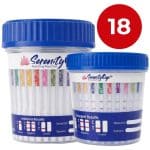
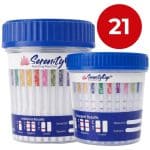
If you are running a sober living home or a pain clinic, missing Kratom usage can be detrimental to a patient’s recovery plan. We have seen a significant shift toward the 18-Panel and 21-Panel Cups, which are specifically configured to catch these “legal” loopholes that standard 5 or 10-panel cups miss.
Industry-Specific Recommendations: Which Cup Do You Need?
Choosing the right configuration depends entirely on your “Risk Profile.” Here is our recommendation based on common client scenarios:
1. Rehabilitation & Sober Living (Maximum Oversight)
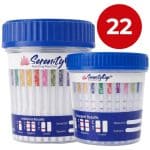
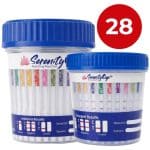
Recommended: 28-Panel Ultra Cup or 22-Panel Cup
Why: You are the last line of defense. You need to screen for everything—Fentanyl, EtG, Kratom, Tramadol, and Gabapentin. The 28-Panel is the most comprehensive tool on the market, essentially a “lab in a cup,” protecting your facility from liability involving complex poly-substance abuse.
2. Criminal Justice & Probation
Recommended: 16-Panel to 18-Panel Cups
Why: These sectors require strict adherence to EtG monitoring and Fentanyl detection. The 18-panel strikes the perfect balance between comprehensive coverage and budget efficiency for high-volume government agencies.
3. Modern Workplace & Staffing
Recommended: 13-Panel or 14-Panel Cups (with FEN)
Why: You need to meet the new 2025 standard. A 13 or 14-panel cup maintains the traditional screening for marijuana, cocaine, and amphetamines, but adds the crucial Fentanyl strip to ensure you aren’t hiring liability.
Secure Your Testing Program Today
The drug trends of 2025 require 2025 solutions. Whether you need to block the Fentanyl risk or ensure true sobriety with EtG and Kratom screening, the right tool is available.
At 12 Panel Now, we maintain a massive inventory of these advanced configurations in our Florida warehouse, ensuring same-day shipping so you never face a supply gap.
Don’t wait for a missed detection to upgrade your protocols. Explore our full range of Multi-Panel Drug Test Cups and Single Dip Cards to find the configuration that safeguards your organization.
Frequently Asked Questions
Q: Are these high-panel cups CLIA Waived?
Yes. Our extensive range of multi-panel cups, including those screening for Fentanyl and EtG, are CLIA Waived and FDA Approved. This ensures they meet the regulatory standards required for clinical and workplace environments.
Q: Can I customize a panel if I don’t need all 28 substances?
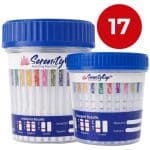
Absolutely. We specialize in custom configurations. Whether you need a specific 6-panel cup for a specialized project or a unique 17-panel configuration, we can tailor the assays to your specific requirements.
Q: How reliable are the results for Fentanyl and EtG?
Our products boast a 99% accuracy rate. While no rapid test serves as a final legal confirmation (that requires GC/MS lab confirmation), our cups provide the high-reliability screening data needed to make immediate, confident decisions.