Pre Employment Drug Testing Guide for HR Managers


Finding the right balance between safety, compliance, and candidate privacy can feel daunting when implementing pre-employment drug testing policies. Federal regulations such as the Americans with Disabilities Act and the Civil Rights Act set important boundaries, while state rules add unique layers that demand attention from every HR manager. This guide breaks down the key legal steps and best practices, helping you build a transparent, fair, and effective process to protect your workplace and your company.
Step 1: Assess Legal Requirements for Drug Screening
Navigating the legal landscape of pre-employment drug screening requires HR managers to understand complex federal and state regulations that protect both employer interests and employee rights. The legal framework surrounding drug testing involves multiple layers of compliance designed to prevent discrimination while maintaining workplace safety.
To effectively assess legal requirements, HR managers must focus on several critical components:
- Federal Guidelines: Understand regulations from the Americans with Disabilities Act (ADA) and Civil Rights Act
- State-Specific Laws: Research individual state regulations on drug testing procedures
- Notification Requirements: Ensure written policies are communicated to job candidates before screening
- Uniform Application: Develop consistent testing protocols applied equally to all applicants
Employers must conduct pre-employment drug screenings uniformly to avoid potential legal challenges related to discriminatory practices.
Safety-sensitive industries like transportation have additional mandatory screening requirements through Department of Transportation (DOT) regulations. These sectors demand stringent workplace drug testing protocols to maintain public safety and regulatory compliance.
The screening process typically occurs after extending a conditional job offer, which allows employers to assess candidate suitability while respecting legal boundaries. Candidates must be informed about testing policies in advance and provide informed consent.
Pro tip: Consult with legal counsel annually to review and update your drug testing policies to ensure ongoing compliance with evolving federal and state regulations.
Step 2: Select Appropriate Drug Testing Supplies
Choosing the right drug testing supplies is critical for HR managers seeking accurate, reliable, and legally compliant screening methods. Your selection will directly impact the effectiveness of your workplace safety protocols and candidate evaluation process.
When selecting drug testing supplies, focus on these key considerations:
- Test Panel Complexity: Determine the number of drug panels needed based on industry requirements
- Detection Window: Select tests that provide appropriate timeframes for substance detection
- Collection Method: Choose between urine, hair, saliva, or blood testing techniques
- Accuracy and Reliability: Prioritize FDA-approved testing supplies with high sensitivity
Comprehensive drug testing requires strategic selection of supplies that balance thoroughness with legal compliance.
Different industries have unique testing requirements. Safety-sensitive sectors like transportation and healthcare often require more extensive workplace drug testing protocols with broader panel screenings. Manufacturing and construction environments might need quick, on-site testing solutions that provide immediate results.
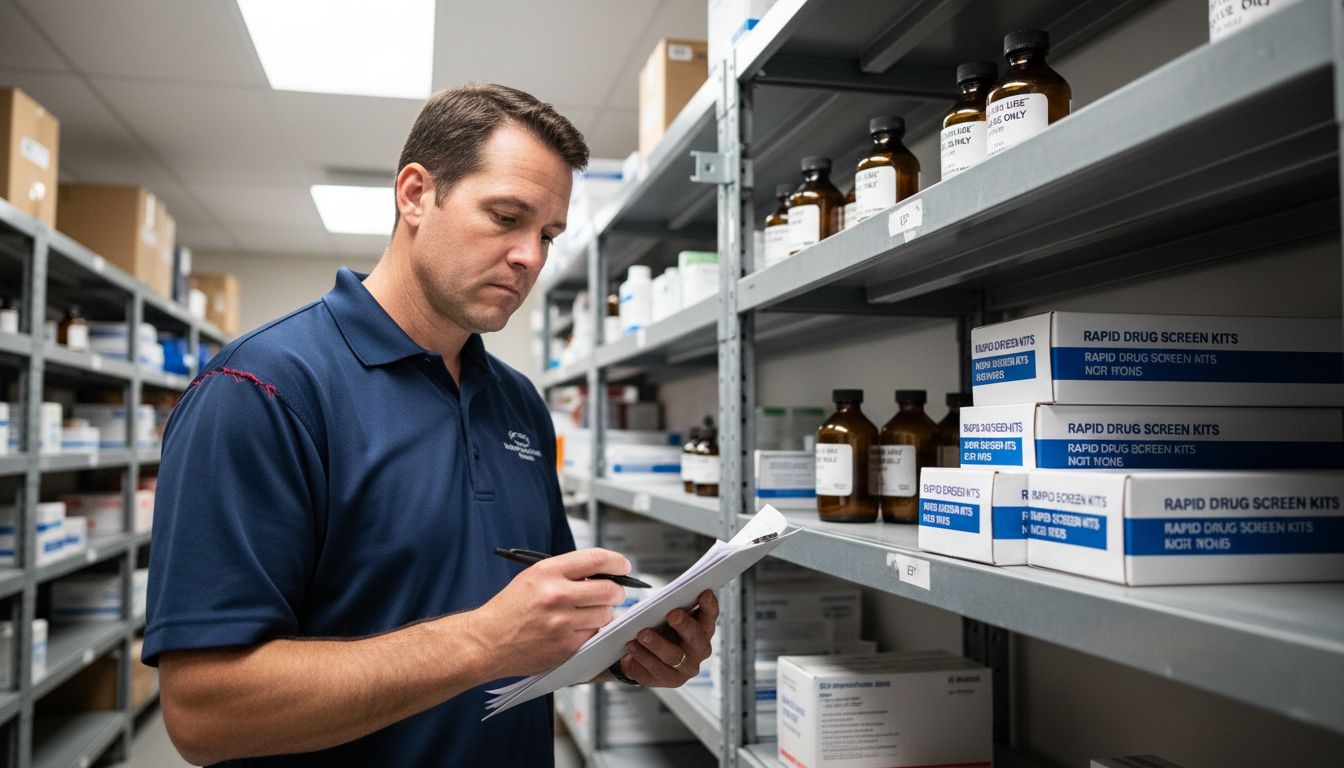
The most effective approach involves matching your testing supplies to specific workplace needs. Consider factors such as budget, turnaround time, detection capabilities, and potential legal implications when making your selection.
Here’s a comparison of common pre-employment drug testing methods and their impact for HR managers:
| Testing Method | Detection Window | Common Uses | Turnaround Time |
|---|---|---|---|
| Urine | 1–7 days | Most industries | 1–3 days |
| Saliva | Up to 48 hours | On-site/rapid needs | 5–15 minutes |
| Hair | Up to 90 days | Safety-sensitive roles | 1–3 days |
| Blood | Hours–2 days | Accident investigations | 1 day |
Pro tip: Invest in multiple testing method options and maintain a diverse inventory of drug testing supplies to accommodate varying screening scenarios and regulatory requirements.
Step 3: Set Up and Communicate Your Testing Policy
Developing a comprehensive drug testing policy requires careful planning and clear communication to ensure fairness, legal compliance, and workplace safety. Your policy will serve as a critical roadmap for both candidates and employees, establishing expectations and procedures for drug screening.
When constructing your drug testing policy, focus on these essential elements:
- Purpose and Scope: Clearly define why drug testing is conducted
- Testing Procedures: Outline specific screening methods and protocols
- Candidate Notification: Ensure transparent communication about testing requirements
- Confidentiality Measures: Protect individual privacy and test result handling
- Consequence Framework: Specify actions following positive test results
Effective drug testing policies balance organizational safety with individual privacy and legal rights.
The policy development process requires detailed documentation and consistent application. Each section should address potential scenarios, including initial screening, confirmation testing, and potential rehabilitation or employment consequences. Workplace drug testing protocols must be tailored to your specific industry requirements and local legal regulations.
Communication is paramount. Candidates and employees should receive comprehensive written information explaining the testing policy, including the rationale behind screening, types of substances tested, collection methods, and potential outcomes. This transparency helps build trust and reduces uncertainty during the hiring process.
Pro tip: Conduct annual policy reviews with legal counsel to ensure your drug testing guidelines remain current with evolving state and federal regulations.
Step 4: Administer and Document Pre Employment Tests
Administering pre-employment drug tests requires precision, attention to detail, and meticulous documentation to ensure legal compliance and maintain the integrity of your screening process. Your approach will directly impact the reliability of your workplace safety protocols and candidate evaluation methods.
When administering drug tests, follow these critical documentation and procedural steps:
- Consent Collection: Obtain written consent from candidates before testing
- Chain of Custody: Maintain rigorous documentation tracking test samples
- Confidentiality Protocols: Protect candidate test result privacy
- Consistent Procedures: Apply testing methods uniformly across all candidates
- Detailed Record Keeping: Document every stage of the testing process
Comprehensive documentation protects both the organization and the candidate throughout the pre-employment screening process.
Each test requires careful handling and precise tracking. Implement a systematic approach that captures essential information, including candidate identification, testing method, collection time, and lab submission details. Workplace drug testing protocols should include comprehensive documentation templates to standardize the process across your organization.
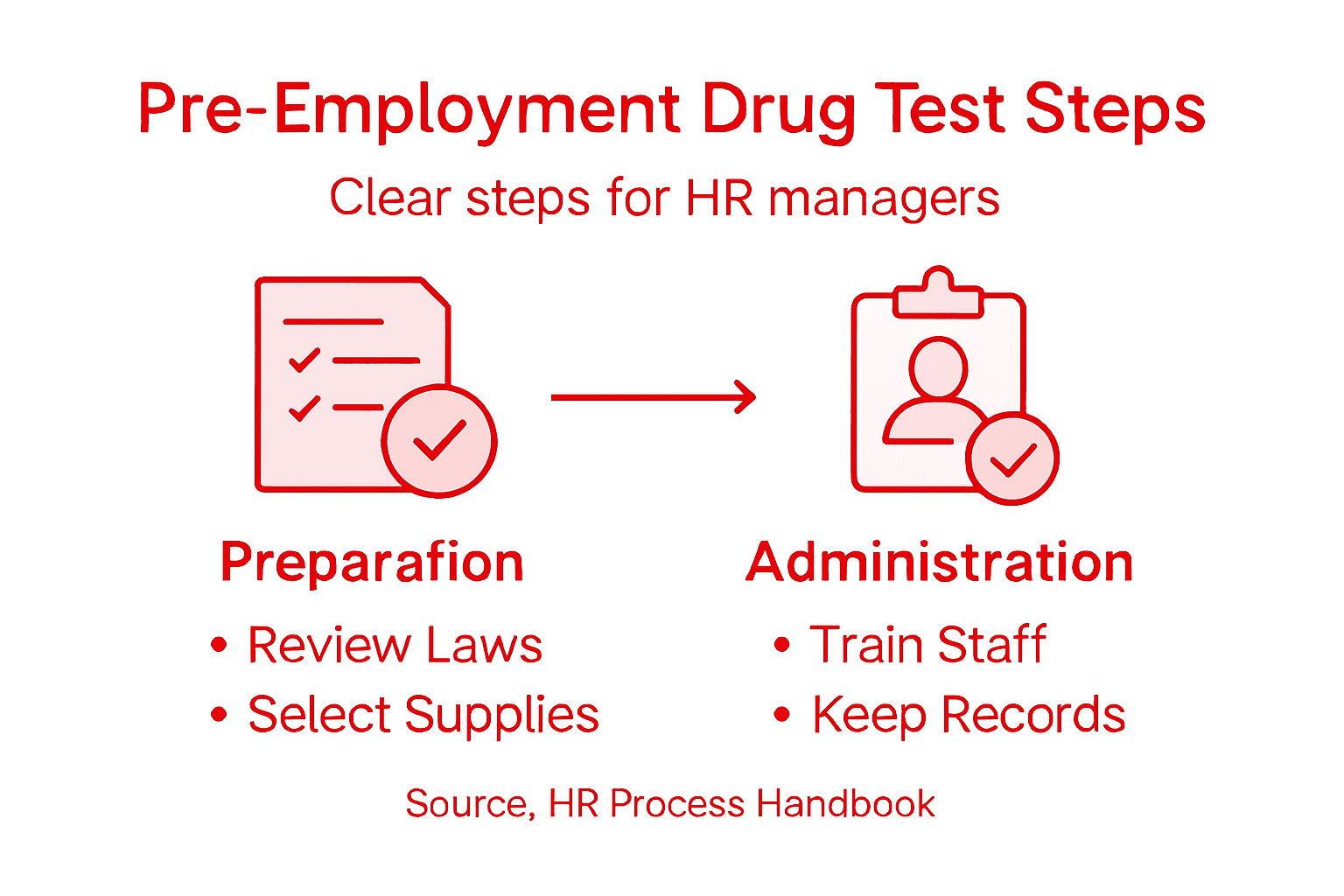
The documentation process extends beyond the initial test. Maintain secure records of test results, including medical review officer reports, for the legally required retention period. Different industries may have varying record retention requirements, so consult with legal counsel to ensure full compliance.
Pro tip: Develop a digital record-keeping system that automatically timestamps and secures candidate drug test documentation to streamline compliance and protect sensitive information.
Step 5: Verify Results and Finalize Hiring Decisions
The final stage of pre-employment drug testing involves carefully verifying test results and making informed hiring decisions that balance organizational safety with fair candidate evaluation. This critical process requires a systematic approach to interpreting laboratory findings and making legally compliant employment choices.
When reviewing drug test results, HR managers should focus on these key elements:
- Initial Screening Results: Understand the difference between preliminary and confirmed tests
- Medical Review Officer (MRO) Evaluation: Allow professional review of potentially positive results
- Candidate Communication: Provide transparent opportunities to explain test outcomes
- Consistent Decision Making: Apply uniform standards across all candidates
- Legal Compliance: Ensure hiring decisions align with anti-discrimination regulations
Comprehensive result verification protects both the organization’s interests and the candidate’s rights throughout the hiring process.
The verification process involves multiple critical steps. Negative results typically allow immediate progression in the hiring process, while positive results require additional investigation. Workplace drug testing protocols recommend a thorough review by a Medical Review Officer who can distinguish between legitimate medical explanations and problematic substance use.
Final hiring decisions must be consistent, transparent, and based on clear policy guidelines. This means creating a structured framework that considers test results alongside other candidate qualifications while avoiding discriminatory practices. Documentation of the entire decision-making process provides crucial protection against potential legal challenges.
Below is a summary of key checkpoints for verifying drug test results and making final hiring decisions:
| Step | Purpose | HR Action |
|---|---|---|
| Review Screening | Distinguish negative/positive | Check for lab confirmation |
| MRO Evaluation | Assess medical explanations | Consult with medical officer |
| Candidate Notification | Ensure fair communication | Share findings and request input |
| Decision Framework | Maintain consistency | Apply policy-based criteria |
Pro tip: Develop a standardized decision matrix that outlines specific criteria for handling different test result scenarios to ensure consistent and fair hiring practices.
Simplify Your Pre Employment Drug Testing Process with Trusted Supplies
Ensuring legal compliance and accurate screening during your pre employment drug testing can be overwhelming. You need reliable, FDA approved testing supplies that match your industry’s unique demands and help maintain fairness while protecting privacy. At 12 Panel Now, we understand the critical role of uniform application, detailed documentation, and effective communication outlined in this guide. Our high quality drug testing solutions empower HR managers to confidently implement comprehensive workplace safety protocols without compromise.
Explore our Complete Drug Test Knowledge Base – 12 Panel Now to deepen your understanding and clear common doubts with Drug Testing FAQs: Unravel the Mysteries about Drug Testing. Ready to upgrade your screening program? Visit 12 Panel Now today for reliable supplies and expert resources that keep your hiring process transparent, efficient, and fully compliant. Take control of your drug testing strategy now before the next hiring cycle begins.
Frequently Asked Questions
What are the legal requirements for pre-employment drug testing?
To comply with pre-employment drug testing, HR managers must understand both federal and state regulations. Review the Americans with Disabilities Act and other relevant acts to ensure your drug testing policy protects candidate rights while promoting workplace safety.
How do I select the right drug testing supplies for my organization?
Choose drug testing supplies by considering the test panel complexity, detection window, and collection method appropriate for your industry. Prioritize supplies that are FDA-approved and known for their accuracy to support consistent testing outcomes.
What should I include in my organization’s drug testing policy?
Your drug testing policy should define the purpose of the tests, outline specific testing procedures, and establish consequences for positive results. Clearly communicate this policy to candidates to ensure transparency and mutual understanding.
How do I effectively administer and document pre-employment drug tests?
Administer pre-employment drug tests by collecting written consent from candidates and maintaining a strict chain of custody. Keep detailed records of each step in the testing process to ensure legal compliance and protect both the organization and the candidates.
What steps should I follow to verify drug test results?
Start by reviewing initial screening results and consult a Medical Review Officer for any positive findings. Ensure open and transparent communication with candidates regarding their results, and maintain consistent decision-making aligned with your organization’s policies.
Recommended
- Workplace Drug Testing: Why It Matters for Safety
- Workplace Drug Testing Checklist: 8 Essential Steps – 12PanelNow | 12 Panel Drug Test | Free Shipping
- Ultimate Guide to Custom Drug Panels – 12PanelNow | 12 Panel Drug Test | Free Shipping
- 7-Step Employee Drug Testing Checklist for Workplaces – 12PanelNow | 12 Panel Drug Test | Free Shipping