Streamlining Your Drug Testing Program: An Implementation Guide for Rapid Urine Test Cups

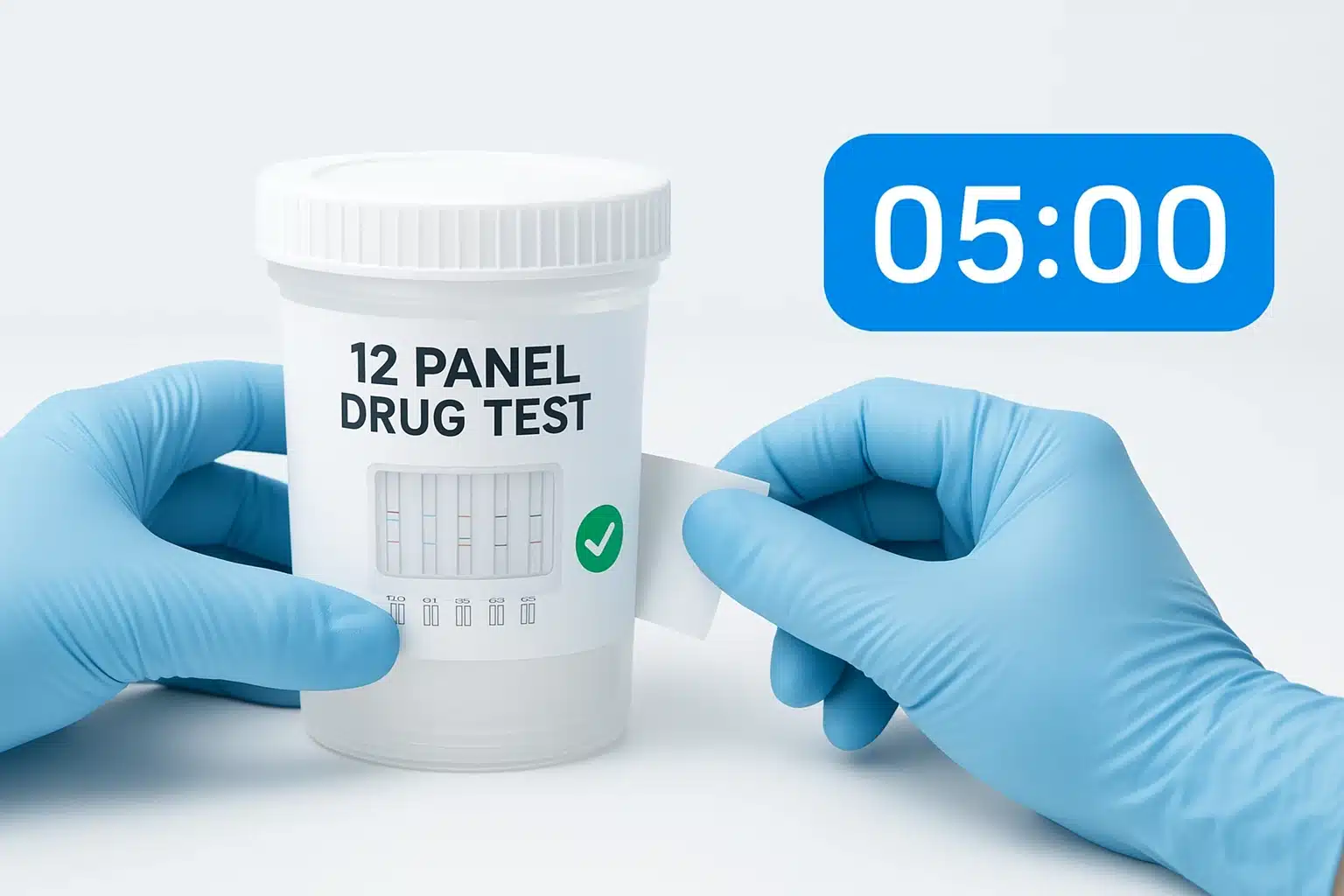
You aren’t looking for a definition of drug testing—you already know what it is. You are looking for a way to stop hemorrhaging time and money during the hiring process with rapid urine test cups.
The traditional model of sending every candidate to an off-site laboratory is becoming obsolete for initial screening. When you rely solely on institutional labs like Quest or Labcorp, you are often looking at a 3-day turnaround time and a cost of $30 to $80 per test. In a competitive labor market, those 72 hours are often enough time for your best candidate to accept a job offer elsewhere.
This guide is for decision-makers ready to bring their drug testing in-house. We will walk through how to implement a rapid response program using CLIA-waived urine test cups—transforming your “Time-to-Hire” from days into minutes, without sacrificing the 99% reliability standard you require.
The Real ROI: From “Days to Hire” to “Minutes to Hire”
The strongest argument for switching to on-site rapid testing is strictly mathematical.
While lab-based testing provides a “gold standard” for confirmation, using it for every initial screen is overkill. Current data suggests that on-site rapid testing costs range between $2.00 and $10.00 per unit, compared to the significantly higher fees of lab collection and analysis.
But the hidden cost is opportunity. If you are hiring for logistics, healthcare, or construction, an open seat costs money. By implementing a Rapid Urine Test Cups workflow, you receive a negative result (a pass) in five minutes. You can make the job offer immediately, rather than waiting for an email from a lab three days later.
Phase 1: The Compliance Foundation
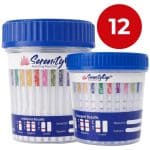
Before you order your first box of 12 Panel Cups, you need to ensure your “house” is in order. Many HR managers hesitate here, fearing legal exposure. However, the regulatory pathway is well-trodden.
The most critical factor is the CLIA Waiver. The Clinical Laboratory Improvement Amendments (CLIA) regulate laboratory testing. However, the FDA grants “waived” status to simple, low-risk tests that can be performed by non-laboratory personnel.
Your Implementation Checklist:
-
- Verify CLIA Status: Ensure the urine test cups you purchase are CLIA-waived. This is the safety marker that allows your HR staff to legally perform the test on-site.
- Update Your Policy: Your workplace drug testing policy must disclose that initial screening will be done on-site.
- Confirmation Protocol: Establish a relationship with a lab strictly for confirmation testing. If a rapid cup shows a “Non-Negative” (positive) result, that specific sample should be sent to a lab for GC/MS verification. This hybrid model saves money because you only pay the lab for the statistical minority of non-negative results.
Phase 2: Product Selection Matrix
Not all rapid tests are created equal. Your choice depends on your specific environment, the level of privacy required, and your budget.
1. Integrated Cups (The Gold Standard)
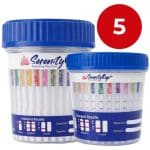
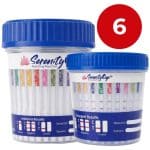
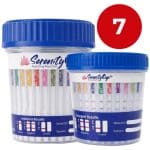
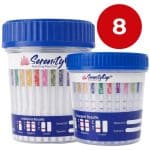
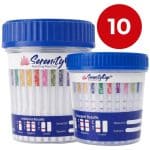
These are the most popular choice for a reason. The test strips are built into the urine test cups, meaning the administrator never has to handle the urine.
-
- Best for: High-volume hiring, probation departments, and healthcare.
- Why: They include temperature strips and adulteration checks built-in.
2. Dip Cards
A more cost-effective solution where the test panel is dipped into a separate collection urine test cups.
-
- Best for: Budget-conscious programs ($0.49 – $1.00 range) or low-risk environments.
- Why: Lowest cost per test, though slightly more manual handling is required.
3. Oral Swabs
Saliva testing is rising in popularity for post-accident testing or situations where a bathroom isn’t available.
-
- Best for: Construction sites, roadside checks, or observed testing without privacy intrusion.
- Why: Virtually impossible to cheat, though the detection window is shorter than urine.
Phase 3: The 5-Minute Workflow
Training your staff to administer these tests should not require a medical degree. The beauty of the modern rapid test cups is its simplicity. However, consistency is key to defensibility.
Here is the standard operating procedure (SOP) we recommend for a standard 12-panel urine test:
-
- The Hand-Off: Provide the sealed cup to the donor. Instruct them to fill it to the minimum fill line.
- Temperature Check (Critical): Within 4 minutes of receiving the sample back, check the temperature strip on the side of the cup. It must read between 90°F and 100°F. If it does not, the sample is likely substituted or diluted with water.
- Activation: Peel back the label to reveal the results window.
- The Read: Wait 5 minutes for the lines to set. Do not read after 10 minutes, as the results may degrade.
Phase 4: Troubleshooting & Integrity
This is where the amateur administrators get separated from the pros. According to recent data from Quest Diagnostics and SAMHSA, substituted urine samples increased by 600% in 2023. Donors are using synthetic urine or “clean” urine purchased online to bypass tests.
Your rapid test program must have countermeasures.
The Adulteration Defense
High-quality cups (like standard 12 Panel options) often come with Adulteration Strips (SVTs). These check for pH, Specific Gravity, and Creatinine.
-
- The Rule: If the drug result is negative, but the creatinine is zero or the pH is off the charts, the sample is invalid. It is likely synthetic or bleached.
The “Faint Line” Confusion
This is the most common call we receive. A donor tests negative, but the line next to “THC” or “OPI” is very faint compared to the others.
-
- The Verdict: A faint line is a negative result. There is no “ghost line” in drug testing. Even a barely visible line indicates the presence of the antibody reaction, meaning the drug concentration is below the cutoff level. Do not send a candidate home because of a faint line.
Logistics: The Zero-Lag Inventory Strategy
You cannot implement a fast hiring process if you are waiting on supplies. One of the logistical failures businesses make is treating drug tests like office stationery—ordering them only when they run out.
To maintain hiring momentum, partner with a distributor that offers same-day shipping. Because testing volume can fluctuate wildly based on seasonal hiring or new contracts, having a supplier that can ship a bulk order of 25 to 500 cups immediately ensures your hiring pipeline never stalls.
Taking Control of Your Hiring Safety
Transitioning to an in-house drug testing program is not about cutting corners—it is about gaining control. By choosing the right rapid test cups and training your team on the simple “collection-temperature-read” workflow, you create a safer workplace while significantly reducing your cost per hire.
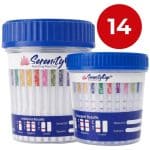
If you are ready to configure your program, evaluate your volume needs. Whether you need a simple 5-panel dip card or a comprehensive 14-panel cup with adulteration checks, the tools are available to make your process efficient, affordable, and compliant.
Frequently Asked Questions
Q: Do I need a medical license to administer these tests?
A: No. As long as you are using FDA-approved, CLIA-waived devices and following the manufacturer’s instructions, your HR or safety staff can administer them.
Q: Can I use these for DOT testing?
A: No. The Department of Transportation (DOT) currently requires lab-based urine testing for official compliance. However, many trucking companies use rapid cups for non-DOT pre-employment screening to save money before paying for the official DOT test.
Q: How accurate are these compared to the lab?
A: High-quality rapid tests boast a 99% reliability rate. They use the same immunoassay technology that labs use for their initial screen. The only difference is that labs have advanced equipment for confirmation if the initial screen is positive.