The 2026 Blueprint for Recovery Drug Testing: A Guide to Fair and Defensible Protocols

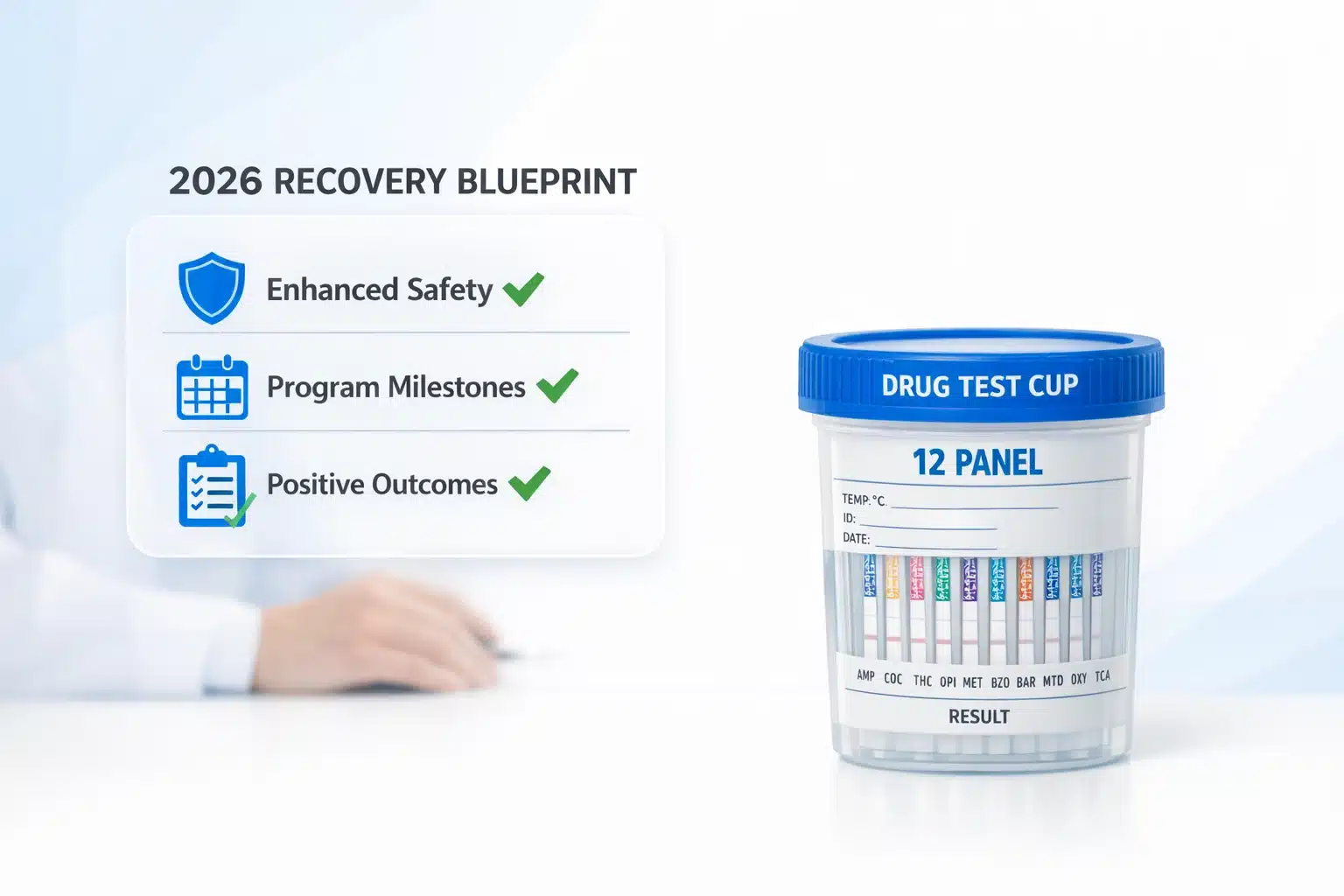
Effective drug testing in a recovery setting is a delicate balance. You need a program that promotes accountability and ensures resident safety without creating a culture of suspicion and punishment. Many operators struggle to find this balance, often defaulting to inconsistent schedules or protocols that don’t stand up to clinical or legal scrutiny. The right approach, however, can transform testing from a necessary chore into a powerful therapeutic tool.
This guide provides a blueprint for creating a drug testing protocol that is evidence-based, legally sound, and centered on the long-term recovery of your residents.
The evidence-based protocol for modern recovery
The most common question facility managers ask is about frequency: “How often should we be testing?” While a weekly schedule seems logical, research from the American Society of Addiction Medicine (ASAM) and the National Institutes of Health (NIH) points to a more effective model. The clinical gold standard is random, twice-weekly testing.
This frequency is high enough to detect substance use before it escalates into a full relapse, providing a crucial window for intervention. More importantly, the random nature removes the “beat the test” mindset that scheduled tests can encourage. It shifts the focus from avoiding detection to maintaining sobriety day-to-day. A well-structured protocol becomes a safety net for residents, not a trap. It reassures them, and their families, that the environment is truly committed to recovery.
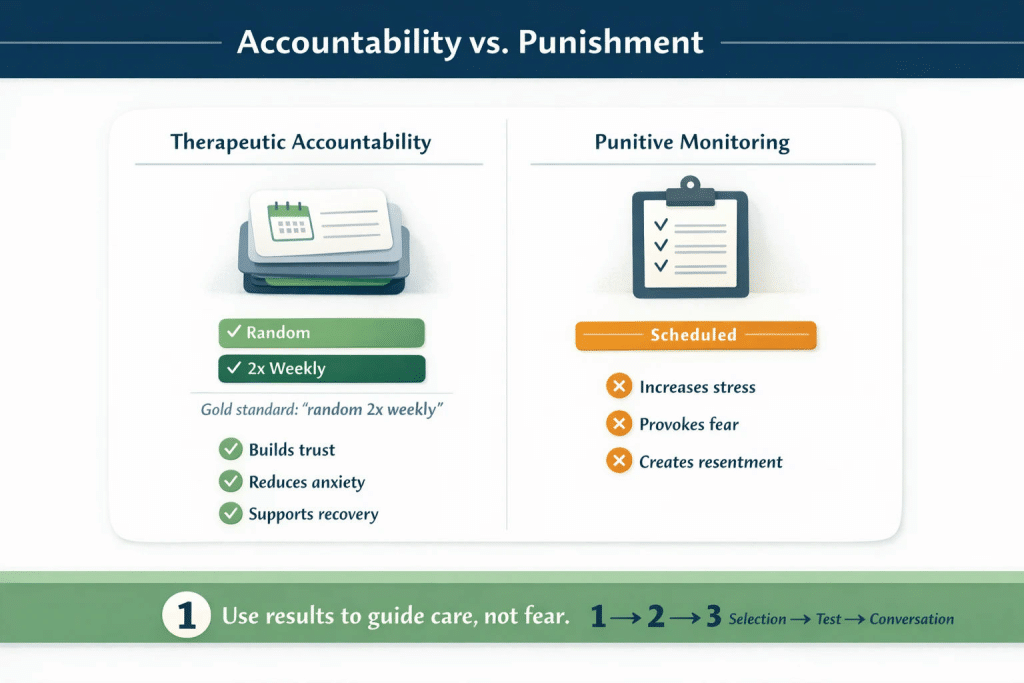
A fair protocol isn’t just about detecting use—it’s about keeping residents safe. Random twice-weekly testing supports early intervention while reducing the ‘gotcha’ feeling of scheduled checks.
Building your 2026 panel: Testing for what matters now
An effective protocol is useless if you aren’t testing for the right substances. The drug landscape is changing rapidly, and your testing panels must adapt. The rise of potent synthetics requires a more strategic approach than a generic 5-panel test can offer.
Data from 2024 and 2025 shows a significant 15-20% increase in the need for Xylazine (“Tranq”) screening in sobriety monitoring. Combined with the continued prevalence of Fentanyl, it’s clear that older testing panels leave dangerous blind spots.
Your panel blueprint for 2026 should be multi-layered:
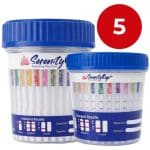
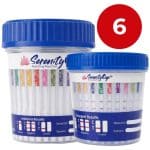
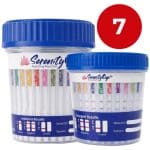
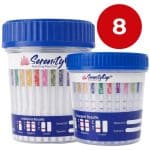
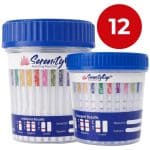
- Baseline Screening: For most intake and routine testing, a comprehensive solution like our CLIA-waived 12-panel drug test cups provides a solid foundation. These cups detect common substances of abuse and serve as a reliable first line of defense.
- Targeted Screening: Based on local trends and resident history, you must supplement your baseline with specific tests. If Fentanyl is prevalent in your community, incorporating tests for Fentanyl is no longer optional.
- Emerging Threat Screening: To address new adulterants, having access to individual Xylazine test strips allows you to add specific screening capabilities without overhauling your entire protocol. This targeted approach is both clinically responsible and cost-effective.
Choosing the right panel isn’t about testing for everything all the time. It’s about building a flexible system that reflects the real-world risks your residents face.

Operators don’t need a bigger panel—they need the right one. This blueprint shows when a base panel is enough and when fentanyl/xylazine coverage becomes clinically and operationally necessary.
Creating a legally sound testing program
Fear of legal missteps prevents many operators from implementing the protocols they know are needed. While compliance is critical, it’s often misunderstood. Building a “legal fortress” isn’t about complex jargon; it’s about fairness, consistency, and clear documentation.
Understanding your true legal obligations
A surprising 70% of sober living operators incorrectly claim HIPAA compliance in their marketing. The reality, according to legal analysis, is that most recovery homes are not HIPAA-covered entities unless they directly bill for clinical services.
Your primary legal considerations are typically:
- The Americans with Disabilities Act (ADA): Addiction is a recognized disability. This means you cannot evict a resident solely for their status as a person in recovery. However, the ADA does not protect current illegal drug use. A well-documented positive test result can be a legitimate basis for action, provided your policy is clear and applied consistently.
- The Fair Housing Act (FHA): This act protects against housing discrimination. As with the ADA, a clear, consistently enforced drug testing policy is your best defense against claims of arbitrary or discriminatory eviction.
- 42 CFR Part 2: This provides strict confidentiality protections for records related to substance use disorder treatment from a federally-assisted program. If your facility falls into this category, you must follow its specific rules for handling test results.
Key principles of a defensible policy
Your resident agreement or handbook is your most important legal document. It must clearly state:
- The purpose of the drug testing policy (safety and therapeutic support).
- The testing frequency (e.g., “random, up to twice weekly”).
- The substances tested for.
- The exact procedure for specimen collection.
- The clear, predetermined consequences of a positive test, a refusal to test, or an adulterated sample.
Consistency is everything. If your policy states a positive test results in a referral to a higher level of care, that must be the outcome for everyone. Selective enforcement is the fastest way to invite legal challenges.

Compliance isn’t about intimidating policies—it’s about consistent, respectful routines. A simple checklist and a few watch-outs can make your testing program fair, defensible, and resident-centered.
A field guide to respectful specimen collection
The moment of specimen collection is often the most stressful part of the process for both residents and staff. A poorly handled collection can damage trust and escalate a simple procedure into a confrontation. The goal is to maintain dignity while ensuring the integrity of the sample.
Best Practices for High-Stress Environments:
- Prepare the Environment: Use a designated, private, and clean restroom. Remove any substances that could be used to adulterate a sample (e.g., soap, cleaning products).
- Communicate Calmly and Clearly: Explain the steps of the process beforehand. Use a neutral, non-accusatory tone of voice.
- Ensure Privacy: While direct observation may be necessary in some high-risk cases, there are less intrusive methods. Bluing tablets in the toilet tank prevent dilution, and checking the sample temperature immediately ensures its validity.
- Consider Alternatives: For residents who find urine collection particularly difficult or triggering, oral fluid drug tests offer a less invasive alternative. They are observed by nature, difficult to tamper with, and can be administered almost anywhere.
Closing the loop: Turning results into recovery conversations
The final, most critical step is what you do with the result. A positive test should not be the end of a resident’s journey; it should be the start of a clinical conversation. This is where you transform your protocol from a punitive system to a therapeutic one.
The Therapeutic Loop Framework:
- Step 1: Private Notification: Discuss the results one-on-one in a confidential setting. Avoid shaming or accusations.
- Step 2: Seek Understanding: Open the conversation with a question like, “The test showed a positive result. Can you help me understand what’s been happening?”
- Step 3: Review the Agreement: Calmly refer back to the resident agreement they signed. This depersonalizes the consequences and reinforces that the outcome is part of a pre-agreed policy, not a personal judgment.
- Step 4: Connect to a Clinical Path: The outcome shouldn’t just be eviction. It should be a planned transition, whether that means referral to a detox facility, a meeting with their therapist, or a re-evaluation of their recovery plan.
By following this loop, you reinforce that the purpose of testing is to support recovery. You prove that a setback is an opportunity for intervention, not just a reason for removal.

A protocol only works if it preserves trust. This flow shows how to collect specimens calmly and turn results into a structured recovery conversation—reducing escalation while improving accountability.
Building an effective drug testing program is a foundational element of running a safe and successful recovery facility. By implementing an evidence-based, legally sound, and compassionate protocol, you protect your residents, support your staff, and create an environment truly dedicated to long-term sobriety.
To implement this blueprint, you need a reliable partner. At 12 Panel Now, we provide affordable, CLIA-waived, and FDA-approved testing supplies to help you build the exact protocol your facility needs. Explore our comprehensive selection of test cups, dip cards, and oral swabs to get started.