How to Test for Carfentanil in Urine


Standard fentanyl strips are not a safe stand-in for a carfentanil test. Carfentanil is a different fentanyl analog, and a strip built for fentanyl is not documented to detect it. For urine screening, programs use a dedicated product such as carfentanil drug test strips and send any positive to a lab.
This guide is for treatment centers, probation offices, clinics and employers deciding what to buy. It covers why one strip does not cover every analog, what cutoff to check, how to run a urine dip test, and when a cup or a lab is the better tool.
What carfentanil is and why programs screen for it
Carfentanil is a synthetic opioid in the fentanyl family. The DEA says it was developed to tranquilize large animals such as elephants and is not approved for human use. The DEA and CDC describe it as roughly 100 times more potent than fentanyl, though one pharmacology review puts the figure nearer 20 to 30 times based on animal studies. Either way, it is far more potent than fentanyl, so even trace exposure matters.
For a program that already screens for opioids and fentanyl, the concern is simple. A person can be exposed to a fentanyl analog without a fentanyl test showing it. That gap is why some buyers add a carfentanil-specific screen. For background on fentanyl itself, see our fentanyl drug test knowledge base page.
Will a fentanyl test strip detect carfentanil?
Do not assume so. Test strips use antibodies built to recognize a target molecule, and analogs can look different enough that one antibody does not respond to another. Our own fentanyl test strips guide explains that strips respond differently to analogs with different chemical changes.
Here is what we can state from the product pages checked on October 14, 2026:
- The fentanyl strip page lists a 20 ng/mL fentanyl cutoff and urine sample. It makes no carfentanil cross-reactivity claim.
- The carfentanil strip page says testing for carfentanil requires a kit that can identify fentanyl analogs, and names the carfentanil strip for that job.
If a vendor’s insert does not list carfentanil as a tested analog, treat the strip as not validated for it. Ask for the insert before you buy.
Carfentanil strip details to check before you order
Read these items on the product page and insert:
| What to check | What our product page shows (Oct 14, 2026) |
| Sample type | Urine |
| Target | Carfentanil (dip strip) |
| Cutoff | [OWNER INPUT: page lists both 500 ng/mL in the header and 200 ng/mL in the description; confirm the correct value before publishing] |
| Result time | Read at 5 minutes; do not read after 10 minutes |
| Pack | Description states 25 dip tests per pack; purchase starts at 10 strips |
| Regulatory status | Labeled Forensic Use Only; no FDA or CLIA claim shown |
The cutoff is the concentration at which the strip turns positive. A lower cutoff catches smaller amounts. Two strips with different cutoffs can give different answers on the same sample, so always compare cutoffs, not just names.
The forensic-use label matters for buyers. The page describes the strip as intended for drugs-of-abuse testing for law enforcement purposes. Treatment centers, clinics and employers should confirm with the owner and their own compliance advisor that this use fits their program. [OWNER INPUT: confirm the approved customer types for this product.]
Price tiers
The live product page shows per-strip pricing that drops with volume:
| Quantity | Price per strip |
| 10 | $0.99 |
| 25 | $0.89 |
| 50 | $0.85 |
| 100 | $0.79 |
| 200+ | $0.75 |
Source: Carfentanil Drug Test Strips product page, accessed October 14, 2026. Prices can change, so confirm at checkout. For comparison, standard fentanyl test strips are listed from $0.79 each at 25 strips, down to lower prices at large volumes.
How to run a carfentanil urine strip test
Follow the insert in your box first. The steps below match the general dip-strip method our fentanyl strips use, so confirm them against the carfentanil strip insert.
- Collect a fresh urine sample in a clean container. Observed collection is common in supervised programs.
- Open the strip pouch only when ready to test and use it within an hour.
- Dip the strip in the urine for about 10 to 15 seconds, keeping the liquid below the MAX line.
- Lay the strip flat and wait.
- Read the result at 5 minutes. Do not interpret anything after 10 minutes.
On a typical competitive strip, two lines (control and test) mean negative, only the control line means positive, and no control line means invalid. Repeat invalid tests with a new strip. Confirm the line pattern on the carfentanil insert. Our how to use fentanyl test strips guide walks through the same line-reading logic with photos.
Note that a faint test line still counts as a negative on this style of strip. Do not call a result positive unless the test region is clearly empty.
Strip, multi-panel cup or lab test: which fits your program
| Option | Best for | Limits |
| Carfentanil strip | Targeted screening when carfentanil is a specific concern | One drug per strip; screen only |
| Fentanyl strip or cup | Routine fentanyl monitoring | Not documented to detect carfentanil |
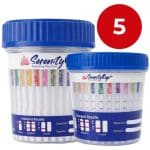
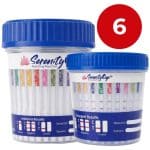
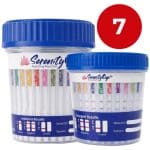
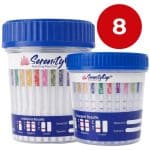
| Multi-panel cup with fentanyl | Broad screening in one test | Check the insert for which analogs are listed |
| Lab test (GC-MS or LC-MS/MS) | Confirming any positive; legal or employment decisions | Slower and costs more |
Many programs run a cup for everyday screening and keep carfentanil strips for cases with a specific concern. Browse the fentanyl test category to compare options, or read how CLIA-waived fentanyl tests differ from forensic-use strips. For employer settings, see workplace fentanyl drug testing.
Need to add a carfentanil screen to your program? Compare cutoff, pack size and volume pricing on the carfentanil drug test strips product page.
Why a positive result needs lab confirmation
A rapid strip is a preliminary screen. It tells you a sample is presumptively positive, not what drug or how much. Cross-reactions, low-level detections and handling errors can all produce a result that a lab does not support.
Send any positive sample to a laboratory that uses GC-MS or LC-MS/MS confirmation before you act on it. Until then, record it as a preliminary positive. This protects the person tested and your program.
Buyer checklist
- Confirm the cutoff, in ng/mL, on both the product page and the insert.
- Confirm the sample type is urine.
- Ask whether the product is cleared for your use or labeled forensic use only.
- Match pack size to your testing volume, since price per strip falls at 25, 50, 100 and 200 units.
- Set a written rule that every positive goes to lab confirmation.
- Store strips as the insert directs and check the expiration date.
Ready to order? See current pricing and pack options on the carfentanil strip page, or compare our best fentanyl test strips guide first.
FAQ
Can regular fentanyl test strips detect carfentanil?
Do not assume they can. Strips respond only to the molecules their antibodies recognize, and our fentanyl strip page makes no carfentanil claim. Use a product whose insert lists carfentanil.
What is the cutoff for carfentanil drug test strips?
The product page currently shows two values, 500 ng/mL and 200 ng/mL. [OWNER INPUT: confirm the correct cutoff.] Always check the insert in your box.
How long do carfentanil strips take to read?
Read the result at 5 minutes and ignore it after 10 minutes, per the product page instructions.
How much do carfentanil test strips cost?
Per-strip pricing on the live page runs from $0.99 for 10 strips down to $0.75 at 200 or more, as of October 14, 2026.
Is a positive strip result final?
No. A strip is a screen. Confirm positives with GC-MS or LC-MS/MS at a laboratory before acting.
Should I use a strip or a multi-panel cup?
Use a strip for a targeted carfentanil check and a cup for broad routine screening. See our drug testing for fentanyl page for program options.