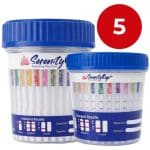
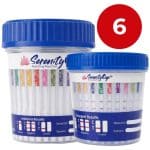
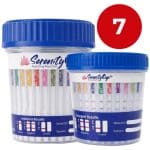
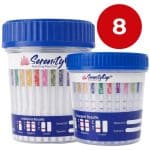
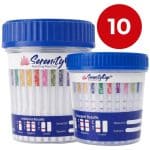
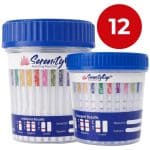
Optimal Multi-Panel Drug Tests: Choose 5, 12, 18 or 28 Panel Counts

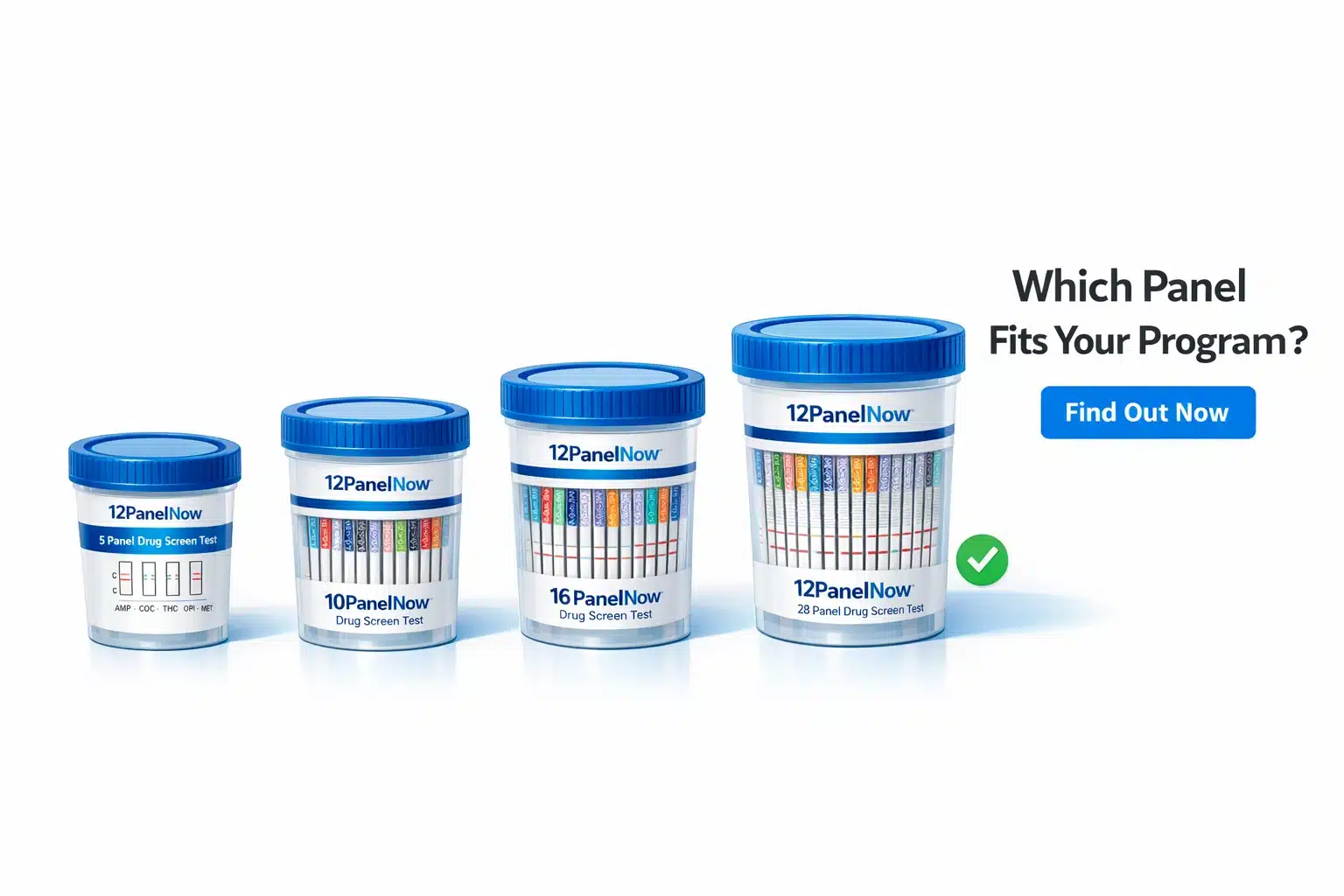
If you are managing a safety program or a treatment facility, you already know that the drug landscape changes much faster than federal guidelines do. A decade ago, a standard 5-panel test was enough to cover the vast majority of substance abuse risks. Today, relying on that same standard might leave your organization exposed to massive liability.
The challenge isn’t just finding a reliable supplier; it’s deciding exactly what you need to test for. Do you stick to the budget-friendly minimums, or do you invest in comprehensive coverage to catch emerging threats like Fentanyl and Xylazine?
We see this evaluation process every day. The decision essentially boils down to one question: Are you testing for compliance, or are you testing for risk mitigation?
Level 1: The Baseline (5-Panel Cups)
Best For: Federal Compliance & DOT
The 5-Panel Drug Test is the industry veteran. It was established as the standard for federal employees and the Department of Transportation (DOT). If your organization is federally regulated, this is often your starting point.
These cups screen for the “SAMHSA 5”:
- Amphetamines
- Cocaine
- Marijuana (THC)
- Opiates (Codeine/Morphine)
- Phencyclidine (PCP)
The Pros: It is cost-effective and meets the bare minimum legal requirements for many government contracts.
The Cons: It has significant blind spots. A standard 5-panel test will often miss semi-synthetic opioids (like Hydrocodone or Oxycodone) and completely misses modern synthetic drugs. If an employee is abusing prescription painkillers or designer drugs, a 5-panel test will likely return a “clean” result.
Level 2: The Corporate Standard (10 & 12-Panel Cups)
Best For: General Workplace & Staffing Agencies
In the private sector, the 10-Panel and 12-Panel Cups have replaced the 5-panel as the standard of care. This shift occurred largely in response to the prescription opioid crisis. Employers realized that testing for basic opiates wasn’t enough when the real risk came from prescription pill abuse.
A 12-Panel Drug Test Cup typically adds detection for:
- Benzodiazepines (Xanax, Valium) – notorious for causing drowsiness and workplace accidents.
- Barbiturates
- Methadone
- Propoxyphene
- Oxycodone (crucial addition)
- Ecstasy (MDMA)
- Buprenorphine (Suboxone)
For most white-collar environments, staffing agencies, and general labor, this level provides a strong balance between budget and coverage. It catches the most common substances that impair judgment and motor skills.
Level 3: The Comprehensive Defense (18 & 28-Panel Cups)
Best For: Healthcare, Rehab, & Zero-Tolerance Safety Roles
This is where the conversation shifts from “standard HR policy” to “aggressive risk management.”
The modern illicit drug market is flooded with substances that didn’t exist twenty years ago. We are seeing a rise in “blind spot” liabilities—incidents involving substances that standard tests simply don’t look for.
If you are running a sober living facility, a pain clinic, or managing heavy construction crews, a 12-panel test may give you a false sense of security.
Why Upgrade to 18 or 28 Panels?
The 28-Panel Ultra Cup is designed to close the gaps in detection. It screens for emerging threats that are becoming prevalent in street supplies:
- Fentanyl: Now the leading cause of overdose deaths, often mixed into other drugs without the user’s knowledge.
- K2/Spice (Synthetic Marijuana): Often used because it evades standard THC tests.
- Kratom & Tianeptine: “Gas station drugs” that mimic opioid effects but are rarely tested for.
- EtG (Alcohol): Detects alcohol consumption up to 80 hours prior, unlike a breathalyzer which only detects current impairment.
- Xylazine (Tranq): A veterinary sedative increasingly found in the opioid supply, causing severe health risks.
In high-stakes environments, the cost of a “missed” positive—whether it’s a workplace injury lawsuit or a relapse in a recovery center—far outweighs the incremental cost of a higher-panel cup.
Industry Blueprint: Which Configuration Fits You?
Choosing a panel count isn’t just about the number of strips; it’s about the profile of the people you are testing. A probation officer has very different needs than a warehouse manager.
1. Rehabilitation & Treatment Centers
Recommended: 14-Panel to 28-Panel Cups
Why: Patients in recovery are often aware of which substances standard tests detect and may switch to “untestable” alternatives like Kratom or K2. Comprehensive screening is vital for accountability and successful treatment outcomes.
2. Construction & Heavy Industry
Recommended: 12-Panel to 18-Panel Cups (Must include Fentanyl)
Why: The risk here is physical safety. The rise of Fentanyl in the workforce is a major liability. Ensuring your panels cover synthetic opioids protects your workers and your company from catastrophic accidents.
3. Corporate & Administrative
Recommended: 10-Panel or 12-Panel Cups
Why: Focuses on productivity and insurance compliance. This covers the most common recreational drugs and prescription abuses without the higher cost of specialized panels.
Technical Reliability & The “Cheating” Epidemic
It is important to address the elephant in the room: attempting to cheat the test. According to recent data from Quest Diagnostics, the rate of substituted or invalid specimens has surged by nearly 600%.
This is why panel count alone isn’t enough; the integrity of the cup matters.
At 12 Panel Now, our multi-panel cups (whether 5 or 28) come equipped with built-in Adulteration Strips (checking for pH, Specific Gravity, Creatinine, etc.) and temperature strips. This ensures that the sample provided is valid and human. Furthermore, our cups are CLIA-Waived, providing high accuracy that stands up to scrutiny.
The Economic Argument: Point-of-Care vs. Lab
Some organizations hesitate to move to higher panel counts due to perceived costs. However, when you compare a 28-Panel Point-of-Care Test (POCT) against sending a sample to a lab for a comprehensive toxicology screen, the math changes drastically.
A comprehensive lab panel can cost significantly more and take 24-48 hours for results. A multi-panel cup provides immediate answers for a fraction of that price. This allows you to screen broadly on-site and only send positive samples to the lab for confirmation, optimizing your budget without sacrificing safety.
FAQ: Common Questions During Evaluation
Q: Can I customize my own panel configuration?
A: Absolutely. While we stock standard configurations for immediate same-day shipping, we specialize in custom configurations. With over 54 different drugs to choose from, we can build a test that matches your specific regional risks.
Q: Are more panels always better?
A: Not necessarily “better,” but “safer.” If you are in a low-risk office environment, a 28-panel test might be overkill. However, if liability is a concern, the cost difference is often negligible compared to the risk of missing a dangerous substance.
Q: How accurate are the higher panel cups?
A: Our 28-Panel cups maintain the same high accuracy rate as our simpler 5-panel cups. Each strip functions independently, ensuring that adding more panels does not degrade the performance of the others.
Making Your Decision
The “right” cup is the one that aligns with your organization’s risk tolerance.
- Need federal compliance? Stick with the 5-Panel.
- Managing a standard workforce? The 12-Panel is your safe harbor.
- Protecting vulnerable patients or high-risk machinery? The 18 to 28-Panel cups are your best insurance policy against the unknown.
At 12 Panel Now, we are committed to helping you navigate these choices. As a family-owned business, we understand that every order represents a commitment to safety. Whether you need a single box or a bulk pallet, we offer the most competitive pricing in the market—with cups starting as low as $1.69.
Ready to secure your program?
Explore our full inventory of Multi-Panel Drug Test Cups to find the exact configuration that meets your safety standards.