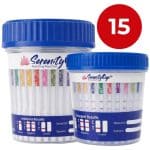
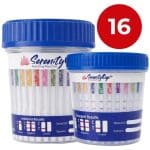
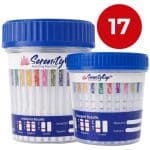
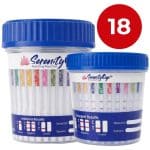
CLIA Waived & FDA Approved Drug Tests for Compliance and Reliability

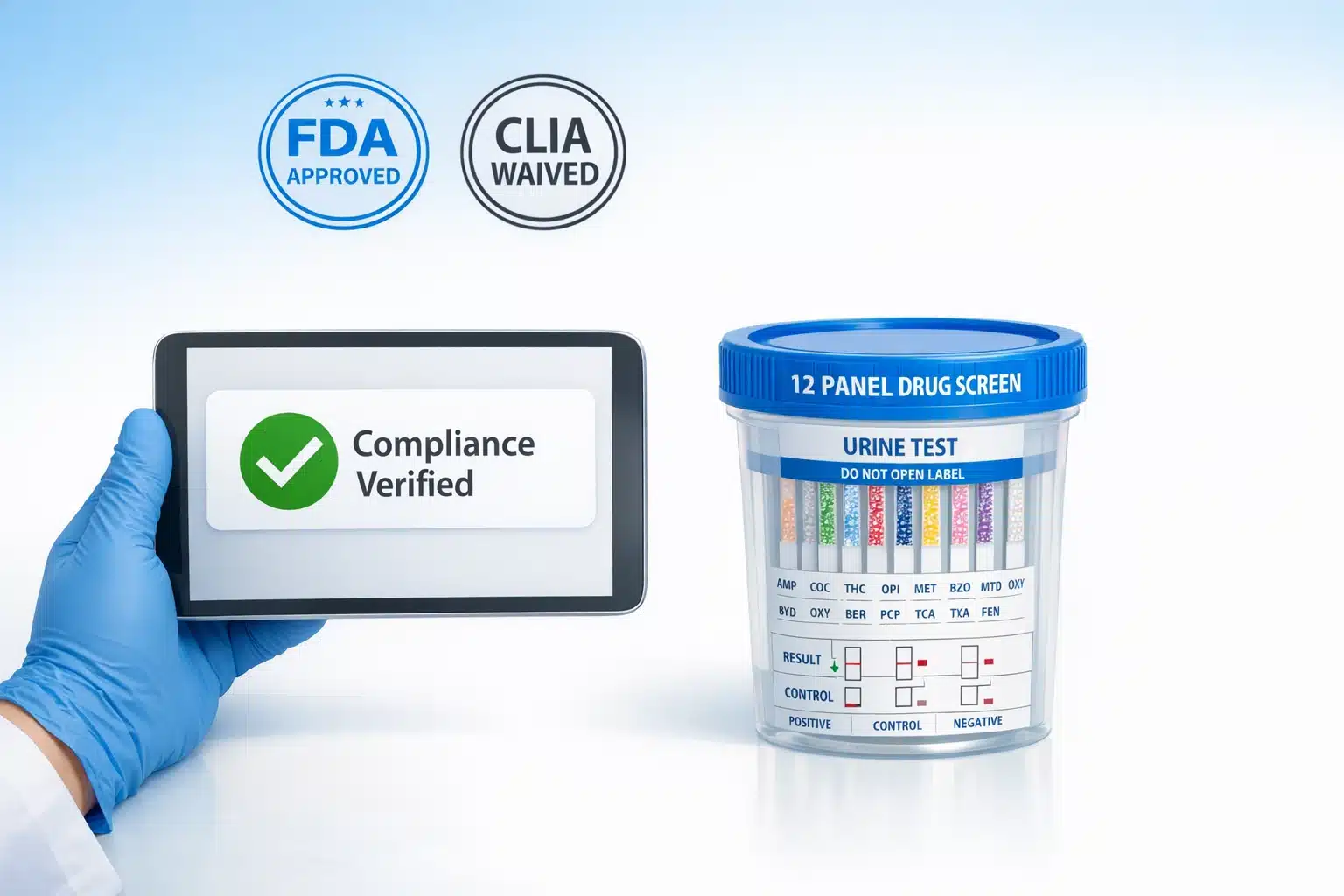
If you are a facility director, HR lead, or lab manager, you know that procuring drug tests isn’t just about finding the lowest price per unit. It’s about risk management. When you sign off on a testing program, you aren’t just buying plastic cups; you are buying the ability to defend your decisions in the face of an audit, a lawsuit, or a disputed result.
The market is flooded with options, but for professional environments—from rehab centers and pain clinics to staffing agencies and probation departments—the conversation inevitably narrows down to two critical acronyms: CLIA Waived and FDA Approved.
Understanding the interplay between these two designations is the difference between running a “check-the-box” operation and establishing a legally defensible, total compliance solution. Here is how to navigate the landscape of compliance, verify your tools, and ensure your facility is audit-ready.
The Compliance Matrix: Moving Beyond Definitions
Most suppliers will give you the dictionary definitions of these terms. But in an operational setting, you need to know how they impact your workflow and your liability.
FDA Approval (510k Clearance) addresses the science of the device. It answers the question: “Does this test actually detect what it claims to detect, safely and effectively?” For a device to be FDA approved, the manufacturer must prove to the federal government that the test produces valid results comparable to an established reference method.
CLIA Waived status addresses the complexity of the testing process. The Clinical Laboratory Improvement Amendments (CLIA) categorize tests based on the difficulty of use. A “Waived” test is so simple and accurate that the likelihood of erroneous results is negligible. This is the “Point-of-Care” gold standard.
The Operational Reality
For your facility, this combination offers a specific strategic advantage. FDA approval ensures that the data you gather is scientifically sound (forensic defensibility), while the CLIA Waiver allows your staff to administer the tests without needing to be degreed laboratory scientists (administrative ease).
The “Untrained Operator” Standard
One of the most overlooked aspects of FDA approval for waived tests is the “untrained operator” requirement. To achieve this status, manufacturers must prove that the test remains 99% accurate even when used by someone who isn’t a lab technician—reproducing the chaotic reality of a physician’s office or a busy detox intake center.
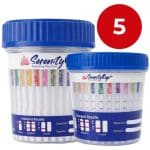
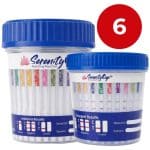
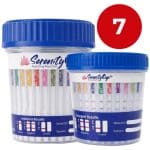
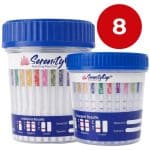
When you choose 12 Panel Now’s FDA-approved and CLIA-waived cups, you are effectively buying insurance against human error. You are deploying a tool designed specifically to withstand the rigors of a high-volume, real-world environment.
The “USG” Factor: Why Standard Panels Are No Longer Enough
The most significant threat to the reliability of your drug testing program isn’t the sensitivity of the drug strip itself—it’s adulteration.
High-intent users searching for “USG drug testing” are often dealing with a specific anxiety: Is the donor trying to cheat? A negative result on a diluted sample is a false negative, which can be disastrous for a treatment center or a probation officer.
This is where the distinction between a “cheap cup” and a “compliance tool” becomes sharp. A comprehensive testing solution must include validity checks, specifically for Urine Specific Gravity (USG), pH, and Creatinine.
Built-in Validity vs. Liability
If you are using a standard panel without validity strips, you are vulnerable to “water-loading” or chemical tampering.
- Specific Gravity (USG): Measures the concentration of the urine. Low USG indicates dilution.
- pH: Detects the presence of acidic or alkaline adulterants (like bleach or vinegar).
- Creatinine: A waste product found in normal urine; absence suggests the sample is not human urine.
By integrating these validity checks directly into cups ranging from 5 to 28 panels, you ensure that a “Negative” result is truly negative, not just a successful attempt at deception.
Verification: How to Prove It to an Auditor
In our industry, trust is good, but documentation is better. A common pain point for facility managers is the “Verification” intent—how do I prove to a CMS surveyor or an auditor that the kits I bought on the internet are actually compliant?
Many generic suppliers list “FDA Approved” on their website, but the paper trail ends there. To maintain a legally defensible program, you should be able to verify your supplier’s claims within seconds.
The Verification Workflow
- Locate the 510(k) Number: Legitimate manufacturers will provide this upon request or list it on the package insert.
- Access the FDA Database: Visit the FDA’s De Novo or 510(k) database.
- Match the Credentials: Ensure the product name and manufacturer match the government record.
At 12 Panel Now, we encourage this level of scrutiny. We operate with total transparency because we know that when you verify our credentials, you are validating your own decision-making process.
The Business of Testing: Professional Coding & Billing
One of the most confusing aspects of facility management is billing. If you search for “drug testing lab codes,” you might inadvertently stumble into gaming forums discussing Resident Evil 2 puzzles (often abbreviated as “RE2 lab codes”).
Let’s clear the noise. For professional facilities, accuracy in billing is as vital as accuracy in testing. If you are a medical facility billing insurance, you are likely operating under a CLIA Certificate of Waiver. This means you must use specific CPT (Current Procedural Terminology) codes to describe the presumptive testing you are doing on-site.
The “Cheat Sheet” for Facility Billing
While we are not billing consultants, we support our clients by speaking the language of the industry. The most relevant codes for point-of-care cups generally fall under:
- CPT 80305: Drug test(s), presumptive, any number of drug classes, any number of devices or procedures; capable of being read by direct optical observation only (e.g., dipsticks, cups, cards).
- Modifier QW: This is crucial. For many payers, you must append the “QW” modifier to the CPT code to indicate that the test was performed under a CLIA Waiver.
Failure to use the QW modifier when required is a common administrative error that leads to claim denials.
Navigating the 2024 Legal Landscape
The legal environment for drug testing is shifting rapidly. With new regulations like California’s AB 2188 and similar laws in Washington state, the focus is moving from detecting past use to detecting impairment.
These laws generally prohibit discrimination based on the presence of non-psychoactive cannabis metabolites. However, this does not eliminate the need for testing—it refines it. Facilities must now be more precise than ever.
While standard tests typically use a 50ng/mL cutoff for THC, staying compliant in 2024 means understanding exactly what your panel is screening for. 12 Panel Now stays ahead of these trends, offering highly configurable kits that allow you to test for the substances that matter to your specific safety protocol (like Fentanyl, Tramadol, or Xylazine) while ensuring you have the specificity required for modern compliance.
Frequently Asked Questions
Can I use a non-CLIA waived test for workplace screening?
If you are a federally regulated workplace (DOT) or a medical facility, you generally must use FDA-approved, CLIA-waived devices for on-site screening. Using non-compliant devices can invalidate your results in a legal challenge.
What is the difference between “Forensic Use Only” and “CLIA Waived”?
“Forensic Use Only” tests are not FDA cleared for medical use and are typically intended for law enforcement or criminal justice settings where medical diagnosis is not the goal. For healthcare, treatment, or clinical settings, CLIA Waived status is required.
How often do I need to renew my CLIA Certificate of Waiver?
Certificates of Waiver are typically renewed every two years. However, your internal compliance—checking expiration dates on cups and temperature strips—must be continuous.
—
Ready to secure your compliance?
Your testing program is the first line of defense for your facility’s safety and reputation. Don’t leave it to chance. Equip your team with CLIA Waived, FDA Approved solutions that are trusted by professionals nationwide. Explore our inventory of fully compliant drug test cups today.