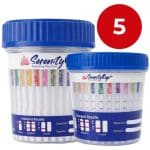
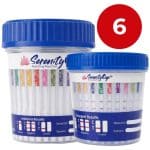
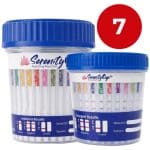
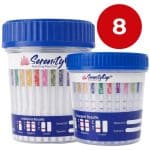
14 Panel Drug Test Cups
A 14 panel drug test cup collects a urine sample and screens it for fourteen drugs at once,
with results in about 5 minutes. Most of our cups add EtG (alcohol) and fentanyl to the core opioid,
stimulant and sedative strips. Others swap in tramadol, K2, gabapentin, TCA, propoxyphene or an hCG
pregnancy strip. For the background on panels, see what a 14 panel drug test checks for. We make
the Serenity Cup® in 12 versions of the 14 panel: three CLIA waived and nine labeled Forensic Use Only,
in 120 mL or a 90 mL economy size, from $1.39 per cup in bulk.

Showing all 12 results

14 Panel Drug Test Cup detects Fentanyl, CLIA Waived with EDDP & TCA – Clearance! As low as $1.79
AMP, BAR, BUP, BZO, COC, FEN, MDMA, MET, MTD, OPI/MOR, OXY, TCA, THC, EDDP, FEN 1ng/mlCLIA WAIVEDAs low As$1.79 $1.79 - $2.99
14 Panel Drug Test Detects GAB, K2, ETG, FEN, Blow Out price of $1.89
AMP, BUP, BZO, COC, EtG, FEN, GAB, K2, MET, MTD, OPI/MOR, OXY, PCP, THC, GABAForensic UseAs low As$1.89 $1.89 - $3.09
14 Panel Drug Test Cup detects PCP, (ETG) Alcohol & Fentanyl-120ml Large Cup, As low as $1.89
AMP, BAR, BUP, BZO, COC, EtG, FEN, MDMA, MET, MTD, OPI/MOR, OXY, PCP, THCForensic UseAs low As$1.89 $1.89 - $3.09
14 Panel Drug Test Cup 90ml Detecting Alcohol (ETG) & Fentanyl as low as $1.79 Per cup
AMP, BAR, BUP, BZO, COC, EtG, FEN, MDMA, MET, MTD, OPI/MOR, OXY, PCP, THCForensic UseAs low As$1.79 $1.79 - $2.99
14 Panel Urine Drug test detects HCG, ETG and FEN, as Low as $1.89
AMP, BAR, BUP, BZO, COC, EtG, FEN, hCG, MDMA, MET, MTD, OPI/MOR, OXY, THCForensic UseAs low As$1.89 $1.89 - $3.09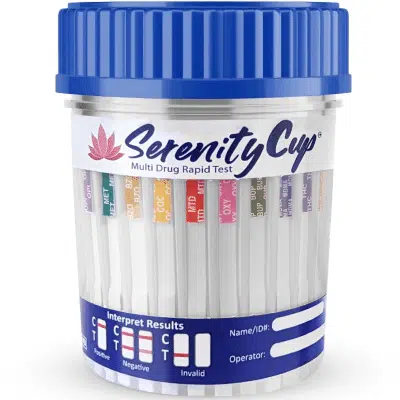
14 Panel Drug Test detects Tramadol, ETG and Fentanyl, As low as $1.89
AMP, BAR, BUP, BZO, COC, EtG, FEN, MDMA, MET, MTD, OPI/MOR, OXY, THC, TRAForensic UseAs low As$1.89 $1.89 - $3.09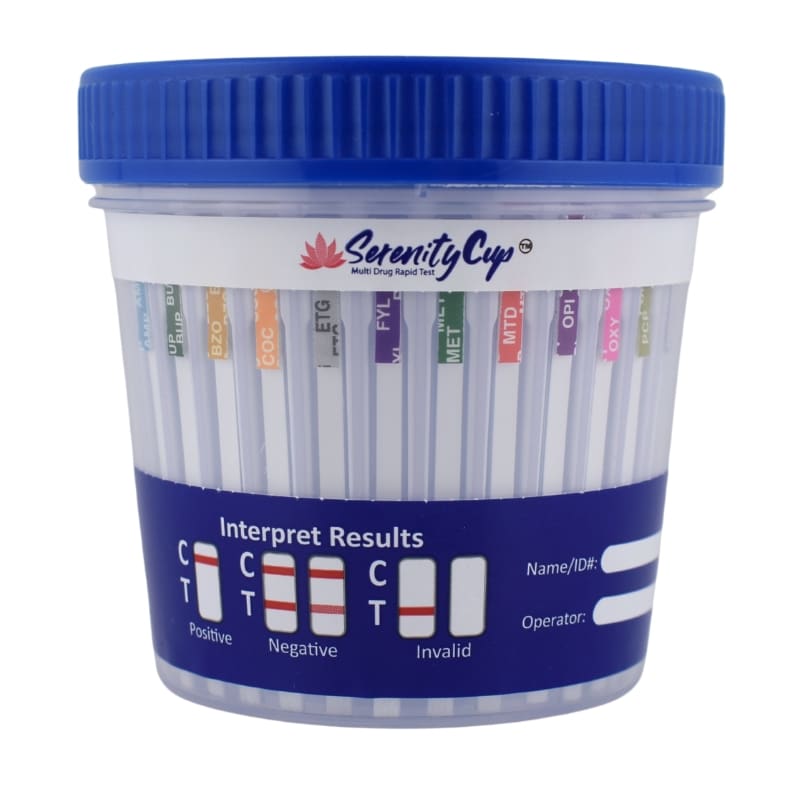
14 Panel Urine Drug Test Cup 90ML CLIA Waived & FDA Approved Detects PPX, OPI/2000, BUP, OXY, BZO, PCP, TCA & Adulterants, As low as $1.69
ADLTX, AMP, BAR, BUP, BZO, COC, MDMA, MET, MTD, OPI/MOR, OXY, PCP, PPX, TCA, THCCLIA WAIVEDAs low As$1.69 $1.69 - $2.89
14 Panel Urine Test detects Adulterants, TRA, ETG, K2 & FEN, As low as $1.69
ADLTX, AMP, BUP, BZO, COC, EtG, FEN, K2, MDMA, MET, MTD, OPI/MOR, OXY, THC, TRAForensic UseAs low As$1.69 $1.69 - $2.89
14 Panel Urine Test Cup, 90ML detects K2, PPX, OPI/300 & TRA- As low as $1.49
AMP, BAR, BUP, BZO, COC, K2, MDMA, MET, MTD, OPI/MOR, OXY, PCP, PPX, TRAForensic UseAs low As$1.49 $1.49 - $2.69
14 Panel Urine Drug Test Cup 90ML Detects ETG, FEN, TRA, K2 & Adulterants, As low as $1.49
ADLTX, AMP, BUP, BZO, COC, EtG, FEN, K2, MDMA, MET, MTD, OPI/MOR, OXY, THC, TRAForensic UseAs low As$1.49 $1.49 - $2.79
14 Panel test Cup, Multi Drug detects ETG, FEN, MOP & Adulterants, As low as $1.69
ADLTX, AMP, BAR, BUP, BZO, COC, EtG, FEN, MDMA, MET, MTD, OPI/MOR, OXY, PCP, THCForensic UseAs low As$1.69 $1.69 - $2.89
14 Panel Drug Test Cup with Tramadol & Fentanyl, CLIA Waived – As low as $1.79
AMP, BAR, BUP, BZO, COC, FEN, MDMA, MET, MTD, OPI/MOR, OXY, THC, EDDP, FEN 1ng/ml, TRACLIA WAIVEDAs low As$1.79 $1.79 - $2.99Features of Our 14 Panel Drug Test Cups
Our 14 panel cups share these seven features:
-
- Fourteen results from one sample: Collect and test in one step, with no dipping.
- Results in about 5 minutes: Read within the time window in the package insert.
- Temperature strip: Fresh urine reads 90–100°F within 4 minutes of collection.
- Double click-top lid: Leak-resistant for storage or for sending a non-negative sample to a lab.
- Two sizes: 120 mL standard, or 90 mL economy for high-volume programs.
- CLIA waived or Forensic Use Only: Three cups are CLIA waived; nine are Forensic Use Only. The status is on each product label.
Prefer a dip format? See our 14 panel dip cards.
What Does a 14 Panel Cup Test For?
A 14 panel cup tests for 14 drugs, but there is no single standard list. Every one of our cups tests eight drugs: amphetamines, buprenorphine, benzodiazepines, cocaine, methamphetamine, methadone, opiates and oxycodone. The other six strips depend on the version you choose.
Strips used in our 14 panel cups
This table shows each strip, its cutoff and how many of our 12 cups carry it.
| Strip | Substance | Cutoff (ng/mL) | What it picks up | Cups (of 12) |
|---|---|---|---|---|

|
Amphetamines | 1000 (500 on the 2 CLIA fentanyl cups) | Adderall, Vyvanse | 12 |

|
Buprenorphine | 10 | Suboxone, Subutex | 12 |

|
Benzodiazepines | 300 | Xanax, Valium, Ativan | 12 |

|
Cocaine | 300 (150 on the 2 CLIA fentanyl cups) | Powder cocaine, crack | 12 |

|
Methamphetamine | 1000 (500 on the 2 CLIA fentanyl cups) | Crystal meth | 12 |

|
Methadone | 300 | Methadone treatment | 12 |

|
Opiates (morphine) | 300 (2000 on the PPX/TCA cup) | Heroin, morphine, codeine | 12 |

|
Oxycodone | 100 | OxyContin, Percocet | 12 |

|
Marijuana | 50 | Cannabis, edibles, vapes | 11 |

|
Ecstasy | 500 | Ecstasy, Molly | 11 |

|
Fentanyl | 20 (1 on the 2 CLIA fentanyl cups) | Fentanyl | 10 |

|
Barbiturates | 300 | Butalbital, phenobarbital | 9 |

|
Ethyl glucuronide | 300 | Recent drinking | 8 |

|
Phencyclidine | 25 | Angel dust | 6 |

|
Tramadol | 100 | Ultram | 5 |

|
Synthetic cannabinoids | 50 | Spice, K2 | 4 |

|
Tricyclic antidepressants | 1000 | Amitriptyline, nortriptyline | 2 |

|
Propoxyphene | 300 | Darvon (withdrawn) | 2 |

|
Methadone metabolite | 300 | Confirms methadone is processed | 1 |

|
Gabapentin | 1000 | Neurontin | 1 |

|
Pregnancy hormone | — | Pregnancy screen | 1 |

|
Adulterant checks | — | Diluted or tampered samples | 4 |
Choose your 14 panel version
Each version below keeps the eight core strips and adds six more. The table compares what each one adds, its size, its status and its lowest bulk price.
| Version | What it adds to the 8 core strips | Size | Status | From |
|---|---|---|---|---|
| EtG, fentanyl and PCP cup | THC, MDMA, BAR, PCP, EtG, FEN | 120 mL | Forensic Use Only | $1.89 |
| Economy EtG and fentanyl cup | Same as above | 90 mL | Forensic Use Only | $1.79 |
| EtG, fentanyl and PCP cup with adulterant checks | Same + pH, SG, creatinine | 120 mL | Forensic Use Only | $1.69 |
| EtG, fentanyl and tramadol cup | THC, MDMA, BAR, TRA, EtG, FEN | 120 mL | Forensic Use Only | $1.89 |
| EtG, fentanyl and hCG cup | THC, MDMA, BAR, EtG, FEN + pregnancy strip | 120 mL | Forensic Use Only | $1.89 |
| Tramadol, K2, EtG and fentanyl cup with adulterants | THC, MDMA, TRA, K2, EtG, FEN + pH, SG, CR; no BAR | 120 mL | Forensic Use Only | $1.69 |
| Economy tramadol, K2, EtG and fentanyl cup | Same as above | 90 mL | Forensic Use Only | $1.79 |
| Gabapentin, K2, EtG and fentanyl cup | THC, PCP, GAB, K2, EtG, FEN; no BAR or MDMA | 120 mL | Forensic Use Only | $1.89 |
| No-THC economy cup with K2, propoxyphene and tramadol | MDMA, BAR, PCP, PPX, K2, TRA; no THC | 90 mL | Forensic Use Only | $1.39 |
| CLIA-waived fentanyl cup with EDDP and TCA | THC, MDMA, BAR, TCA, EDDP, FEN 1 ng/mL | 120 mL | CLIA waived | $1.59 |
| CLIA-waived tramadol and fentanyl cup | THC, MDMA, BAR, TRA, FEN 1 ng/mL + PCP or EDDP | 120 mL | CLIA waived | $1.89 |
| CLIA-waived classic cup with PPX, TCA and adulterants | THC, MDMA, BAR, PCP, PPX, TCA + pH, SG, CR; OPI at 2000 | 90 mL | CLIA waived | $1.79 |
Prices are the lowest bulk tier in the live grid on 2026-10-09; single-cup prices run $2.79–$3.19. Treat any non-negative result as preliminary and confirm it by GC-MS or LC-MS/MS before acting.
How to Use a 14 Panel Urine Drug Test Cup
Step 1 – Collect
Open the sealed pouch just before use. The donor fills the cup to the fill line. Close the lid until it clicks.
2 – Wait
Within 4 minutes, check that the temperature strip reads between 90 and 100°F. Set the cup on a flat surface.
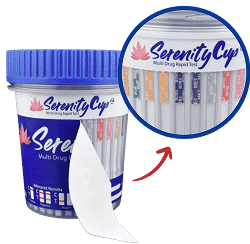
3 – Read
Peel off the label and read at 5 minutes. Do not read after the time limit in the package insert.

Preliminary positive
Only the C line appears. The drug is at or above the cutoff. Confirm by GC-MS or LC-MS/MS before acting.

Negative
Lines appear at C and T. A faint T line still counts as negative.

Invalid
No C line. Retest with a new cup. If it happens again, call us at 561-897-9238 with the lot number.
Why Choose a 14 Panel Cup Over a 12 Panel?
A 14 panel cup adds two strips to the twelve in a standard 12 panel drug test, and most buyers use them for alcohol (EtG) and fentanyl. Lab 14 panels are built differently: recovered.org describes them as the 10-panel classes plus more prescription opioids and ecstasy. Our instant cups use those slots for drugs that programs ask for today. Need fewer strips? See our 12 panel cups or 13 panel cups. Need more? Our 15 panel cups and 16 panel cups add kratom, ketamine or 6-AM. The 12 vs 13 vs 16 panel comparison explains the trade-offs.
-
Opioids, up to seven strips:
All 12 cups test opiates (OPI), oxycodone (OXY), methadone (MTD) and buprenorphine (BUP). Fentanyl (FEN) is on 10 cups, tramadol (TRA) on 5 and propoxyphene (PPX) on 2. Opiate strips do not reliably catch oxycodone, fentanyl or tramadol, which is why each has its own strip. Learn more about tramadol testing.
-
Stimulants and party drugs:
All 12 cups test amphetamines (AMP), methamphetamine (MET) and cocaine (COC). MDMA is on 11 and PCP on 6.
-
Sedatives and prescription drugs:
All 12 cups test benzodiazepines (BZO). Barbiturates (BAR) are on 9 cups, tricyclic antidepressants (TCA) on 2 and gabapentin (GAB) on 1. A BZO strip does not detect barbiturates, so pick a cup with BAR if they matter to your program. Our gabapentin test guide covers that drug in more detail.
-
Cannabis and synthetic cannabinoids:
Marijuana (THC 50) is on 11 cups. The 90 mL K2/PPX/TRA cup has no THC strip. K2/Spice (50 ng/mL) is on 4 cups.
-
Alcohol, pregnancy and specimen validity:
EtG (300 ng/mL) is on 8 cups. One cup adds an hCG pregnancy strip. Four cups check pH, specific gravity and creatinine, which flag samples outside normal ranges and can point to dilution or tampering. Recollect a flagged sample, under observation if your policy allows.
-
Leak-resistant, tamper-evident cup:
Every cup has a double click-top lid, a sealed pouch and a built-in temperature strip. No extra collection equipment is needed.
Buy 14 Panel Drug Test Cups Wholesale, Direct From the Manufacturer
-
- › Serenity Cup® 14 panel:
Our own brand, made and distributed by 12 Panel Now.
- › EtG and fentanyl cups, from $1.69:
Eight versions add alcohol (EtG 300 ng/mL) and fentanyl (20 ng/mL) for probation, drug courts, treatment and sober living. All are Forensic Use Only. - › CLIA-waived cups, from $1.59:
Three versions for sites with a CLIA certificate of waiver, including two with fentanyl at 1 ng/mL. - › Adulterant cups, from $1.69:
Four versions add pH, specific gravity and creatinine checks to the drug strips. - › Economy 90 mL cups, from $1.39:
Four versions for high-volume programs such as corrections. - › Temperature strip and click-top lid on every cup.
- › Results in about 5 minutes; positives are preliminary and need lab confirmation.
- › Serenity Cup® 14 panel:
- › Free shipping on 100+ cups, and same-day shipping on orders placed before 3:00 PM EST.
- › OEM and private label:
Your logo, packaging and drug set on any 14 panel version.
See our bulk and wholesale price tiers or call 561-897-9238 · [email protected].
Private Label 14 Panel Cups: Your Brand, Your Drug Set
What our private label program includes
Our private label program for 14 panel cups covers five things:
- › Your logo, cup label and packaging on any of our 12 versions
- › A drug set and cutoffs to fit your market (EtG, fentanyl 1 or 20 ng/mL, tramadol, K2, gabapentin, TCA, PPX, hCG, adulterant checks; 120 or 90 mL)
- › Tiered pricing in writing
- › Drop shipping under your brand from US stock
- › One account rep for distributors, clinics, courts, probation, treatment and corrections
Start on our private label page, or contact our wholesale team with your drug list and monthly volume.
Want to Private Label your 14 Panel Cup? Check 12 PANEL NOW's Private Labeling Solution:
Source your 14 Panel Drug Test Cups directly from 12 Panel Now — one of the most trusted names in rapid drug testing supply in the United States. Through Slash Medical, our dedicated wholesale division, we offer reliable bulk access to professional-grade 14 panel urine drug test cups backed by consistent stock, competitive pricing, and a supply chain built for scale. With over 15 million products ready in our US warehouse, your orders ship fast every time.
- Reliable stock. Competitive bulk pricing. A partner built to help your business grow.
Contact us for you Custom Label and OEM Queries
561-897-9238
[email protected]
Why Many 14 Panel Cups Include EtG for Alcohol
EtG (ethyl glucuronide) is a breakdown product of alcohol that stays in urine longer than alcohol itself. That's why programs that test for drinking between visits add an EtG strip instead of relying on a breath test alone. How long EtG stays positive depends on how much was drunk, the timing and the cutoff. All eight of our EtG cups use 300 ng/mL. Our articles on how long EtG stays in urine and EtG vs a breathalyzer explain the details. An EtG result shows recent drinking, not current intoxication.
Traditional alcohol testing methods such as breathalyzers only detect alcohol for a limited time, often around 12 hours after drinking.
This creates compliance gaps where alcohol use may go undetected between scheduled testing periods. A 14 panel drug test cup with EtG detects Ethyl Glucuronide, a direct metabolite of alcohol that remains in urine for approximately 48–80 hours after consumption.
Key Advantage of EtG in 14 Panel Drug Test Cups
- Most 14 panel drug test cups with EtG use a 500 ng/mL cutoff level designed to:
- Reduce false positives from incidental exposure
- Improve reliability
- Ensure results reflect actual alcohol consumption
- EtG transforms alcohol screening from a short term snapshot into a multi day monitoring solution that supports more accurate and defensible compliance decisions.
Where 14 Panel Drug Cups Are Used
This table matches common testing settings to the 14 panel version that fits each one.
| Setting | Main uses | Best-fit cup | Why |
|---|---|---|---|
| Probation and parole | Random compliance, monitoring | EtG/FEN/PCP cup with adulterants | Alcohol, fentanyl and tamper checks on one screen |
| Drug courts | Compliance checks, phase progression | EtG/FEN cups (120 or 90 mL) | Same-day screen; send non-negatives to a lab before they are used as evidence |
| Sober living and treatment | Admission, random tests, relapse checks | EtG/FEN/tramadol or tramadol/K2 cups | Covers drinking, fentanyl and newer drugs |
| MAT and pain clinics | BUP and methadone adherence, fentanyl | CLIA fentanyl cup with EDDP | EDDP shows methadone has been processed by the body; CLIA waived |
| Corrections and jails | Intake, random, pre-release | 90 mL economy cups (K2/PPX/TRA, EtG/FEN) | Lowest cost per test |
| Family court | Court-ordered testing | EtG/FEN cups | Alcohol and fentanyl in one cup; lab-confirm before use in court |
| Employers (non-DOT) | Pre-employment, random, post-accident | CLIA classic cup with PPX/TCA | CLIA waived, with THC and adulterant checks |
Instant cups cannot be used for DOT-regulated tests, which require an HHS-certified lab. See DOT vs non-DOT drug testing.
14 Panel Cups for Courts, Probation and Government Programs
Agencies use 14 panel cups because one low-cost cup covers fentanyl, alcohol (EtG) and the core drug classes without extra equipment or lab time for negatives. Staff can be trained on the three steps above in one session. For contract or tender supply, we can match a single version across sites, hold stock for scheduled releases and supply product documents.
Advanced Control for Program Managers
Balancing detection capability with fiscal responsibility? That's why we price these fairly.
A 14 panel configuration supports program oversight by expanding detection capabilities for controlled substance monitoring programs managed by government agencies ensuring:
- Broader substance detection coverage for compliance monitoring
- Enhanced visibility into emerging substance use patterns relevant to public safety programs
- Support for structured supervision programs under legal mandate
- Suitability for forensic-level screening environments
- This helps agencies maintain stronger oversight within regulated populations
Why This Matters in Government Testing Programs
A 14 panel drug test cup supports law enforcement and government agencies in shifting from limited, reactive screening approaches to more structured and proactive monitoring systems. By combining rapid processing, expanded detection capability, and operational efficiency, it strengthens compliance oversight and enhances consistency in testing programs across regulated environments
Trust in 12 Panel Now. Leading Supplier of Drug Tests in The US


Best Rates
We ensure the best rates beating any and all suppliers
Priority allocation
Stock reserved for bulk and contract buyers ·
Fast Shipping
Same day before 3:00 PM EST, free on 100+ cups
Multi Drug Test Options
350+ configurations, 5 to 28 panels ·
Best Customer Service
Dedicated Sales Representative For Our Customers
CLIA Waived vs Forensic Use Only: Which 14 Panel Cup Can You Use?
This 14 panel drug cup carries a "Forensic Use Only" designation, which has specific meaning for who can purchase it and how results can be used.
- Forensic Use Only (9 of our 12 cups): The product has not gone through FDA 510(k) clearance for clinical use. It is sold for forensic settings such as courts, probation, corrections and compliance programs. It is not for diagnosis, treatment decisions or home use.
- CLIA waived (3 of our 12 cups): The FDA has cleared the test and categorized it as waived under CLIA, so sites with a CLIA certificate of waiver can run it at the point of care. Results are still preliminary. Browse all CLIA-waived drug tests or read CLIA waived vs non-CLIA waived tests.
- How results are used: Forensic tests check program compliance, for example probation conditions, sober living rules or custody orders. Many courts require lab confirmation (GC-MS or LC-MS/MS) before a screening result is used as evidence.
14 Panel Drug Test Cup Frequently Asked Questions
A 14 panel cup tests for 14 drugs, and the list depends on the version. All of our cups test AMP, BUP, BZO, COC, MET, MTD, OPI and OXY. The other six come from THC, MDMA, BAR, PCP, EtG, fentanyl, tramadol, K2, TCA, PPX, EDDP, gabapentin or hCG. See the version table above.
Only versions with an EtG strip do. Eight of our 12 cups have EtG at 300 ng/mL.
No. Eleven of our cups do. The 90 mL K2/PPX/TRA cup has no THC strip.
It is a reliable screen when read on time, but positives are preliminary and should be confirmed by GC-MS or LC-MS/MS. Sensitivity and specificity for each strip are in the package insert.
Yes, in part. Every cup has a temperature strip, and four cups also check pH, specific gravity and creatinine. For high-stakes tests, use observed collection.
EDDP is the main breakdown product of methadone. A positive EDDP strip shows that methadone has been processed by the body.
A faint T line next to the control line is negative. Line darkness does not show how much drug is present. More in our faint line guide.
It depends on the drug, dose and person. recovered.org (accessed 2026-10-02) gives amphetamines about 2 days, cocaine 2–4 days, opiates 2–3 days, PCP about 8 days and marijuana 2–3 days for light use, up to 28 days or more for chronic use. For other drugs, see how long drugs stay in your system.
No. DOT tests require an HHS-certified lab under 49 CFR Part 40.
$1.39 to $1.89 per cup at the top bulk tier, and $2.79 to $3.19 for a single cup (live grid and Store API, 2026-10-09).
No. Labs and cup makers use different lists. Ask your employer or program which panel they require.
Ten of them: eight Forensic Use Only cups at 20 ng/mL and two CLIA-waived cups at 1 ng/mL.
About 5 minutes. Don't read after the time limit in the insert.
Three: the fentanyl cup with EDDP and TCA, the tramadol and fentanyl cup, and the 90 mL classic cup with PPX and TCA.
No. Our 14 panel cups do not. Kratom is on some of our 15 and 16 panel cups.
It shows whether the sample reads 90–100°F within 4 minutes, which is normal for fresh urine.
Treat it as preliminary. Send the sample to a lab for GC-MS or LC-MS/MS confirmation, with medical review officer review where your program requires it.
A 14 panel adds two strips, usually EtG and fentanyl in our range. The rest of the screen is similar.
No. They are professional products, and Forensic Use Only cups are not for home use.
Yes. We make the Serenity Cup® line and offer wholesale, private label, OEM and drop shipping. Call 561-897-9238.