Why Test for Benzodiazepines: Complete Guide



Nearly one in eight adults in the United States has used benzodiazepines, yet confusion about these medications remains widespread. Misunderstandings can shape crucial decisions around treatment, safety, and health. By shedding light on how benzodiazepines work, separating fact from myth, and revealing the real impact of accurate testing, this guide empowers readers with the knowledge to make informed choices and recognize the risks tied to misuse.
Key Takeaways
| Point | Details |
|---|---|
| Benzodiazepines are diverse medications | These drugs vary in duration and specific clinical use, making individualized prescriptions crucial. |
| Dependency risks are significant | Long-term use without medical oversight can lead to addiction and other health risks. |
| Reliable testing protocols are essential | Multi-stage drug testing ensures accurate detection, particularly in high-stakes environments. |
| Regulatory compliance is vital | Adherence to legal standards and privacy laws is necessary for safe and ethical benzodiazepine testing. |
Table of Contents
- Benzodiazepines Explained And Common Misconceptions
- Types Of Benzodiazepine Drug Tests Used Today
- How Benzodiazepine Testing Works In Practice
- Legal And Regulatory Standards In The U.S.
- Risks Of Missed Or Improper Testing
- Workplace, Clinical, And Safety Implications
Benzodiazepines Explained and Common Misconceptions
Benzodiazepines are a class of powerful psychoactive drugs primarily prescribed to manage complex neurological conditions like anxiety, insomnia, and seizures. According to research from the European Drug Agency, these medications interact with the brain’s neurotransmitter systems, specifically enhancing the effects of gamma-aminobutyric acid (GABA), which produces calming neurological responses.
Contrary to popular belief, benzodiazepines are not a one-size-fits-all medication. As highlighted by Mayo Clinic Labs, different benzodiazepines have varying durations of action, making some more suitable for specific medical conditions than others. Common prescribed variants include:
Here’s a comparison of common benzodiazepines and their clinical uses:
| Benzodiazepine | Typical Duration | Common Uses |
|---|---|---|
| Diazepam | Long-acting | Anxiety Seizures Muscle spasms |
| Alprazolam | Short-acting | Panic disorder Anxiety |
| Clonazepam | Intermediate | Seizures Panic disorder |
| Lorazepam | Intermediate | Anxiety Insomnia Pre-surgery sedation |
- Diazepam
- Alprazolam
- Clonazepam
- Lorazepam
One of the most dangerous misconceptions surrounding these drugs is the assumption that they are completely safe and non-addictive. In reality, benzodiazepines carry significant risks of dependence, especially when used long-term or without strict medical supervision. Benzodiazepines guide provides deeper insights into understanding these complex pharmaceutical compounds and their potential impact on individual health.
Types of Benzodiazepine Drug Tests Used Today
Benzodiazepine drug testing involves sophisticated methods designed to detect the presence of these potent medications in biological samples. According to research published in scientific literature, drug screening primarily relies on two fundamental approaches: immunoassay screening tests and confirmatory analytical techniques.
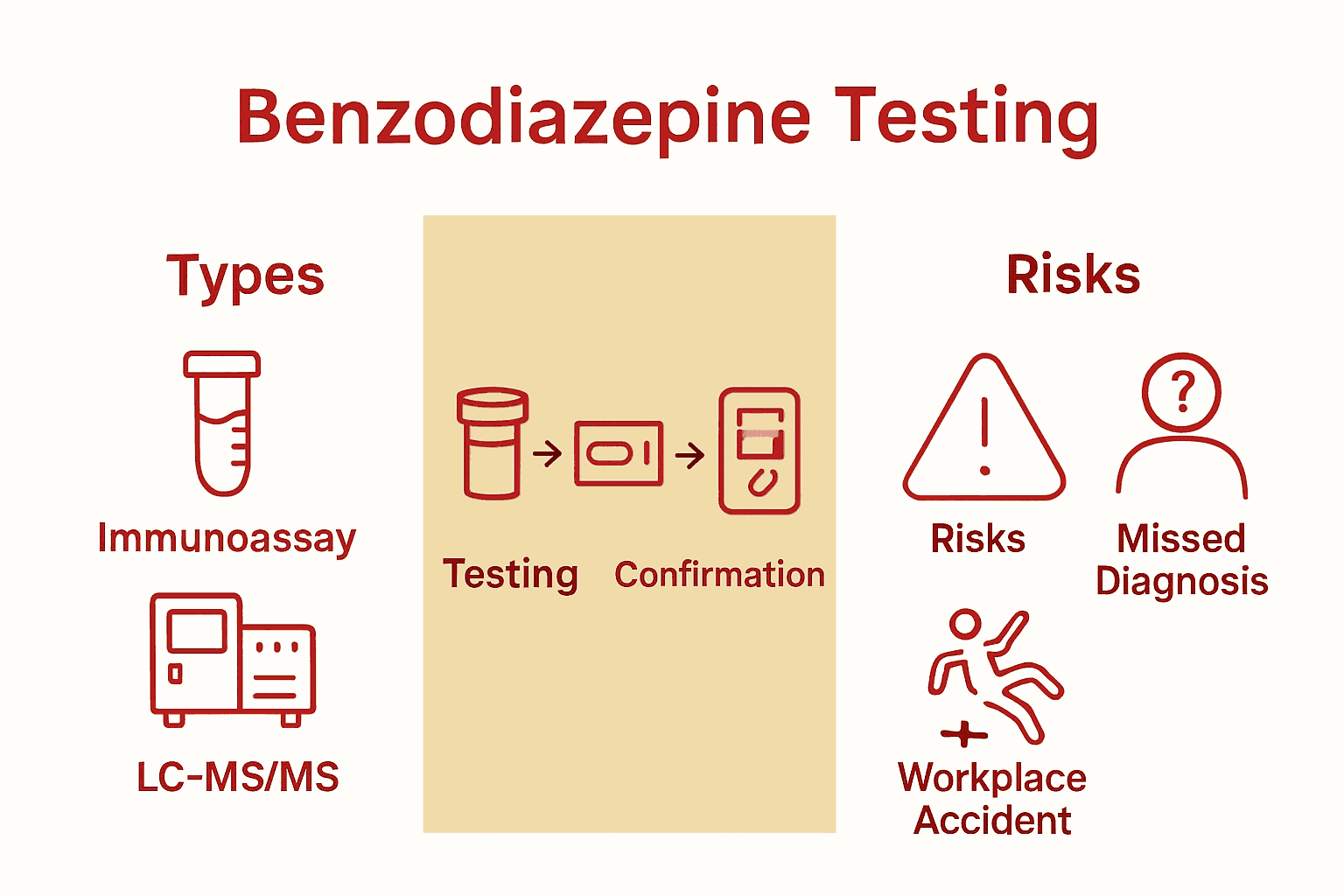
Initial screening typically involves immunoassay tests, which provide rapid results and serve as the first line of detection. These tests are quick and cost-effective, allowing for immediate identification of potential benzodiazepine presence. As noted by scientific research, these initial screenings are followed by more precise confirmatory methods such as:
- Gas chromatography-mass spectrometry (GC-MS)
- Liquid chromatography-tandem mass spectrometry (LC-MS/MS)
Recent laboratory developments have significantly enhanced detection capabilities. Research from advanced pharmacological studies indicates that modern drug test strip types now incorporate enzymatic hydrolysis steps, which improve the detection of glucuronidated benzodiazepine metabolites. This technological advancement reduces false negative results and increases the overall accuracy of urine drug testing, providing more reliable screening methods for healthcare professionals and testing facilities.

How Benzodiazepine Testing Works in Practice
Testing involves a meticulous process designed to accurately detect and confirm the presence of these medications in biological samples. According to clinical research, the standard procedure begins with collecting a urine sample, which serves as the primary medium for drug screening.
The process typically follows a two-stage approach. First, an immunoassay screening is conducted, providing a rapid initial assessment. When a positive result is identified, the sample undergoes a more rigorous confirmation process.
In forensic and legal settings, maintaining the chain of custody becomes critically important. This protocol ensures the integrity of the specimen by documenting every individual who handles the sample. Key steps in the testing process include:
- Initial urine sample collection
- Immunoassay screening
- Confirmatory LC-MS/MS testing
- Detailed documentation and chain of custody tracking
The final stage involves comprehensive analysis using advanced techniques like liquid chromatography-tandem mass spectrometry (LC-MS/MS), which provides the most accurate and specific identification of metabolites. This multi-step approach guarantees the highest possible reliability in detecting use across medical, professional, and legal contexts.
Legal and Regulatory Standards in the U.S.
The legal landscape surrounding benzodiazepine testing in the United States is complex and tightly regulated. According to the U.S. Food and Drug Administration (FDA), benzodiazepine test systems are classified as Class II medical devices under specific federal regulations, designed to measure these compounds in biological samples accurately.
Workplace drug testing standards play a crucial role in regulatory compliance. The Drug-Free Workplace Act of 1988 mandates that federal contractors and grantees maintain drug-free work environments, which necessitates comprehensive drug testing protocols. Workplace Drug Testing Checklist provides insights into implementing these critical screening procedures.
Key regulatory considerations for benzodiazepine testing include:
- FDA classification of testing devices
- Compliance with federal workplace drug testing regulations
- Strict chain of custody documentation
- Adherence to privacy and medical confidentiality laws
Beyond federal guidelines, individual states may have additional requirements for drug testing, particularly in sensitive industries like healthcare, transportation, and government services. These regulations aim to balance workplace safety with individual privacy rights, ensuring that benzodiazepine testing is conducted ethically, accurately, and in full compliance with legal standards.
Risks of Missed or Improper Testing
Ineffective benzodiazepine testing can have severe consequences across medical, professional, and personal domains. Diagnostic challenges emerge from the complexity of modern drug landscapes, where emerging designer benzodiazepines can easily evade standard screening methods, potentially leading to critical misdiagnoses and inappropriate treatment strategies.
The proliferation of novel benzodiazepine compounds presents significant testing obstacles. Research indicates that routine assays may fail to detect these sophisticated substances, creating substantial gaps in understanding an individual’s actual drug consumption. How Substance Abuse Impacts Patient Safety highlights the critical nature of comprehensive screening protocols.
Key risks associated with missed or improper benzodiazepine testing include:
- Undetected substance abuse
- Inappropriate medical treatments
- Potential patient safety compromises
- Increased risk of adverse health outcomes
Public health implications are profound. Underreporting and inadequate testing methodologies can mask the true extent of benzodiazepine misuse, potentially preventing timely interventions and comprehensive treatment approaches. Precision in drug screening is not just a technical requirement but a crucial step in protecting individual and community health.
Workplace, Clinical, and Safety Implications
Safety-sensitive industries face critical challenges when addressing benzodiazepine use, with profound implications for workplace productivity and public safety. Federal regulations have increasingly recognized the importance of comprehensive drug testing protocols to mitigate potential risks associated with impaired performance.
Legal precedents, such as the landmark Supreme Court case Skinner v. Railway Labor Executives Association, have established clear guidelines for drug testing in high-risk professional environments. The Court explicitly acknowledged that public safety concerns can supersede certain individual privacy considerations, particularly in sectors where impairment could lead to catastrophic consequences. Substance Abuse vs. Workplace Productivity provides deeper insights into these complex dynamics.
Key implications across different sectors include:
- Reduced workplace accidents
- Enhanced employee safety
- Improved organizational productivity
- Mitigation of potential legal liabilities
The Federal Aviation Administration’s recent regulations extending drug and alcohol testing requirements to foreign aviation-repair stations demonstrate the evolving approach to comprehensive safety standards. These measures underscore a critical understanding: benzodiazepine testing is not just a procedural requirement, but a fundamental strategy for protecting individual and collective well-being across professional, clinical, and safety-critical environments.
Ready to Ensure Accurate Benzodiazepine Testing?
Testing for benzodiazepines is never just a formality. As discussed in the article, missed or improper testing can compromise safety, accurate diagnoses, and compliance with strict regulations. If you are worried about outdated tests or unreliable results in your workplace, clinic, or lab, you are not alone. The challenges of detecting both traditional and novel compounds, maintaining chain of custody, and meeting federal standards are real—and the risks of getting it wrong are too great to ignore.

Take control with dependable supplies from 12 Panel Now. Our expertly crafted drug test kits are trusted by professionals nationwide who need results they can rely on, every time. Whether you want to improve accuracy with the latest drug test strip types or need help keeping your drug screening process compliant and secure, we have solutions ready to ship. Visit our home page now to protect your organization and ensure testing confidence from the start. Supplies are in demand—get yours while they last and take the first step toward safer screening today.
Frequently Asked Questions
What are benzodiazepines and what conditions do they treat?
Benzodiazepines are psychoactive medications prescribed to manage conditions such as anxiety, insomnia, and seizures. They work by enhancing the calming effects of the neurotransmitter GABA in the brain.
How does benzodiazepine testing work?
Benzodiazepine testing usually involves collecting a urine sample and performing an initial immunoassay screening. If the initial test is positive, a more accurate confirmatory test, like LC-MS/MS, is conducted to detect specific metabolites.
Why is it important to test for benzodiazepines?
Testing for benzodiazepines is crucial to ensure accurate diagnoses, prevent substance misuse, and maintain safety in workplaces where impairment could lead to accidents. It helps identify potential substance abuse and informs appropriate treatment strategies.
What are the risks of missed benzodiazepine testing?
Missed or improper testing can lead to undetected substance abuse, inappropriate medical treatments, and serious safety concerns. This underreporting can hinder effective interventions and compromise patient safety.