Urine Drug Test Cups, Dip Cards, Oral Swabs: Choosing the Best Method


If you are managing a safety-sensitive workforce or a recovery program, you know that the landscape of drug testing has shifted fundamentally. It is no longer just a technical comparison of chemical reagents; it is a battle against evasion.
According to 2024 data from the Quest Diagnostics Drug Testing Index, the U.S. workforce has seen a staggering 633% surge in substituted specimens. This means your choice of collection method is now your primary line of defense against tampering.
You aren’t just looking for a product that works; you are looking for a protocol that secures your liability. Whether you are running a high-volume staffing agency or a precise clinical treatment center, the decision usually comes down to three methodologies: Integrated Urine Cups, Dip Cards, or Oral Fluid Swabs.
This guide provides a comparative framework to help you match the right form factor to your operational reality.
The 2024 Testing Landscape: Why Method Matters More Than Ever
Before we analyze the hardware, we must address the context. The “Gold Standard” of urine testing remains dominant due to its deep historical data and CLIA-waived status, but the rise of synthetic urine and the legalization of recreational marijuana in many states have complicated the picture.
Employers and program directors are currently weighing two competing priorities:
-
- The “Pot” Problem: How to test for safety without penalizing legal, off-duty marijuana use (where Oral Fluid excels).
- The “Cheat” Problem: How to prevent candidates from using synthetic urine to mask opioid or stimulant use (where observed collection becomes critical).
With the Point of Care Testing (POCT) market now holding a 41% revenue share, organizations are moving away from slow lab turnarounds toward instant decision-making. The hardware you choose dictates your speed, your cost per hire, and your confidence in the result.
The Decision Matrix: Cups vs. Cards vs. Swabs
To simplify the evaluation, we have broken down the three primary methods against the criteria that matter most to program administrators: integrity, detection window, and workflow.
| Feature | Integrated Urine Cups | Dip Cards | Oral Fluid Swabs |
| :— | :— | :— | :— |
| Primary Use Case | High-Volume / Clinical | Budget / Mass Screening | Reasonable Suspicion / Post-Accident |
| Tamper Resistance | High (Temp Strip Included) | Moderate (Requires separate cup) | Superior (100% Observed) |
| Detection Window | Long (Days to Weeks) | Long (Days to Weeks) | Short (Hours to 2-3 Days) |
| Cost Efficiency | Balanced (Labor saving) | Best Unit Price | Higher Unit Price / Lower Risk |
| Collector Skill | Low (All-in-one) | Moderate (Handling required) | Low (Non-invasive) |
| Mess Factor | Minimal | Moderate | Zero |
Integrated Urine Cups: The Professional Standard
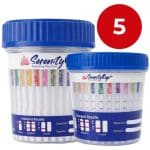
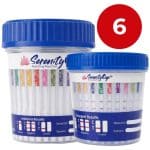
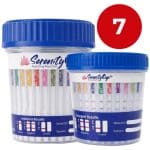
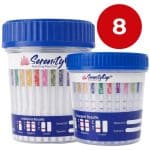
For most organizations, the integrated cup represents the sweet spot between security and convenience. This “all-in-one” form factor eliminates the need for pipetting or dipping strips into a separate container, which significantly reduces the “yuck factor” for your staff.
The Hygiene & Speed Advantage
In a high-throughput environment—such as a detox facility intake or a staffing agency hiring blitz—time is money. Integrated cups, like the CLIA-waived options available from 12 Panel Now, allow for immediate reading upon collection. Because the test strips are built into the chassis of the cup, the chain of custody is streamlined.
Combating the Tampering Surge
The most critical feature of the modern urine cup is the Temperature Indication Strip. With specimen tampering at record highs, verifying that a sample is between 90°F and 100°F within four minutes of collection is mandatory.
Furthermore, advanced cups now offer up to 28 panels in a single unit. This allows facilities to screen for emerging threats like Fentanyl, Xylazine, or Kratom alongside standard 5-panel markers. If you need a comprehensive toxicity profile without the delay of a lab, the integrated cup is your strongest asset.
Dip Cards: The Economic Workhorse
If your primary KPI is cost reduction, the Dip Card remains the undisputed leader. By stripping away the plastic housing of the cup, you strip away manufacturing costs, allowing for prices that can drop significantly in bulk orders.
Best-Fit Scenarios
Dip cards are ideal for programs where the collection process is already rigidly controlled, or where budget constraints are tightest. They are frequently used in:
-
- Probation and parole departments
- Large-scale government workforce screening
- Budget-conscious sober living homes
The Trade-off
The trade-off is labor and logistics. You must source separate collection cups, and the collector must physically dip the card into the specimen. While effective, this adds a step to the process and increases the potential for mess. However, with configurations ranging from 10 to 19 panels, you do not sacrifice analytical depth for price.
Oral Fluid Swabs: The “Impairment” & Compliance Solution
Oral fluid testing is the fastest-growing segment in the market, driven largely by the legalization of cannabis. Unlike urine, which detects metabolites (history of use), oral fluid detects the parent drug (active presence).
Solving the Legal Cannabis Dilemma
In states like New York or California, where discriminating against off-duty cannabis use is legally restricted, urine testing can be problematic because it detects THC use from weeks ago. Oral swabs typically detect THC only within a 24-48 hour window. This makes them the superior choice for answering the question: “Is this employee impaired right now?”
The Ultimate Anti-Cheat Measure
Remember the 633% increase in substituted urine? Oral fluid solves this instantly. Because the collection is 100% observed (the donor swabs their cheek in front of you), it is virtually impossible to substitute or adulterate the sample without being caught.
While the positivity rate for oral fluid is generally lower (~1.9%) compared to urine (~6.3%), this often indicates greater accuracy regarding recent use rather than historical use, reducing false alarms for responsible off-duty behavior.
Operational Workflow: Which Method Fits Your Needs?
Rather than viewing these methods as mutually exclusive, many savvy program directors utilize a hybrid approach to maximize efficiency and minimize risk.
1. Pre-Employment Screening -> Integrated Cups
Why: You need a broad look at the candidate’s history to assess lifestyle risks. The 5 to 14-panel cup is standard here. It strikes the right balance of professionalism and depth.
2. Reasonable Suspicion / Post-Accident -> Oral Swabs
Why: If an accident occurs on the forklift, you need to know if the operator is currently under the influence. A urine test might flag marijuana use from last Saturday, which could be legally contested. A swab targets the immediate timeframe.
3. Random Monitoring -> Dip Cards
Why: When testing large groups randomly to ensure compliance (such as in a labor department or halfway house), the lower unit cost of dip cards allows for more frequent testing without breaking the budget.
Conclusion: Partnering for Safety
Choosing between cups, cards, and swabs is not about finding the “perfect” test—it is about finding the perfect match for your risk tolerance and workflow.
-
- Choose Integrated Cups for a professional, tamper-resistant, and hygienic process.
- Choose Dip Cards to maximize your budget for high-volume screening.
- Choose Oral Swabs to eliminate cheating and focus on recent impairment.
At 12 Panel Now, we understand that your testing program protects your business and your people. That is why we maintain a massive inventory of all three configurations, ensuring same-day shipping whether you need a single box or a bulk pallet.
Evaluate your current “cheat rate” and your cost-per-test. If you are ready to optimize your collection strategy, explore our full range of FDA-approved and CLIA-waived solutions today.
Frequently Asked Questions
Which method is the most accurate?
All CLIA-waived instant tests from reputable providers like 12 Panel Now are engineered for 99% accuracy. The “difference” is usually in the detection window. Urine is more accurate for historical use; oral fluid is more accurate for recent use.
Can I test for Fentanyl with a Dip Card?
Yes. Modern manufacturing allows for complex assays on simple platforms. You can configure dip cards, cups, and even strips to detect Fentanyl, often at cutoff levels as low as 20 ng/mL or 200 ng/mL, depending on your needs.
Is Oral Fluid testing legal for federal DOT employees?
The Department of Transportation (DOT) authorized oral fluid testing as an alternative method in their final rule published in 2023. However, implementation depends on the availability of HHS-certified laboratories for confirmation testing. For non-regulated workforce testing, it is fully available and legal in most jurisdictions.