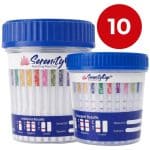
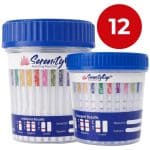
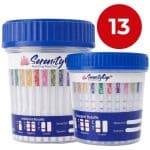
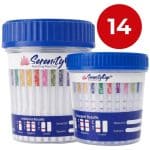
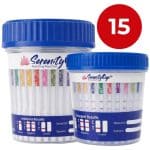
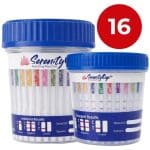
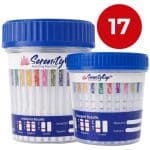
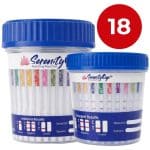
Custom Drug Test Panels: Choose Right Substances for Your Organization

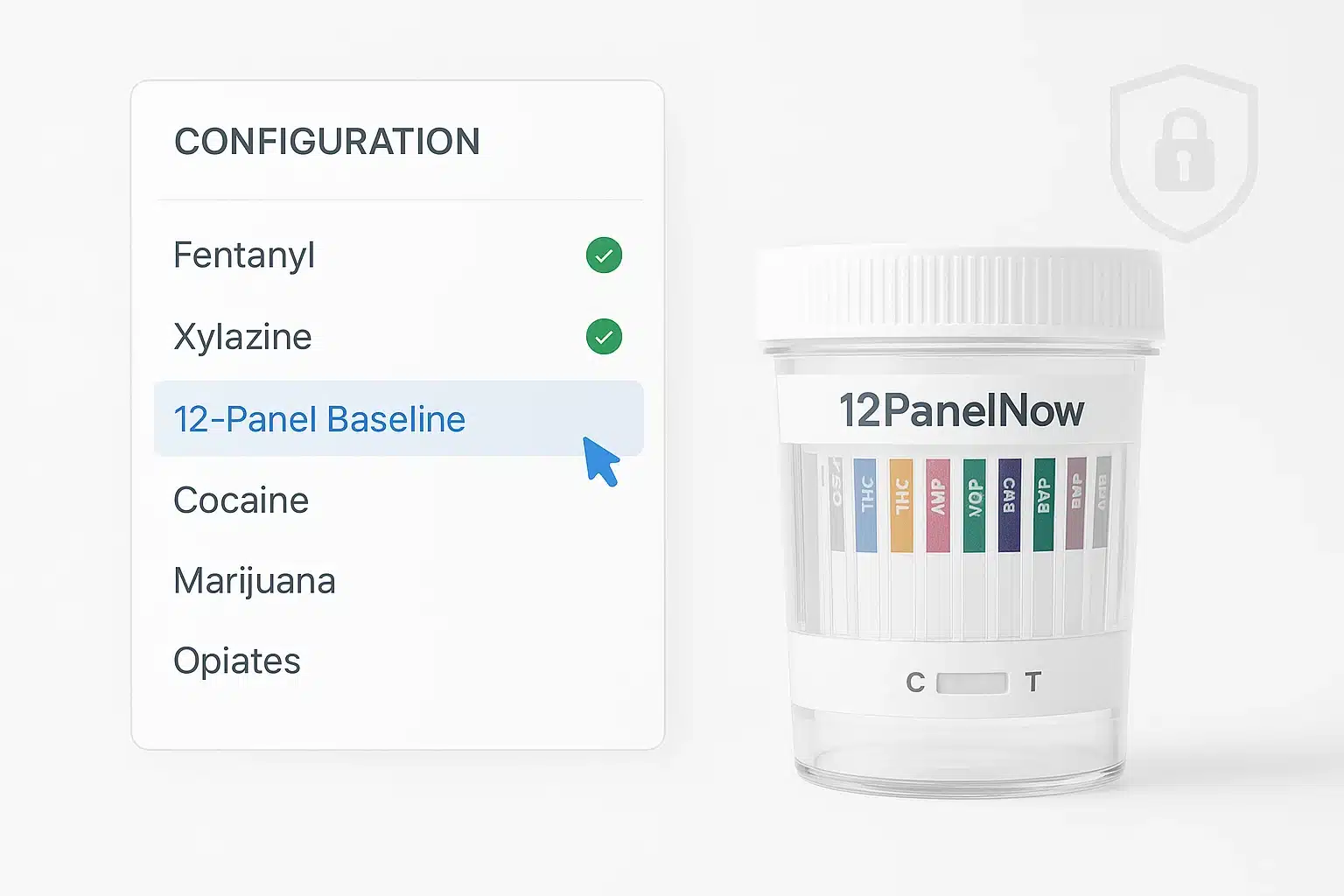
The landscape of workplace safety has shifted beneath our feet. For years, the standard 5-panel or 10-panel drug test was the gold standard—a “set it and forget it” policy that HR departments relied on.
But recent data suggests that the “standard” approach is no longer enough to protect your organization.
According to the Quest Diagnostics Drug Testing Index (2024), Fentanyl positivity is now 7x higher in random post-employment tests than in pre-employment screenings. Let that sink in. Employees are passing the initial screen because they know what to expect, but once they are on the payroll, usage spikes.
If you are still relying on a static panel designed decades ago, you likely have a blind spot. You aren’t just missing substances; you are missing the specific risks associated with your industry and workforce demographics.
The question is no longer just “Do we test?” It is “How do we get exactly what we need?”
This guide moves beyond the basics to help you engineer a drug testing strategy that balances cost, compliance, and genuine safety.
The Framework: Matching Risk Profiles to Substances
Before you browse a catalog of urine drug test cups, you need to audit your risk environment. A “one-size-fits-all” approach often leads to over-testing for irrelevant substances while missing critical emerging threats.
We recommend a tiered approach to customization:
1. The Baseline (Safety-Sensitive vs. Professional Services)
If you operate in DOT, logistics, or heavy machinery, your baseline is non-negotiable. However, private employers have the flexibility to tighten the net.
-
- High Risk (Construction, Manufacturing): Requires broader panels (12-14 panel) covering opioids and synthetic painkillers that could impair motor function.
- Moderate Risk (Retail, Admin): Standard 5-10 panel tests may suffice, focusing on the most common substances of abuse.
2. The Geographic Variable
Drug trends are hyper-local. While Methamphetamine usage might be the primary concern in the Midwest, the Northeast is battling a surge in synthetic opioids. Customizing your panel allows you to target the specific substance epidemic in your region without paying for a 20-panel test when a targeted 12-panel configuration would be more effective.
Beyond the Standard: Emerging Substances You Must Watch
The biggest liability in modern testing is the gap between what employees use and what employers test for. The emergence of synthetic compounds has outpaced standard testing configurations.
At 12 Panel Now, we’ve seen a massive shift toward requests for “The New Big Three”:
1. Fentanyl (FEN)
As noted in the Quest data, Fentanyl is the silent risk in the workplace. Many standard panels do not include Fentanyl. If your current provider requires a separate dip card or an add-on fee for Fentanyl, you are creating friction in your testing process. We recommend integrating FEN into your primary cup—specifically looking for low cutoff levels (more on that below).
2. Xylazine (“Tranq”)
Often mixed with Fentanyl to extend the high, Xylazine is a non-opioid veterinary sedative. Because it is not an opioid, it will not trigger a positive result on a standard opiate or Fentanyl panel. This is a critical gap for industries involving heavy machinery, as Xylazine causes severe sedation and blackouts.
3. Kratom (KRA)
Marketed as an herbal supplement, Kratom acts on opioid receptors. It is legal in many jurisdictions but can cause significant impairment. For zero-tolerance environments like treatment centers or probation departments, adding Kratom to your configuration is becoming a standard best practice.
The Decision Factor: Custom vs. Pre-Set Panels
When you are evaluating suppliers, you generally have two paths: buying off-the-shelf pre-set panels or building a custom configuration.
Pre-Set Panels are ideal for:
-
- Standard compliance (e.g., meeting basic insurance requirements).
- Speed of deployment (grab-and-go ordering).
- Lower perceived upfront decision-making effort.
Custom Configurations are necessary when:
-
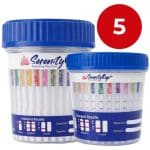
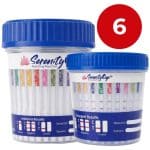
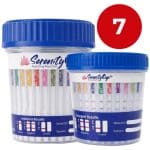
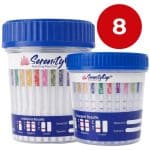
- You need “Zero-Tolerance” assurance: Our 28 Ultra Panel Cup covers 99% of commonly abused substances, including K2 (Spice), EtG (Alcohol), and Tramadol.
- You need cost efficiency: Why pay for a 14-panel test if you only need 10 specific drugs plus Fentanyl? Customizing allows you to strip out the noise and focus your budget on the relevant risks.
Technical Deep Dive: False Positives and Cut-off Levels
This is where the science of testing meets the reality of HR management. When customizing your panel, you aren’t just picking drugs; you are picking sensitivity.
Understanding Cut-off Levels
The cut-off level determines how much of a substance must be present to trigger a positive result.
-
- Standard Sensitivity: Great for general screening.
- High Sensitivity (Low Cut-off): Crucial for high-risk drugs. For example, we offer Fentanyl tests with a sensitivity as low as 1 ng/mL (nanogram per milliliter). Compare this to standard tests that might only detect at 20 ng/mL. In a safety-critical role, that difference is the line between preventing an accident and missing a warning sign.
Navigating Cross-Reactivity (False Positives)
One of the biggest hesitations we hear from clients regarding custom panels is the fear of false positives. “If I test for more things, won’t I get more false alarms?”
It is a valid concern. For instance, Fentanyl screens can occasionally cross-react with:
-
- Trazodone (an antidepressant)
- Risperidone (an antipsychotic)
- Labetalol (a blood pressure medication)
Knowing this doesn’t mean you shouldn’t test; it means you need a partner who understands these interactions. By selecting CLIA-waived and FDA-approved cups with high specificity, you reduce this risk. Furthermore, knowing these triggers allows your Medical Review Officer (MRO) to quickly validate legitimate prescriptions versus illicit use.
The Hidden Metric: Adulteration Controls
Customization isn’t just about drug testing; it’s about integrity. With the recent 600% surge in “substituted” urine samples, your test is only as good as its ability to detect cheating.
Any custom panel you configure should automatically include checking for Adulteration. You aren’t just looking for drugs; you are looking for valid urine.
-
- pH: Normal human urine falls between 4.5 and 9.0. Anything outside this suggests bleach or acidic additives.
- Specific Gravity & Creatinine: These check for dilution. If a donor drinks gallons of water to flush their system, these markers will flag the sample as “Diluted,” prompting a re-test.
When building your custom order, ensure your cups include at least 3-6 adulteration strips (pH, SG, CR, Nitrite, Glutaraldehyde, Oxidants).
Next Steps: Designing Your Defense
The goal of drug testing is not to catch people; it is to create a safe, healthy, and productive environment. But you cannot achieve that with outdated tools.
By customizing your panel, you move from a passive “check-the-box” activity to an active risk mitigation strategy. Whether you need to add Xylazine detection for your logistics fleet or require a comprehensive 14-panel solution for healthcare staff, the technology exists to match your exact needs.
Ready to build your specific panel?
You don’t have to guess. Our team specializes in helping organizations configure the exact panel mix for their industry risks. Explore our drug testing cups inventory or contact us directly to discuss a custom configuration that closes your safety gaps.
Frequently Asked Questions
Q: Can I customize a test for just one specific drug?
A: Absolutely. While comprehensive cups are popular, we offer single drug testing strips and dip cards. This is often a cost-effective strategy if you want to use a standard 5-panel cup but need to “add on” a test for Fentanyl or Tramadol for a specific employee or department.
Q: How long does a custom configuration take to ship?
A: Many suppliers have lead times of weeks for custom orders. Because we maintain a massive inventory of over 54 drug configurations in Boynton Beach, we prioritize same-day shipping on the vast majority of our orders, even bulk configurations.
Q: Is a 28-panel test overkill?
A: For a standard office job? Perhaps. But for probation departments, rehabilitation centers, and pain clinics, a 28-panel test is often the baseline for ensured compliance. It removes the guesswork and the need for multiple testing methods.