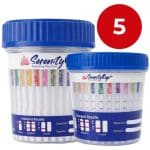
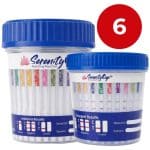
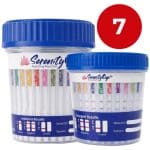
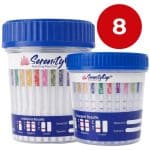
Best Drug Test Cups for Workplace & DOT Compliance: A Guide for Employers & HR Professionals

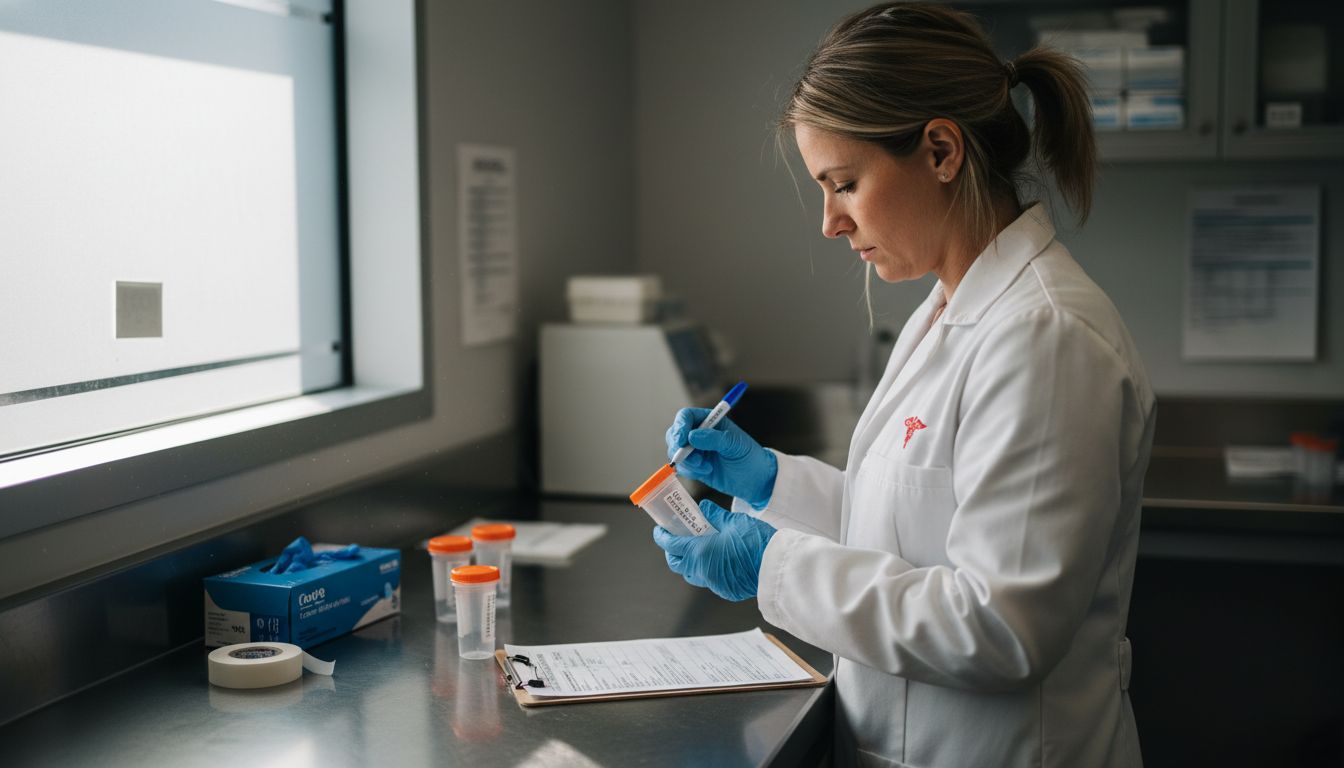
For HR directors and safety officers, the drug testing landscape has shifted. It is no longer just about purchasing supplies; it is about risk mitigation, legal defensibility, and maintaining operational velocity.
The evaluation process for testing solutions is often clouded by regulatory jargon. You are likely asking two core questions: “Does this meet federal compliance standards?” and “Is this cost-effective enough to sustain a high-volume screening program?”
Navigating the 2025 compliance landscape requires understanding the distinction between “marketing compliant” and “legally compliant.” This guide dismantles the complexity of DOT regulations versus private sector flexibility, helping you select a testing infrastructure that protects your organization without draining your budget.
The Compliance Framework: DOT vs. Non-DOT Standards
The most common point of friction we see during the evaluation phase is the confusion surrounding Department of Transportation (DOT) regulations versus general workplace screening.
If your organization falls under DOT jurisdiction (trucking, aviation, rail), your testing protocols are governed by 49 CFR Part 40. It is critical to understand that for official DOT record-keeping, the federal government requires a specific chain of custody sent to a certified laboratory.
However, this does not render rapid point-of-care (POC) cups obsolete for regulated industries. Many safety-sensitive organizations utilize CLIA-waived rapid tests for non-DOT pre-employment screening or internal “fitness for duty” assessments (where legally permitted) to make immediate hiring decisions before investing in the slower, federally mandated lab process.
For private, non-regulated employers, FDA-approved and CLIA-waived cups are the industry gold standard. They provide legally defensible “presumptive positive” results that allow you to manage workforce safety autonomously.
The “Presumptive” vs. “Confirmatory” Distinction
To maintain a defensible position, HR professionals must understand the limits of technology. Immunoassay tests (rapid cups) rely on antibodies to detect the presence of drugs. While highly accurate (99%), they screen for drug classes.
Research indicates a presumptive positive rate of 1-5% in rapid testing due to cross-reactants (e.g., certain prescription medications mimicking illicit substances). Therefore, a compliant policy always treats a positive cup result as “presumptive” pending [lab confirmation] via GC-MS (Gas Chromatography-Mass Spectrometry). This two-step workflow is your safety net against liability.
The Panel Decision Matrix: Matching Configuration to Risk
Once compliance requirements are understood, the next variable is configuration. The market is moving away from the standard 5-panel test as the “default,” driven largely by the synthetic opioid crisis.
Choosing the right panel count is an exercise in risk management. You must balance the cost of the test against the cost of a missed detection.
1. The 5-Panel Baseline
This configuration mirrors the standard mandatory DOT profile (Amphetamines, Cocaine, Marijuana, Opiates, PCP). It is the minimum viable product for a drug-free workplace policy but leaves significant gaps regarding prescription abuse.
2. The 10-Panel Corporate Standard
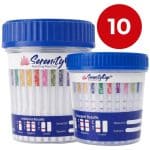
For most general workforce environments, the [10 Panel Drug Test Cup] is the operational standard. It expands coverage to include benzodiazepines, barbiturates, and methadone—substances often associated with workplace impairment and accidents.
3. The 12-Panel Advantage (Best ROI)
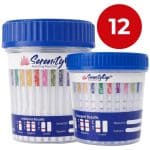
Data suggests that employees who misuse drugs are 3.5x more likely to be involved in workplace accidents. With the rise of Oxycodone and other semi-synthetic opioids, the [12 Panel Drug Test Cup] has emerged as the preferred choice for forward-thinking employers.
By covering extended opiates and prescription painkillers, the 12-panel configuration closes the “compliance loopholes” that often exist in standard 5 or 10-panel screens.
Strategic Procurement: Analyzing Cost-Per-Hire
In the evaluation of testing supplies, procurement teams often overlook the “Price-to-Coverage” ratio.
A common misconception is that more panels equal significantly higher costs. However, efficient manufacturing and bulk distribution have inverted this logic. For example, through strategic sourcing, high-volume [12 Panel configurations] can often be secured for as low as $1.59, compared to $1.69 for some 10-panel options.
This pricing anomaly presents an opportunity to upgrade your safety protocols while simultaneously lowering your per-test expenditure. When you factor in the ability to utilize [bulk ordering] with same-day shipping, the administrative burden of inventory management decreases significantly.
Ensuring Test Integrity: Adulteration and Administration
The final, and perhaps most critical, evaluation criteria is ease of administration. HR professionals and site managers are rarely trained lab technicians. The equipment you choose must minimize human error and prevent sample tampering.
Defeating Adulteration
Cheating a drug test is an industry of its own. Candidates may attempt to alter pH levels, dilute samples with water, or use oxidants to mask drug presence. Superior testing cups include built-in Adulteration Strips (checking pH, Specific Gravity, and Creatinine).
This feature allows the administrator to verify sample validity before reading the drug results, ensuring that a “negative” result is a true negative, not a masked positive.
The “Clean-Hand” Workflow
Traditional dip cards can be messy and unhygienic, requiring the administrator to handle urine samples directly. Modern T-Cup designs utilize vacuum-transfer technology or secure-seal lids.
This “no-drip, no-pour” design is not just a convenience feature; it is a liability feature. It ensures that if a presumptive positive needs to be sent to a lab, the sample remains sealed and uncontaminated, preserving the chain of custody.
Making the Decision
Selecting the right drug testing cup is about finding the intersection of compliance, coverage, and cost.
For organizations looking to maximize safety, the data points toward the 12-Panel configuration as the superior choice. It captures the risks of the modern opioid landscape, includes necessary adulteration controls, and, when sourced correctly, offers a lower cost-per-test than narrower alternatives.
By standardizing your testing program with reliable, CLIA-waived technology, you move your HR department from a reactive stance to a proactive culture of safety.
Frequently Asked Questions
Q: Can we use these cups for DOT compliance?
A: Rapid cups are FDA Approved and CLIA Waived, but they are not a replacement for the mandatory DOT lab-based test (49 CFR Part 40). However, they are excellent for non-regulated pre-employment screening or internal safety audits where permitted by state law.
Q: What happens if a cup shows a positive result?
A: Treat it as a “presumptive positive.” Do not take adverse employment action based solely on the cup. Send the sample to a certified laboratory for confirmation testing to ensure legal defensibility.
Q: Why are 12-panel cups cheaper than some 10-panel cups?
A: Supply chain efficiency. Because the 12-panel configuration is becoming the new industry standard, production volume is higher, allowing suppliers to pass [bulk savings] on to the customer.