CLIA-Waived Instant Urine Tests: Science, Reliability, and Regulatory Compliance

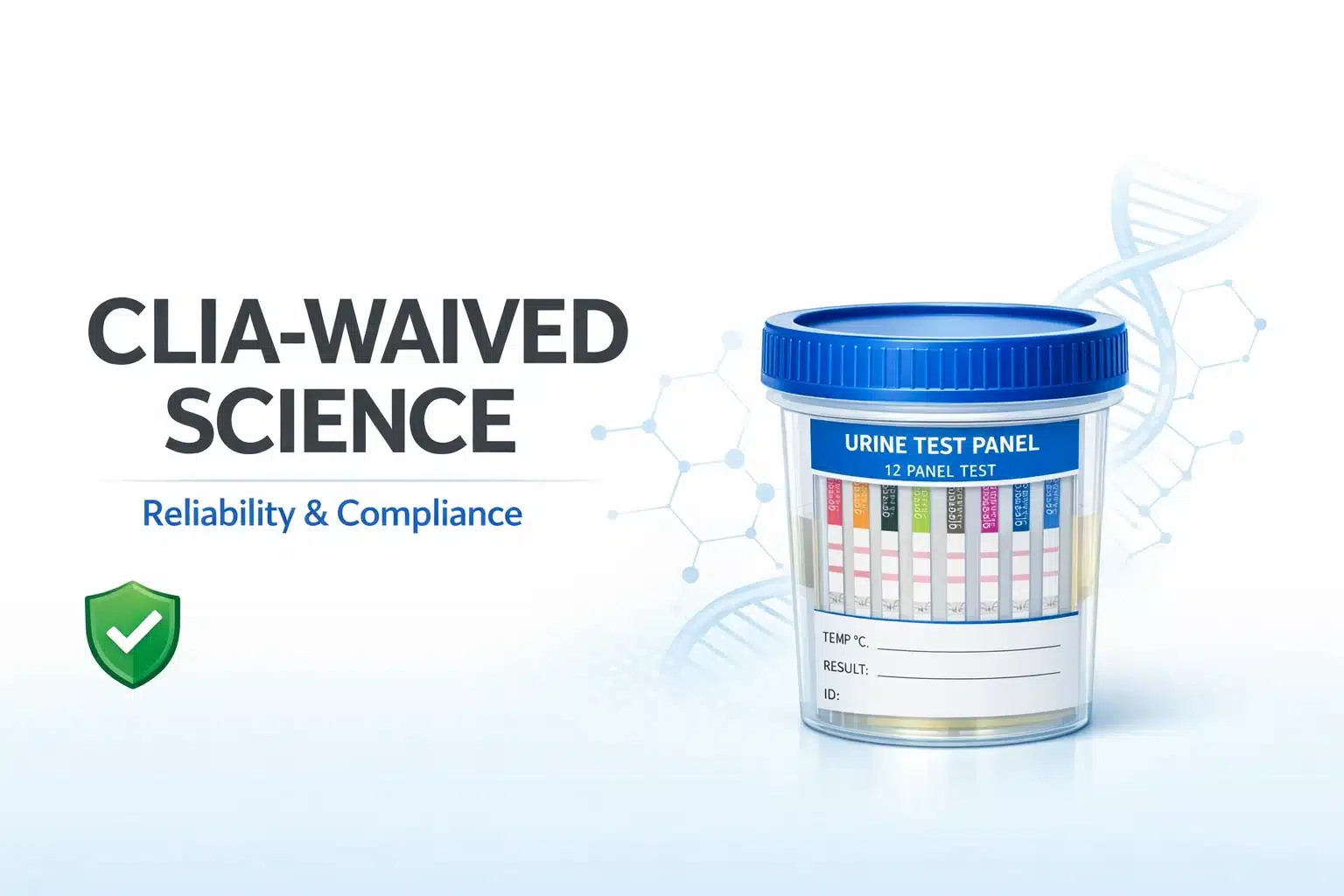
When you are responsible for maintaining a safe workplace, managing a healthcare facility, or overseeing a rehabilitation center in 2026, the diagnostic tools you choose carry immense weight. You are not just buying plastic cups—you are investing in compliance, safety, and undeniable accuracy.
Before we dive into the molecular science of these tests, let’s clear up a common search confusion. If you are researching organizational testing, you might have stumbled across terms like “IDRlabs” or “Midyis.” It is critical to separate these entirely: those are online personality and cognitive aptitude assessments. What we are discussing here are strictly medical-grade diagnostic urine tests. Assessing a candidate’s personality profile is one thing; detecting substances in their system requires an entirely different level of scientific rigor, molecular chemistry, and regulatory oversight from bodies like the FDA and CDC.
Let’s demystify the science, compliance, and reliability of CLIA-waived instant urine tests so you can make highly informed, confident decisions for your organization.
What Makes a Test “CLIA-Waived”? Understanding Regulatory Standards
The Clinical Laboratory Improvement Amendments (CLIA) regulate all laboratory testing performed on humans in the United States. For a facility or employer to perform on-site drug screening without hiring specialized laboratory scientists, the test must be “CLIA-waived.”
But what does a waiver actually mean? Under federal regulation (42 CFR 493.15 and 42 U.S.C. § 263a), a waived test must employ methodologies that are so simple and accurate as to render the likelihood of erroneous results negligible. In the FDA’s exact framework, the test must pose “no reasonable risk of harm to the patient if the test is performed incorrectly.”
For an instant urine cup or dip card to achieve this status, it must undergo rigorous FDA evaluation to prove that a layperson can use it just as effectively as a trained lab technician. Once your facility obtains a simple Certificate of Waiver, you can legally administer these rapid tests on-site.

The Molecular Mechanics: How Lateral Flow Actually Works
The technology inside a modern multi-panel drug test cup is a marvel of biochemistry known as a competitive immunoassay.
Unlike a COVID-19 rapid test or a pregnancy test—where the appearance of a line means you are positive (a sandwich assay)—drug tests use a competitive format. This causes a frequent point of confusion for new administrators: Why does no line mean a positive result?
Here is the science of the “Molecular Trap”:
The test strip contains microscopic antibodies programmed to seek out specific drug molecules. It also contains colored particles coated with the drug.
- If the person’s urine is clean: The colored drug particles flow up the strip, bind freely to the antibodies in the test zone, and create a visible line. The presence of a line means the antibodies were empty.
- If the person has used drugs: The actual drug molecules in the urine flood the test strip and bind to the antibodies first. Because the antibodies are “full,” the colored particles have nowhere to attach and wash right past. Therefore, no line forms.
Understanding this mechanism helps administrators confidently interpret results and explain the science to donors who might question the validity of a faint line.
The Accuracy Paradox: Presumptive vs. Confirmatory Testing
High-quality CLIA-waived tests boast a 99% reliability rate. However, a deep dive into clinical chemistry reveals what scientists call the “discordance rate.” When rapid tests are compared against the gold-standard laboratory method—Gas Chromatography/Mass Spectrometry (GC/MS)—there is typically a 1-4% variance.
Why does this happen if the test is 99% accurate? Because rapid immunoassays are presumptive. They are designed to cast a wide net and flag chemical structures that look like illicit substances. GC/MS, on the other hand, is confirmatory. It breaks molecules apart to examine their exact atomic fingerprint.

By using an instant cup, you are immediately clearing 99% of negative donors efficiently, often for less than $2.00 per cup. You then only pay expensive lab fees for the 1% of presumptive positives that require GC/MS confirmation. This tiered approach is the most financially sustainable model for any testing program today.
Navigating Cut-Off Levels and False Positives
To minimize the 1-4% discordance rate, top-tier FDA-approved tests utilize highly specific nanogram per milliliter (ng/mL) cut-off levels.
Consider THC (marijuana). The industry standard cut-off is 50 ng/mL. This specific threshold isn’t arbitrary—it is chemically calibrated to ensure that someone walking past secondary marijuana smoke at a concert won’t fail a drug test. It requires active, direct consumption to trigger a positive result.
However, administrators must still be aware of cross-reactivity. Because antibodies look for specific molecular shapes, perfectly legal over-the-counter medications can occasionally mimic illicit drugs:
- Ibuprofen (Advil) in very high doses can sometimes trigger a presumptive positive for THC.
- Pseudoephedrine (Sudafed) has a molecular structure closely resembling Amphetamines.
- Poppy seeds contain trace amounts of opiates.

When you encounter a presumptive positive, asking the donor about recent medication use—and sending the sample out for GC/MS confirmation—mitigates organizational risk and protects the donor’s rights.
Beyond Drug Screening: The Future of Urine Diagnostics
As we look at the diagnostic landscape in 2026, the technology housed inside instant urine testing is evolving far beyond substance abuse panels. The exact same lateral flow and immunoassay foundations are now paving the way for advanced medical diagnostics.
We are entering the era of Urine Microarrays and DNA Methylation Biomarkers. Think of the technology behind stool-based DNA tests for colon cancer, but applied to urine. Researchers are currently utilizing rapid urine delivery formats to detect early epigenetic markers for certain cancers and cellular aging. While these are highly complex medical tests, they represent the future frontier of liquid biopsies—proving that urine is one of the most data-rich, non-invasive diagnostic mediums available to modern science.

Frequently Asked Questions (FAQ)
Are rapid urine tests reported to a national database?
No. This is a common privacy concern. Rapid, CLIA-waived tests performed on-site are strictly confidential between the employer/facility and the donor. There is no central HIPAA or federal database that aggregates instant drug test results.
What is the difference between a 5-panel and a 12-panel test?
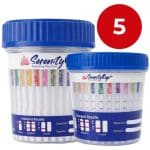
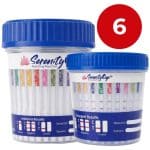
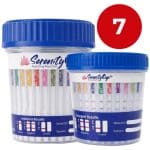
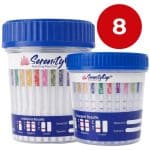
A 5-panel test typically screens for the most common street drugs (THC, Cocaine, Opiates, Amphetamines, PCP). A 12-panel test expands this to include prescription medications that are frequently abused, such as Buprenorphine, Benzodiazepines, and Barbiturates. Comprehensive 12-panel cups are increasingly becoming the standard due to their affordability, often costing just fractions of a dollar more per unit.
Do CLIA-waived tests require specialized storage?
Most rapid tests do not require refrigeration but should be kept in a temperature-controlled environment (typically between 36°F and 86°F). Extreme heat or freezing can denature the sensitive antibodies on the test strips, compromising their 99% reliability.
Making the Right Choice for Your Testing Protocol
Selecting the right testing supplies is ultimately a balance of scientific reliability, regulatory compliance, and budget. You need products that are CLIA-waived and FDA-approved, ensuring you are protected by federal testing standards. You also need a supplier that understands the operational realities of your business—delivering highly accurate supplies without inflating your operational costs.
When evaluating suppliers, look beyond the product. Prioritize partners who operate with transparency, provide accessible customer support for those moments when you need clarification on a test result, and offer pricing models that respect your bottom line. By leveraging bulk, high-quality multi-panel cups, you can easily maintain a rigorous, fully compliant drug testing program that protects your community and your organization.