



7 Types of Laboratory Drug Screens Every Buyer Should Know


7 Types of Laboratory Drug Screens Every Buyer Should Know
Over half of workplaces in the United States rely on some form of drug testing to protect safety and productivity. With so many options available, understanding drug testing methods is crucial for any organization or healthcare provider. Each testing technique offers unique benefits, from rapid results and cost savings to advanced accuracy or long-term detection, helping you make smarter choices about substance screening and compliance.
Quick Summary
| Takeaway | Explanation |
|---|---|
| 1. Immunoassay screens are cost-effective. | These tests provide rapid results at lower costs compared to more complex methods, making them ideal for initial screenings. |
| 2. GC-MS offers high accuracy for confirmations. | This technique is the gold standard for drug testing, providing precise identification of substances, minimizing false positives. |
| 3. HPLC is versatile for complex samples. | High-Performance Liquid Chromatography can analyze various substances effectively, making it useful for detailed chemical analysis. |
| 4. Hair follicle tests reveal long-term use. | This method can detect drug use over the past three months, offering insights into an individual’s substance consumption history. |
| 5. Oral fluid testing is non-invasive and rapid. | This approach allows for quick detection of recent drug use through saliva, ensuring comfort and minimizing manipulation risks. |
Table of Contents
- Immunoassay Screens: Fast And Cost-Effective Testing
- Gas Chromatography-Mass Spectrometry: High Accuracy
- High-Performance Liquid Chromatography: Versatile Analysis
- Enzyme-Linked Immunosorbent Assay: Targeted Results
- Thin Layer Chromatography: Simple Spot Test
- Hair Follicle Drug Testing: Extended Detection Window
- Oral Fluid Drug Testing: Easy And Non-Invasive Option
1. Immunoassay Screens: Fast and Cost-Effective Testing
Immunassay drug screens represent a powerful initial testing method that delivers rapid results while keeping costs manageable for organizations seeking efficient drug screening solutions. These screening tests leverage advanced antibody technology to quickly detect the presence of specific drug metabolites in biological samples.
According to the National Institute on Drug Abuse, immunoassay screens work by utilizing specialized antibodies that bind directly to target drug molecules. This unique mechanism allows laboratories to screen multiple substances simultaneously with remarkable speed.
Key Advantages of Immunoassay Screens:
- Extremely fast turnaround times
- Significantly lower cost compared to complex testing methods
- Ability to screen multiple drug classes in a single test
- High initial detection sensitivity
While immunoassay screens provide excellent preliminary results, they are not definitive. These tests can occasionally produce false positives or negatives, which means additional confirmatory testing might be necessary for absolute accuracy. Professional drug testing facilities typically use immunoassay screens as an initial screening method, following up with more precise techniques like gas chromatography or mass spectrometry when needed.
For organizations prioritizing efficient and economical drug testing, rapid drug test kits offer an excellent solution that combines speed, affordability, and initial screening effectiveness. Understanding how these screens work helps buyers make informed decisions about their drug testing strategies.
2. Gas Chromatography-Mass Spectrometry: High Accuracy
Gas Chromatography-Mass Spectrometry (GC-MS) represents the gold standard in drug testing technology, offering unparalleled precision and reliability for confirming initial screening results. This advanced analytical technique goes far beyond basic drug detection methods by providing a comprehensive chemical breakdown of substances in biological samples.
According to the National Institute on Drug Abuse, GC-MS separates and identifies compounds using their unique chemical properties and mass-to-charge ratios. The process involves two critical stages: gas chromatography separates chemical components, while mass spectrometry identifies and quantifies each specific substance with remarkable accuracy.
Key Features of GC-MS Testing:
- Extremely high specificity and sensitivity
- Ability to detect trace amounts of substances
- Minimal risk of false positive results
- Comprehensive identification of drug compounds
Professional laboratories prefer GC-MS for confirmatory testing because it eliminates the ambiguity associated with initial screening methods. This technique can differentiate between similar molecular structures and provide definitive evidence of specific drug presence. While more time-consuming and expensive than immunoassay screens, GC-MS offers the most reliable results when absolute precision is critical.
When selecting drug testing supplies, understanding the capabilities of multi-panel drug tests can help organizations choose the most appropriate screening strategy. For situations requiring conclusive evidence such as legal proceedings, workplace investigations, or medical diagnostics, GC-MS provides the gold standard of scientific accuracy.
3. High-Performance Liquid Chromatography: Versatile Analysis
High-Performance Liquid Chromatography (HPLC) stands as a sophisticated analytical technique that provides unprecedented precision in drug testing and chemical analysis. This powerful method enables researchers and laboratories to separate, identify, and quantify complex compounds with remarkable accuracy.
According to the National Institute on Drug Abuse, HPLC offers exceptional versatility by effectively analyzing substances that cannot be easily volatilized. The technique works by pushing liquid samples through a column packed with specialized materials that separate compounds based on their unique chemical interactions.
Key Advantages of HPLC Testing:
- Exceptional sensitivity for detecting trace substances
- Ability to analyze complex biological samples
- High reproducibility of results
- Suitable for a wide range of chemical compounds
The real strength of HPLC lies in its adaptability. Unlike other testing methods that might struggle with complex mixtures, HPLC can precisely separate and measure multiple substances simultaneously. This makes it particularly valuable in forensic science, pharmaceutical research, and comprehensive drug screening programs.
For organizations seeking advanced drug testing supplies, understanding the capabilities of techniques like HPLC can significantly enhance testing accuracy and reliability. Whether you are working in healthcare, law enforcement, or workplace safety, HPLC provides a robust solution for detailed chemical analysis.
4. Enzyme-Linked Immunosorbent Assay: Targeted Results
Enzyme-Linked Immunosorbent Assay (ELISA) represents a sophisticated screening technique that delivers precise and targeted drug detection through an ingenious antibody-based mechanism. This advanced testing method allows laboratories to identify specific substances with remarkable accuracy and sensitivity.
According to the National Institute on Drug Abuse, ELISA works by utilizing specialized antibodies that interact with target drug molecules, producing a distinctive color change when a specific substance is detected. This unique approach enables researchers to screen for particular compounds with exceptional efficiency.
Key Features of ELISA Testing:
- Extremely high specificity for target substances
- Ability to detect minute quantities of drugs
- Rapid results with minimal complex equipment
- Versatile application across multiple sample types
The real power of ELISA lies in its ability to provide targeted screening with minimal interference. By focusing on specific molecular interactions, this method can differentiate between closely related compounds and deliver reliable results quickly. Researchers and medical professionals appreciate ELISA for its precision in identifying substances that might be challenging to detect through other screening methods.
For organizations seeking comprehensive oral fluid drug testing, understanding techniques like ELISA can significantly enhance screening capabilities. Whether in medical diagnostics, workplace safety, or forensic investigations, ELISA offers a powerful tool for accurate substance detection.
5. Thin Layer Chromatography: Simple Spot Test
Thin Layer Chromatography (TLC) emerges as an elegant and straightforward technique for separating and identifying chemical compounds in drug testing scenarios. This method provides researchers with a quick visual approach to analyzing complex mixtures without requiring sophisticated equipment.
According to the National Institute on Drug Abuse, TLC works by applying a liquid sample onto a specially prepared plate coated with a stationary phase. When a developing solvent moves across the plate, different compounds separate based on their unique chemical properties, creating distinct spots that can be easily visualized and analyzed.
Key Advantages of TLC Testing:
- Extremely cost effective screening method
- Quick results with minimal technical expertise
- Requires minimal sophisticated laboratory equipment
- Allows simultaneous analysis of multiple samples
The beauty of TLC lies in its simplicity and versatility. Researchers can quickly identify the presence of various substances by observing the characteristic spots formed during the separation process. Each substance creates a unique pattern based on its molecular interactions with the stationary and mobile phases, providing a visual fingerprint of the sample.
For organizations seeking efficient drug testing supplies, understanding techniques like TLC can offer valuable insights into screening methodologies. Whether used in forensic labs, medical research, or workplace testing, TLC provides a reliable preliminary screening approach that balances simplicity with scientific precision.
6. Hair Follicle Drug Testing: Extended Detection Window
Hair follicle drug testing represents a powerful screening method that provides unprecedented insight into an individual’s long term substance use history. Unlike other testing methods that offer only short term detection, this technique can reveal drug consumption patterns spanning up to three months.
According to the Cleveland Clinic, hair follicle testing works by analyzing hair samples for drug metabolites that become embedded in the hair shaft during growth. As hair grows, it essentially creates a chronological record of chemical substances introduced into the body.
Key Features of Hair Follicle Testing:
- Detection window of approximately 90 days
- Extremely difficult to manipulate or cheat
- Provides comprehensive substance use history
- Highly accurate and scientifically validated method
The mechanism behind hair follicle testing is fascinating. When drugs are consumed, metabolites circulate through the bloodstream and become trapped in the hair follicle during growth. This means each segment of hair can potentially reveal when specific substances were used, creating a detailed timeline of drug consumption.
For organizations seeking comprehensive insights into drug use patterns, hair follicle testing offers an unparalleled approach to understanding an individual’s substance history. Whether used in workplace screening, legal proceedings, or medical assessments, this method provides a robust and reliable testing solution.
7. Oral Fluid Drug Testing: Easy and Non-Invasive Option
Oral fluid drug testing has emerged as a game changing approach for quick and comfortable substance screening. This method provides organizations a simple way to detect recent drug use without the complexity and invasiveness of traditional testing techniques.
According to the Cleveland Clinic, oral fluid testing involves analyzing saliva samples to identify substances consumed in the recent past. The process captures drug metabolites that remain present in oral fluids shortly after ingestion, making it an excellent method for detecting current or very recent substance use.
Key Advantages of Oral Fluid Testing:
- Completely non invasive collection process
- Rapid results within minutes
- Difficult to manipulate or tamper with samples
- Detects recent drug consumption effectively
The scientific mechanism behind oral fluid testing is straightforward. When drugs are consumed, trace amounts remain detectable in saliva for a short period. Trained professionals can collect samples using simple swab techniques, providing a quick and dignified screening method that minimizes participant discomfort.
For organizations seeking efficient drug testing approaches, oral fluid testing offers an ideal solution. Whether used in workplace screening, healthcare settings, or legal environments, this method provides a fast, accurate, and human friendly approach to substance detection.
Below is a comprehensive table summarizing the key drug testing techniques discussed throughout the article, highlighting their advantages, operations, and ideal uses.
| Technique | Description | Key Advantages | Best For |
|---|---|---|---|
| Immunoassay Screens | Uses antibodies to detect drug metabolites rapidly. | Fast results, cost-effective, screens multiple drug classes. | Initial screening in organizations seeking efficiency. |
| Gas Chromatography-Mass Spectrometry (GC-MS) | Separates and identifies compounds with high accuracy. | High sensitivity and specificity, minimal false positives. | Legal, forensic, and medical confirmatory testing. |
| High-Performance Liquid Chromatography (HPLC) | Analyzes complex compounds with high precision. | Handles complex samples, reproducible results. | Pharmaceutical research, forensic science. |
| Enzyme-Linked Immunosorbent Assay (ELISA) | Detects specific substances with antibody interaction. | High specificity, rapid results, versatile application. | Medical diagnostics, workplace safety. |
| Thin Layer Chromatography (TLC) | Separates compounds in a visual test on a coated plate. | Cost-effective, simple, quick results. | Preliminary screening where simplicity is needed. |
| Hair Follicle Testing | Analyzes hair for drug metabolites over months. | Long detection window, difficult to alter results. | Legal cases, workplace screening requiring history. |
| Oral Fluid Testing | Analyzes saliva for recent drug metabolites. | Non-invasive, rapid, tamper-proof. | Current or recent drug detection environments. |
Upgrade Your Drug Screening Confidence with Trusted Supplies
Finding the right laboratory drug screen is only half the battle. The article highlights just how complex and varied drug testing can be. Whether you need the quick turnaround of immunoassay screens, the accuracy of GC-MS, or non-invasive oral fluid tests, reliable results depend on the quality of your testing supplies. Inconsistent materials or out-of-date test kits compromise accuracy and can cause wasted time, false positives, or liabilities for your organization.
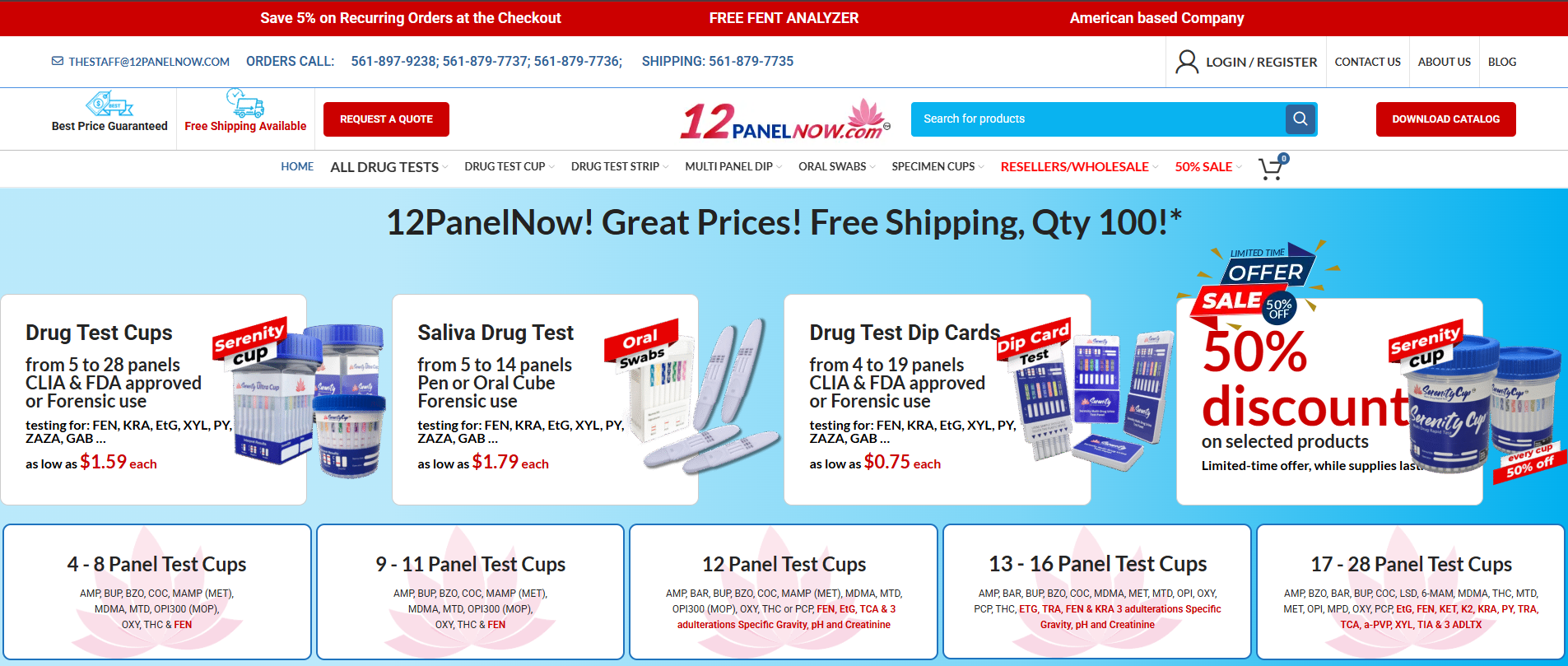
Ready to get the quality and consistency you need? Trust 12 Panel Now, your source for high-quality drug testing supplies for every screen featured in this guide. From rapid drug test kits designed for cost efficiency and precision to comprehensive oral fluid testing solutions, we support healthcare, law enforcement, employers, and labs across the country. Visit https://12panelnow.com now to upgrade your collection and testing process. Streamline your workflows today and keep your results professional.
Frequently Asked Questions
What types of drug screens are available for laboratories?
Immunoassay screens, Gas Chromatography-Mass Spectrometry (GC-MS), High-Performance Liquid Chromatography (HPLC), Enzyme-Linked Immunosorbent Assay (ELISA), Thin Layer Chromatography (TLC), Hair Follicle Testing, and Oral Fluid Testing are the seven types of laboratory drug screens buyers should know. To select the best method, assess your specific testing needs and prioritize requirements like accuracy, turnaround time, and sample type.
How do I choose the right drug testing method for my organization?
Evaluate factors such as the substances being tested, detection windows, and required sensitivity levels. Conduct a comparative analysis of each method’s advantages to determine which aligns best with your organization’s drug screening goals.
What is the importance of confirmatory testing following initial screening?
Confirmatory testing, such as GC-MS, is crucial for ensuring that initial screening results are accurate and reliable. Implement confirmatory testing protocols, particularly in high-stakes environments like employment or legal situations, where definitive results are essential.
How can I ensure efficient collection of oral fluid samples for drug testing?
Use standardized procedures for oral fluid collection that maintain proper hygiene and minimize discomfort for individuals being tested. Train staff on these procedures to ensure they follow best practices during sample collection, boosting accuracy in test results.
What are the advantages of using hair follicle testing compared to other drug testing methods?
Hair follicle testing provides an extended detection window of up to 90 days, making it ideal for assessing long-term drug use patterns. Consider incorporating hair follicle testing in scenarios where historical substance use is critical, such as legal or rehabilitation contexts.
How do I interpret the results of an immunoassay drug screen?
Immunoassay results indicate the presence of specific drug metabolites but may include false positives or negatives. Follow up positive results with confirmatory tests for accurate interpretation, and familiarize yourself with cutoff levels to understand the significance of varying concentration thresholds.