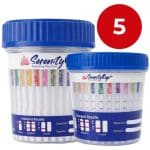
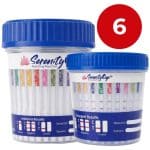
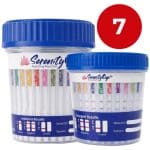
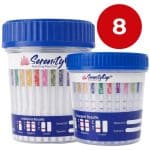
Beyond 99% Accuracy: What to Look for in CLIA Waived & FDA Approved Drug Test Cups

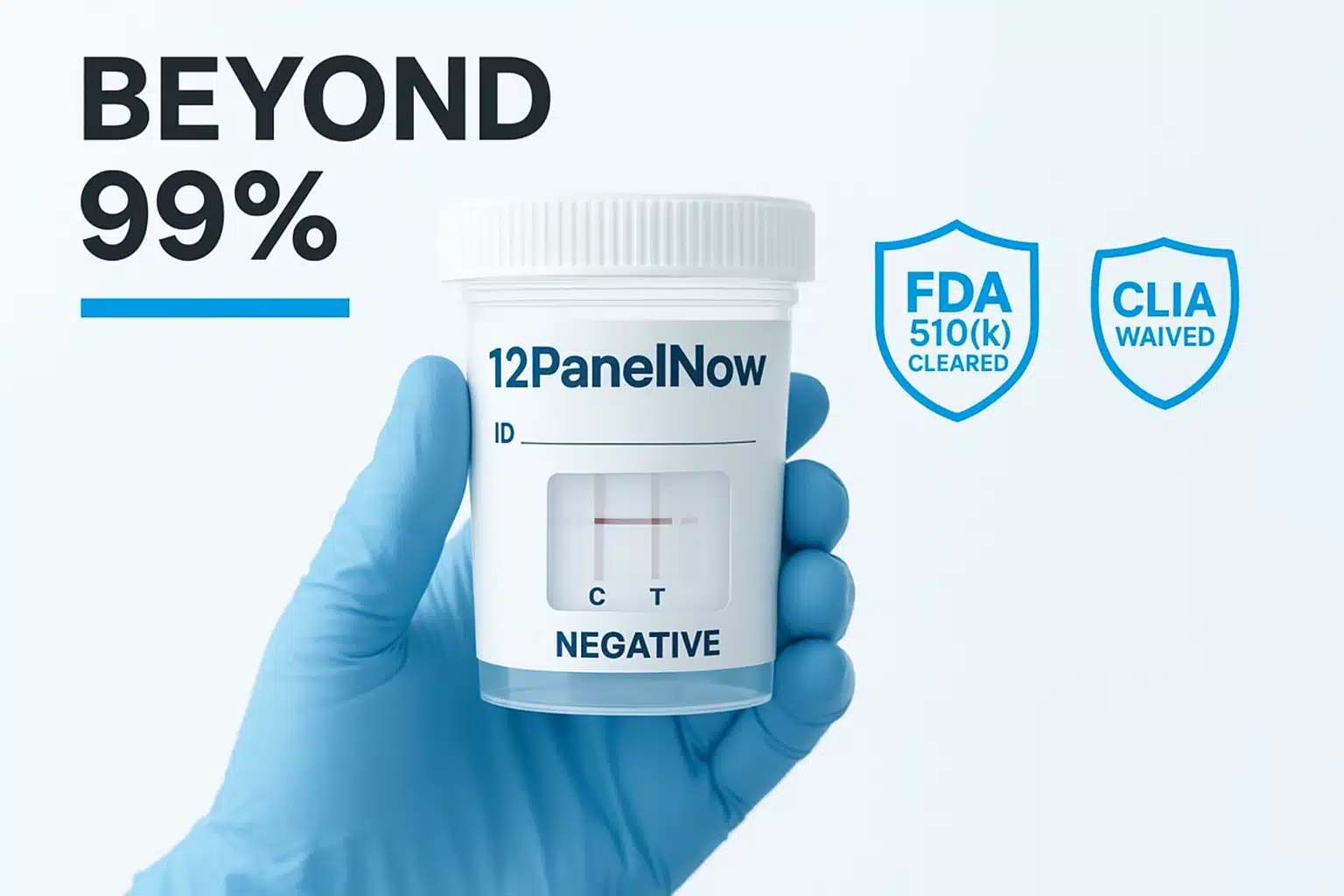
But here is the hard truth that most product catalogs won’t tell you: Accuracy is a baseline, not a strategy.
When an employee contests a positive result, or when a patient claims their clean drop was a false positive caused by over-the-counter medication, “99% accuracy” isn’t what protects you. What protects your organization from liability and administrative nightmares is legal defensibility and operational compliance.
You aren’t just looking for a cup that works; you are looking for a risk mitigation tool. To make a confident decision, we need to look past the marketing percentages and dig into the regulatory frameworks—specifically FDA 510(k) clearance and CLIA waivers—that actually determine if a test is fit for professional use.
The Compliance Shield: FDA 510(k) vs. CLIA Waived
In the world of Point of Care (POC) testing, two acronyms dominate the conversation. Understanding the distinction between them is critical for shielding your facility from legal exposure.
FDA 510(k): The Product Validator
FDA clearance focuses on the device itself. A 510(k) clearance means the manufacturer has submitted comprehensive data demonstrating the device is safe and effective, substantially equivalent to a legally marketed device. This is your assurance that the chemistry inside the cup performs as promised.
CLIA Waived: The Facility Protector
While FDA clearance validates the cup, the CLIA Waiver validates your ability to use it.
The Clinical Laboratory Improvement Amendments (CLIA) regulate laboratory testing. For a test to be “Waived,” it must be so simple and accurate that the likelihood of erroneous results is negligible. The FDA scores these tests on a complexity scale of 1 to 3 in seven categories (including knowledge required, troubleshooting, and interpretation).
A test is only CLIA Waived if it scores a total of 12 or less.
Why does this matter to an HR Director or Clinic Operator? Because using a non-waived test in a facility without a high-complexity laboratory certificate is a violation of federal law (42 CFR 493).
When you choose a solution like the 12 Panel Now cups, which carry both FDA approval and CLIA waivers, you aren’t just buying a test; you are buying a regulatory safety net that covers both the product quality and your operational workflow.
The 5-Minute Compliance Audit
Evaluation isn’t just about reading specs; it’s about auditing your potential vulnerability. A cheap test becomes incredibly expensive the moment it forces you into a legal dispute or a false dismissal suit.
Use this framework to evaluate your current or prospective drug testing supply.
1. The Adulteration Check
Does the cup include built-in validity testing (temperature strip and adulterant panels)?
-
- Why it matters: A negative result is worthless if the sample is substituted. Integrated temperature strips (90°F–100°F) are the first line of defense. If a vendor separates these components to save pennies, they are adding minutes to your process and risk to your protocol.
2. Wicking Architecture
Does the cup utilize high-flow wicking technology?
-
- Why it matters: “Invalid” results often stem from wicking failure—where the urine doesn’t migrate up the strip correctly. This forces re-tests, wasting inventory and frustrating donors. High-quality cups use wide-gauge membranes to ensure consistent saturation.
3. Cutoff Clarity
Are the cutoff levels aligned with SAMHSA (Substance Abuse and Mental Health Services Administration) standards?
-
- Why it matters: If your cup tests for THC at 50ng/mL (the industry standard) but your confirmation lab uses a different screening level, you create discrepancies. Consistency between your instant cup and laboratory standards is vital for defensibility.
Decoding the “Faint Line” Crisis
The number one source of anxiety in drug testing isn’t the positive result—it’s the ambiguous one. Search forums and Reddit threads, and you will find thousands of users panicking over “faint lines.”
As an evaluator, you need a product that minimizes this confusion.
The Science of the Ghost Line
In an immunoassay test (which is what rapid cups are), the presence of a line indicates a negative result. The test line (T) appears because the drug was not present to bind with the antibodies on the strip.
However, the intensity of the color does not correlate with the concentration of the drug. A faint line is a negative result, period.
The confusion usually arises from two sources:
-
- Low-Quality Reagents: Cheaper cups often use inconsistent reagent coatings, leading to lines that are barely visible even for clean donors.
- Read Time Errors: Reading the result after the 5-minute window allows the membrane to dry, often causing “ghost lines” to disappear or appear incorrectly.
When evaluating suppliers, look for those who provide clear “Result Interpretation” resources. At 12 Panel Now, we emphasize that reliable results depend on reading the window strictly between 5 and 60 minutes to prevent evaporation artifacts.
Operational Reality: Mitigation Beyond the Cup
Even with the best CLIA Waived, FDA-approved technology, “99% accuracy” refers to analytical sensitivity. In the real world, biological complexity creates outliers.
To truly secure your process, you must account for Cross-Reactivity.
Certain molecular structures in common medications can mimic illicit drugs. For example, some decongestants can structurally resemble amphetamines in an immunoassay. A reliable vendor doesn’t hide this; they equip you with the data to manage it.
The Confirmation Protocol
If you are managing a zero-tolerance environment (probation, heavy machinery, DOT), an instant cup is your screening tool, not your final verdict.
-
- Screen: Use a high-quality, CLIA Waived cup (like our 12 or 14-panel configurations) to filter out the negatives.
- Confirm: Any non-negative result should be sent for GC/MS (Gas Chromatography-Mass Spectrometry) confirmation. This is the “Gold Standard” that clears up any cross-reactivity issues.
Final Thoughts: Confidence in Your Cup
When you are holding a drug test cup, you are holding a decision that affects someone’s livelihood and your organization’s liability. You shouldn’t have to choose between affordability and rigorous compliance.
By selecting cups that are both FDA Approved and CLIA Waived, you ensure that your testing program is built on a foundation of legal defensibility. Whether you need a simple 5-panel screen or a comprehensive 28-panel investigation, the goal is the same: clarity, compliance, and confidence.
Frequently Asked Questions for Decision Makers
Does FDA Approval guarantee the test is 100% accurate?
No diagnostic test is 100% accurate due to potential biological interference. However, FDA 510(k) clearance guarantees the test has met rigorous performance standards against a reference method (like GC/MS). It significantly reduces the risk of lot-to-lot variance.
Can I use these cups for DOT testing?
For Department of Transportation (DOT) testing, the initial screening can be done via instant tests only if permitted by specific agency regulations, but generally, DOT protocols require laboratory-based testing. However, many “Non-DOT” workplace programs mirror DOT standards by using 5-panel or 10-panel configurations that align with federal cutoffs.
Why do some tests cost $5.00 while others are under $2.00?
Pricing often reflects supply chain efficiency rather than just raw material quality. We are a family-owned business that handles massive volume, allowing us to offer CLIA Waived cups for as low as $1.69 without sacrificing the FDA-cleared status or the 99% reliability rating. You are often paying for the brand name, not better chemistry.