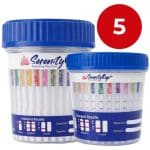
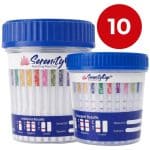
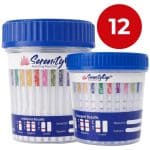
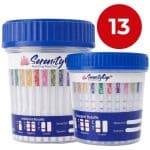
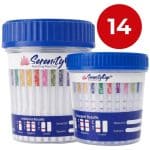
How Fast and Clear Are ETG/Fentanyl Cup Test Results?


If you’re buying an advanced ETG/fentanyl drug test cup, two things matter most: how fast you get a result and how easy it is to read. You need results quickly enough to act on—and lines that don’t spark arguments. This guide covers how long results typically take to appear, how to interpret faint lines, what “clear” really looks like, and what can slow down or distort what you see.
What “results displayed” really means on an ETG/Fentanyl cup
Many people think the test “shows results” the moment urine hits the strips. In real use, it happens in phases. The sample wicks through the strip, lines begin forming, and then those lines finish developing and settle into their final appearance.
For practical purposes, “displayed” should mean “fully developed and readable.” Read too early and you may misjudge a line that hasn’t finished forming. Read too late and you can run into another problem: some tests can change in appearance after the recommended window.
How quickly do advanced ETG/Fentanyl cups show results?
Most rapid urine drug test cups begin showing lines within a few minutes. Control lines often appear first, followed by test lines. Advanced multi-panel cups that include ETG and fentanyl are still designed for fast reads, but each panel needs enough time to finish developing before you make a call.
The best approach is consistency. A repeatable routine matters more than squeezing out an extra minute—especially if you need a decision you can justify later.
A realistic timing pattern you will usually see
- Early stage: Control lines appear first on many panels.
- Mid stage: Test lines develop and become easier to see.
- Final stage: Lines stop changing and are simplest to judge.
Bottom line: read within the manufacturer’s stated time window, and don’t call positives or negatives while the strip is still clearly developing.
What makes results look “clear” (and what makes them look messy)
Clear results come down to contrast. Contrast depends on lighting, strip quality, and whether the sample migrates evenly. You’ll usually get the cleanest read with bright, even light and the cup placed flat on a stable surface.
Most “messy” results are caused by how the test is handled. People rush, read in dim lighting, or tilt the cup—then wonder why one panel looks lighter than another.
Simple habits that improve readability right away
- Use bright light: Stand near a window or use a strong overhead light.
- Keep the cup level: A flat surface helps the sample flow evenly.
- Set a timer: It prevents early reads and late reads.
- Read at eye level: You’ll reduce glare and judge faint lines more accurately.
How to read lines correctly (especially faint lines)
Most multi-panel urine cups use a competitive immunoassay format, which can feel backwards if you’re new to these tests. On many of these cups, a visible test line usually indicates a negative result for that drug, while no test line (with a valid control line) usually indicates a positive screen.
This is especially important on ETG and fentanyl panels, since people tend to watch those most closely. In typical rapid-test interpretation, a faint test line still counts as a line. If you can see it within the read window, treat it as present—even if it’s lighter than the control line.
What a “faint line” usually means in real life
A faint line often means the concentration is near the cutoff level for that panel. The test is still giving you a result, but the next step depends on your setting. Workplace or clinical programs often send non-negative screens for confirmation testing. Home users often retest later with a fresh sample and tighter control of timing and lighting.
How ETG results tend to display (and why timing matters)
ETG panels screen for an alcohol metabolite that can remain detectable after drinking. People choose ETG when they care about recent alcohol use—not just current impairment. That can make borderline results feel high-stakes, especially when someone disputes what the cup “really showed.”
You can reduce arguments by controlling how you read and document the test. Use the same timing and lighting each time. If your process allows it, take a clear photo at the correct read time. That photo can help later—especially if the cup is discarded or stored in a way that changes how the strip looks.
Common mistakes that create “unclear” ETG reads
- Reading too early: The test line may look absent before it finishes forming.
- Reading too late: Evaporation and drying can create artifacts that change the strip’s appearance.
- Judging by line darkness: On rapid screens, presence usually matters more than darkness.

How fentanyl results tend to display (and why users worry)
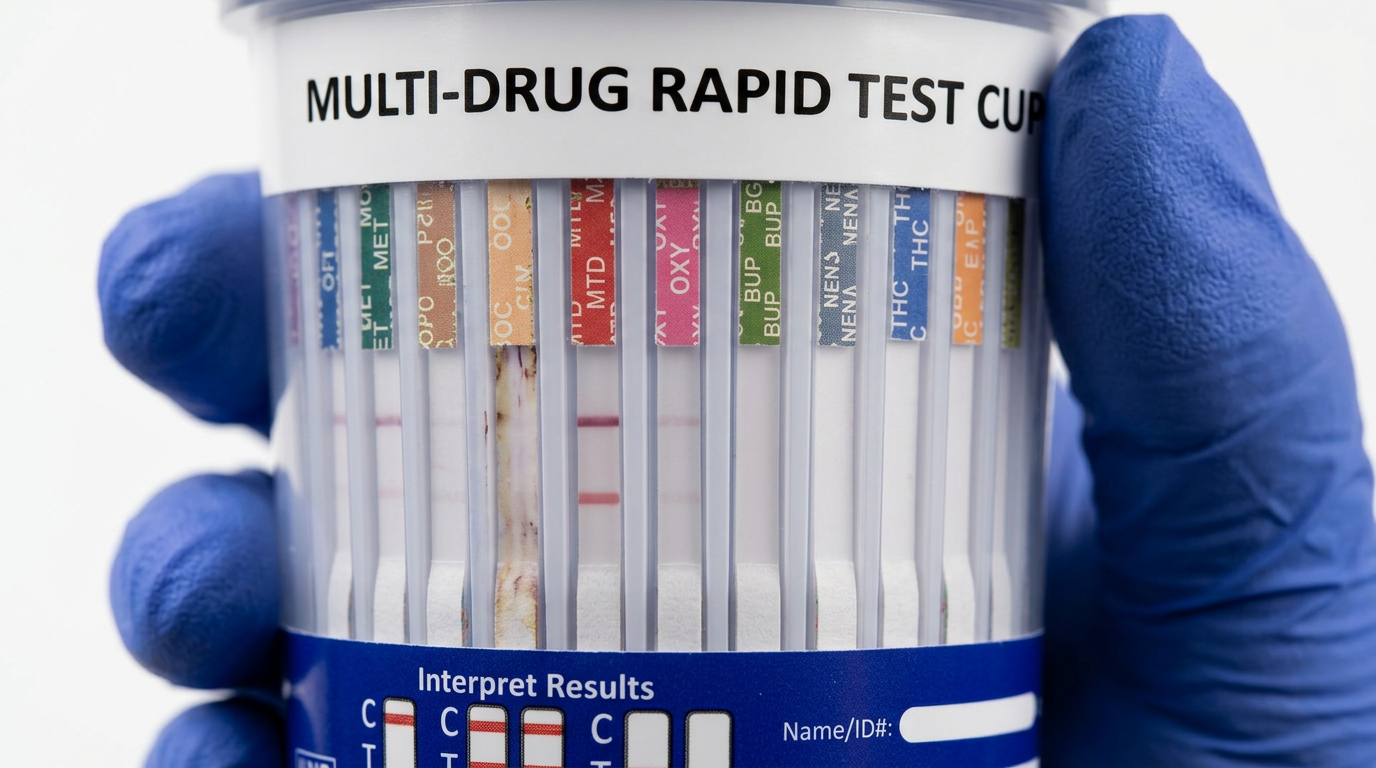
Fentanyl raises the anxiety level because it’s potent and the perceived risk is serious. People want a simple “yes” or “no.” The cup provides a screen—not a final, courtroom-ready conclusion—so the most useful thing you can do is read it correctly and know what you’ll do if the result is non-negative.
Visually, fentanyl panels follow the same rules as the others: you need a valid control line, and you interpret the presence or absence of the test line within the correct time window. If something looks off, treat it as invalid and retest with a new device rather than trying to interpret a questionable panel.
When a fentanyl panel looks unclear
- No control line: The panel is invalid.
- Streaking or blotchy background: Flow may be uneven; retesting usually solves it.
- Very light test line: If it appears within the read window, treat it as a line.
What can slow down results or make lines harder to see?
Delays usually come from sample conditions or handling. Very cold urine can slow the reaction and delay line development. Extremely concentrated or diluted urine can also affect how lines appear. If your program uses specimen integrity checks, complete those steps before interpreting drug panels.
Storage matters too. Heat and humidity can degrade test materials. Store cups exactly as the packaging instructs, and avoid using cups past the expiration date if you want reliable timing and readable lines.
Quick checklist for clearer, faster reads
- Bring the test cup to room temperature before use.
- Use a fresh sample and follow the fill line.
- Place the cup on a level surface.
- Start a timer immediately.
- Read only within the stated read window.
- Record the result right after reading it.
What “instant results” can’t tell you
A rapid cup provides a screening result, not a confirmed lab result. That difference matters most with a non-negative screen, an invalid panel, or situations involving employment, court, or medical decisions.
If you need defensible outcomes, treat a non-negative screen as the start of the process—not the final word. Many programs require lab confirmation for exactly that reason. The cup helps you move quickly, but it doesn’t replace confirmation when the rules or risk level demand it.
How to choose an ETG/Fentanyl cup that reads clearly
It’s easy to focus only on panel count, but readability is just as important. Look for clear labeling, consistent result windows, and a layout that reduces the chance of mixing up panels.
Also match the cup to your reason for testing. If alcohol and fentanyl are your specific concerns, choose a cup that includes both panels so you’re not juggling multiple devices or relying on guesswork.
FAQ
How fast should I see the control line?
You’ll usually see the control line early. If a panel never shows a control line, treat that panel as invalid and retest with a new cup.
If the test line is faint, is that a positive?
On many rapid urine drug screens, a faint test line still counts as a line and usually indicates a negative screen for that panel. If a result seems questionable, follow your program’s rules for retesting or confirmation.
What if I read the cup late and the lines changed?
Use the result read within the stated read window. If you missed the window, retest rather than guessing—late reads can show drying artifacts that weren’t present at the proper time.
Conclusion
Advanced ETG/fentanyl drug test cups can produce results within minutes, but “clear” results depend on timing, lighting, and consistent handling. If you want a fast screen that’s easier to interpret with less second-guessing, use a multi-panel cup that includes ETG and fentanyl in one device. For reliable, easy-to-read screening in one step, choose the 12 Panel ETG & FEN Cup from 12 Panel Now.