Do Rapid ETG/Fentanyl Tests Detect All Adulterants?

If you’re buying a rapid ETG/fentanyl test, you likely want two things: clear results and confidence the urine sample wasn’t tampered with. A common follow-up question is whether rapid ETG and fentanyl tests also include broad adulteration detection. Here’s what “adulteration detection” usually means in rapid cups, what it typically covers, what it doesn’t, and how to pick the right setup for your needs.
What people mean by “adulteration detection” (and why it matters)
Most buyers use “adulteration detection” to mean any sign that a urine sample isn’t valid. In reality, integrity issues fall into a few categories, and rapid cups don’t address all of them the same way.
Three common integrity problems come up repeatedly:
- Substitution: submitting synthetic urine or someone else’s urine.
- Dilution: drinking excessive water or adding water to the sample to lower drug concentrations.
- Chemical adulteration: adding oxidizers, acids, bases, soap, or “detox” agents designed to interfere with test chemistry.
ETG and fentanyl panels tend to raise the stakes. Alcohol and opioids are tied to safety, relapse, and compliance risk, so speed matters—but so does trust in the sample. Integrity checks help you spot obvious issues, but they don’t make a collection “tamper-proof” on their own.
Do rapid ETG/fentanyl tests automatically include adulteration checks?
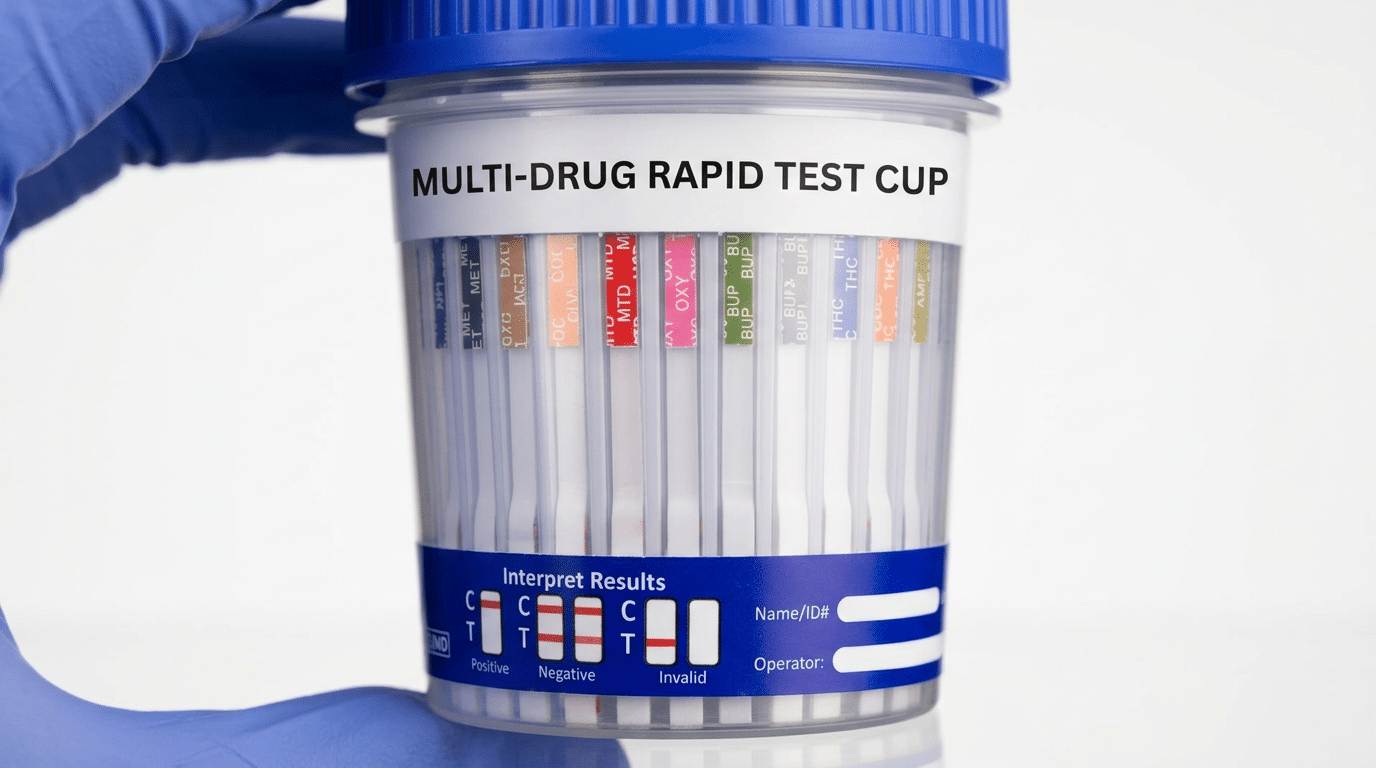
No. “Rapid ETG and fentanyl” describes the drug panels included in the device. Adulteration detection refers to specimen validity features, and those vary by product and model. Some multi-panel cups include built-in validity strips (such as pH and creatinine). Others focus strictly on drug panels.
In other words, “rapid ETG/FEN cup” does not automatically mean “full adulteration panel” unless the listing spells it out. Before you buy, review the product images and description for terms like temperature strip, specimen validity testing, SVT, or adulterants.
What adulteration checks usually cover in rapid cups
When a cup includes specimen validity checks, it’s generally aimed at catching the most common ways people try to defeat a urine test. These checks don’t prove tampering, but they can flag results that deserve follow-up.
Temperature: the fastest first check
A temperature strip is the quickest reality check. Fresh urine typically falls within an expected temperature range shortly after collection. If the reading is outside that window, treat the sample as questionable and follow your policy (re-collection, observed collection, or lab testing).
Temperature helps most with substitution (synthetic urine or a stored sample). It’s less useful for dilution or chemical adulterants, since a compromised sample can still be “warm enough.”
Creatinine and specific gravity: the main dilution indicators
Creatinine and specific gravity address a basic question: is the urine too diluted to trust? Over-hydration can push drug levels below a cutoff, and direct water addition can do the same. These indicators can flag unusually low concentration.
This matters for frequent monitoring because a negative result on a diluted sample isn’t as reassuring as a negative result on a normal sample.
pH: a quick clue for acids, bases, and unusual samples
Urine pH usually stays within a typical human range. A pH result far outside that range can point to chemical tampering or a non-urine liquid. It can also warn you about conditions that may interfere with immunoassay performance.
Oxidants and “adulterant panels”: targeted chemical tamper flags
Some cups include strips that react to oxidizers or other common adulterants used to disrupt drug test chemistry. These can be helpful, but they only detect what they’re designed to detect. A strip aimed at oxidants won’t catch every household chemical or every commercial “detox” product.
What “comprehensive” adulteration detection would require (and why rapid tests rarely match that)
“Comprehensive” adulteration detection looks more like laboratory work. A lab can run specimen validity testing (SVT) with higher precision, multiple markers, instrument controls, review rules, and chain-of-custody documentation.
Rapid cups are built for speed and convenience. Even when they include validity strips, those results are screening-level indicators. They help answer, “Does this look like normal urine?”—not, “Does this meet every laboratory validity criterion?”
Rapid tests cannot catch every method of cheating
Some cheating methods won’t trigger basic validity markers. For example, a person can submit real urine from another person at the right temperature with normal creatinine and pH. A rapid cup can’t identify whose urine it is.
Some chemical strategies are also designed to stay within “normal” ranges. As with any screening tool, edge cases can slip through.
ETG adds a “what did they drink?” complication
ETG helps detect recent alcohol exposure, but results can come with real-world gray areas—timing, hydration, and concerns about incidental exposure (such as certain personal care products). Validity checks can flag dilution, but they can’t explain intent or context. If results affect employment, legal status, or custody, you’ll want a clear confirmation pathway.
Fentanyl screening also raises confirmation questions
Fentanyl is associated with significant safety risk, but screening still has limits. Rapid immunoassays are useful for fast screening, yet any non-negative result typically needs confirmation by a certified lab method if you plan to take formal action. The same goes for integrity flags: lab testing can help distinguish “invalid sample,” “collection issue,” and “true positive.”

How to judge whether a rapid ETG/fentanyl test has the adulteration coverage you need
Most buyers fall into two groups: personal monitoring and formal programs (workplaces, treatment, supervision). Which group you’re in should shape how heavily you rely on validity testing and follow-up procedures.
If you test at home or for personal monitoring
You generally want a simple system that closes the most obvious loopholes. A practical approach looks like this:
- Use a multi-panel cup that includes ETG and fentanyl.
- Collect the sample promptly and check the temperature strip right away (if included).
- Keep rules consistent (same time of day when possible, consistent expectations about hydration).
- If a result is surprising, re-test or confirm through a lab instead of turning it into an argument.
At-home testing works best when it’s routine rather than a one-time “gotcha.” Consistency reduces the temptation to game the process and makes patterns easier to spot.
If you test for workplaces, clinics, or supervision programs
Validity strips are only one piece of a defensible process. You’ll usually need:
- Collection rules (privacy boundaries, timing, handwashing, and limits on bags/coats in the restroom).
- Documentation (who collected, when, and any unusual observations).
- Reflex actions (what you do with an invalid, diluted, or non-negative screen).
- Confirmation access for disputed or high-impact results.
If you don’t have a way to confirm, avoid treating a screening integrity flag as final proof of tampering. You can still treat it as a reason to recollect under stricter conditions.
Common buying questions that reveal what “comprehensive” means for you
Marketing language can be vague. These questions are usually more useful than the phrase “adulteration detection,” because they clarify what level of protection you actually need.
“Do I need adulteration detection if the cup already tests ETG and fentanyl?”
Yes—especially if you plan to rely on negative results. Someone trying to “pass” is usually focused on turning a true positive into a negative. Dilution and substitution are common ways to attempt that, and validity checks help you trust negative screens more.
“If the adulteration panel looks normal, does that prove the drug result is correct?”
No. A normal validity strip means the sample looks like typical urine and doesn’t show obvious tampering for the markers tested. It doesn’t rule out every cheating method, and it doesn’t replace lab confirmation when the decision is serious.
“What is the best way to handle an ‘invalid’ or ‘dilute’ situation?”
Use a written rule set. Many programs recollect as soon as possible, tighten collection conditions, and document hydration instructions. If the stakes are high, send a confirmation test to a lab that can perform specimen validity testing and confirmation analysis.
Where rapid ETG/fentanyl tests fit best: screen fast, confirm smart
Rapid ETG/fentanyl cups do one job well: they provide fast screening insight without waiting days for lab results. That speed supports frequent monitoring and quick safety decisions. The trade-off is that rapid cups can only flag common integrity problems—they can’t guarantee “comprehensive” adulteration detection in the lab sense.
The most reliable approach is a strong rapid cup paired with clear collection rules and a plan to confirm non-negative or questionable samples. You get speed without pretending a screen has the final word.
Optional FAQ
Does an ETG result change if someone drinks a lot of water?
Yes. Heavy hydration can lower urine concentrations. A cup with validity indicators can help you spot dilution risk, but a lab test provides stronger context if you need certainty.
If fentanyl is present, will a rapid cup always catch it?
A rapid fentanyl panel can detect fentanyl at its stated cutoff when conditions match the test design, but no screening test catches every case. Confirm unexpected or high-impact results through a lab.
Are “adulteration strips” the same as full specimen validity testing (SVT)?
No. Adulteration strips provide quick screening signals. Full SVT relies on laboratory measurement and review rules, which is more defensible for formal decisions.
Conclusion
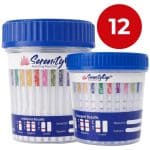
Rapid ETG/fentanyl tests may include adulteration checks, but they don’t guarantee broad, lab-level coverage unless the product specifically lists specimen validity features. Treat integrity indicators as helpful screening tools, then back them up with consistent collection rules and lab confirmation when outcomes are high-stakes. If you want a single cup that screens for alcohol exposure and fentanyl in one step, the 12 Panel ETG & FEN Cup from 12 Panel Now is a strong practical option.