Workplace Drug Test Checklist to Reduce False Positives


False positives cause real workplace headaches. One confusing result can delay hiring, spark disputes, and erode trust. The good news: most of that risk is preventable with the right test choice and a tight, consistent process. Here’s what to look for in a workplace drug test if your goal is straightforward: minimize false positives without bogging down operations.
Start with the goal: screening vs. confirmation
A workplace rapid drug test is a screen, not a final decision. It quickly separates negative results from non-negative results. A confirmation test—typically performed at a certified lab—identifies the specific substance and concentration with much higher accuracy.
Many “false positive” blowups start with a policy problem, not a testing problem. If your policy treats a rapid screen as definitive, you’re inviting conflict. If your policy treats any non-negative screen as “send for confirmation,” you protect employees and the business.
What you should require in your written policy
- Define outcomes clearly: negative vs. non-negative (avoid calling on-site results “positive”).
- State next steps: confirmatory testing for every non-negative screen.
- Document who reviews results: HR, safety, or a designated manager.
- Document retest rules: what happens if a sample is invalid or tampering is suspected.
Choose a test that matches your actual risk profile
Many employers stick with the same standard panel because it’s familiar. That can backfire in two ways: you miss substances that actually matter to your safety program, and you create confusion when your panel doesn’t match what’s happening in your environment.
Start with job risk and local trends. A forklift-heavy warehouse doesn’t have the same exposure profile as an office. A region dealing with fentanyl exposure needs different coverage than a region where alcohol misuse drives incidents.
How panel choice affects false-positive risk
Panel choice isn’t just about what you can detect. It also affects how often you land in the gray zone where a screen flags something and everyone scrambles for clarification. You reduce that churn when your panel matches your real concerns and includes the right markers.
- Alcohol monitoring often calls for EtG urine screening—not just a breath test—when you need insight into recent use beyond the moment.
- Opioid risk increasingly includes fentanyl exposure concerns in many communities.
- Emerging or workplace-relevant substances such as kratom may matter for certain employers and monitoring programs.
Look for clear cutoff levels and consistent interpretation rules
Most rapid urine tests use cutoff thresholds. They’re not asking, “Is there any trace at all?” They’re asking, “Is it at or above the cutoff?” That design reduces background noise and helps keep results consistent across employees.
You’ll see fewer disputes when you choose tests with clear documentation and train staff to interpret results the same way every time.
Questions to ask vendors or your procurement team
- Do you provide written cutoff information for each analyte?
- Do you provide clear reading-time instructions and a defined result window?
- Do you provide lot consistency and expiration dating we can track?
Demand specimen integrity checks (or build them into your workflow)
Some “false positives” aren’t false positives at all—they’re collection problems. A contaminated cup, a labeling mistake, or a sample that sits too long can create confusion that looks like a test failure.
Simple process controls prevent most of this, even if your test format doesn’t include built-in adulteration checks. Consistency also matters: when everyone is treated the same way during collection, you reduce accusations of unfairness or “gotcha” testing.
Collection steps that reduce bad results and complaints
- Use a clean collection area and keep supplies sealed until use.
- Confirm sample labeling while the employee is present.
- Control timing so reading happens within the stated result window.
- Record any issues such as low volume, temperature concerns, spills, or delays.
Prioritize chain of custody when the result can impact employment
Drug testing can affect someone’s job. That makes documentation as important as the test itself. A solid chain of custody reduces disputes, keeps supervisors out of “he said, she said,” and supports consistent, fair treatment.
You don’t need a complicated system—you need a reliable one. Same form. Same steps. Same storage rules. Same retest rules.
Simple chain-of-custody elements that pay off fast
- Unique identifier on the sample and the form.
- Collector name and time stamps for collection and reading.
- Secure handling if you ship a sample for confirmation.
- Result documentation that includes a photo when your policy allows it.

Train staff on the most common “false positive” trigger: reading errors
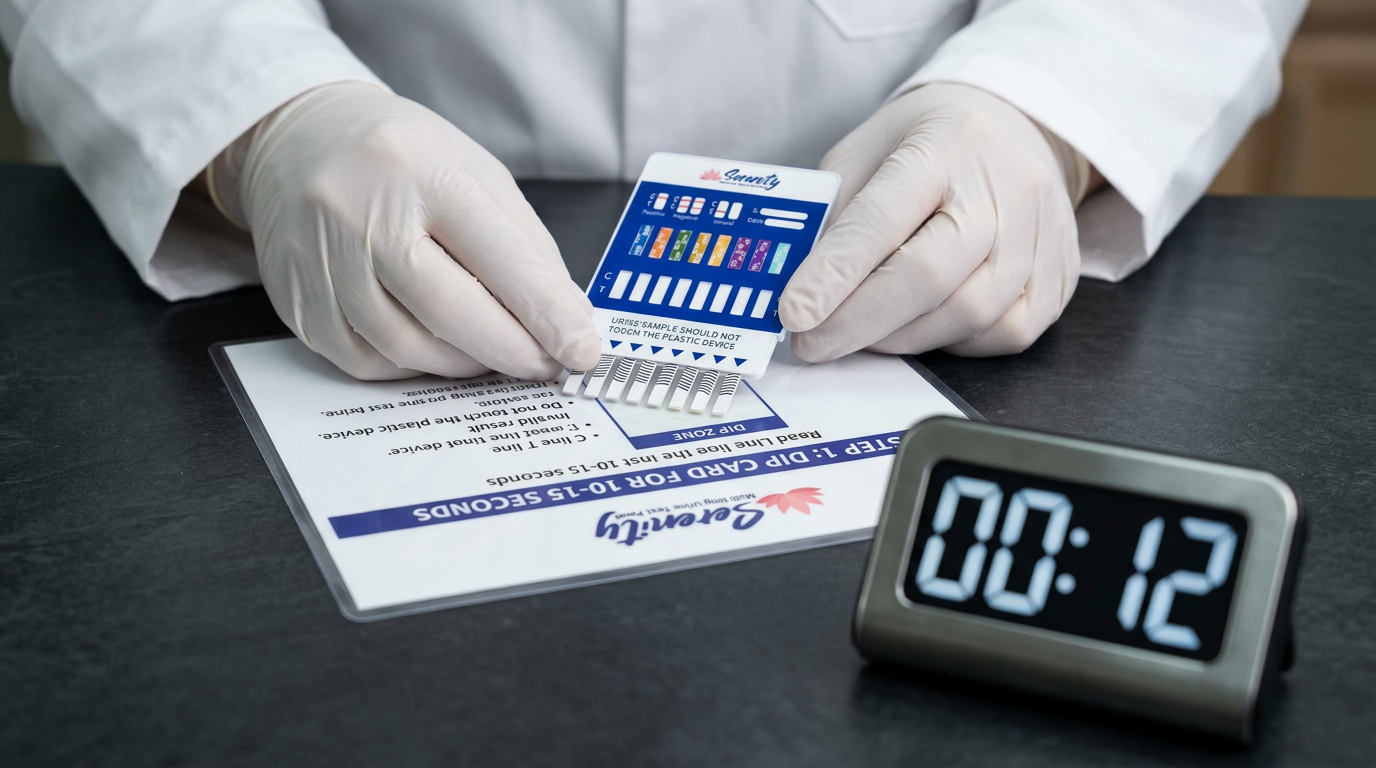
Many rapid-test disputes come down to human error. Faint lines get misread. Results are checked too early or too late. Staff rely on memory instead of the device instructions.
Fixing this doesn’t require a big program. It requires short, consistent training and one non-negotiable rule: read results at the correct time and interpret any visible line exactly as the manufacturer instructs.
Practical training tips that reduce misreads
- Use a timer every time—no guessing.
- Use consistent lighting; avoid dim bathrooms or harsh glare.
- Teach “non-negative” language so staff don’t label someone unfairly.
- Keep the instruction sheet at the test site, not filed away elsewhere.
Plan for medications and honest explanations without turning it into an argument
Employees worry about common medications and supplements—and rumors travel fast. You’ll reduce tension by explaining what happens next. A non-negative screen should trigger confirmation and a review step, not an on-the-spot debate about someone’s health history.
If you use a medical review process (or an external MRO), say so. If you don’t, be clear about how confirmation works and who will see the results.
What your HR message should say (and what it should not say)
- Say: “A non-negative screen goes to confirmation.”
- Say: “We keep results confidential and limit access.”
- Do not say: “If it flags, you failed.”
- Do not say: “Tell your supervisor your medications.”
Use advanced screening when newer substances matter to your workplace
Basic panels don’t always reflect what shows up in real incidents. Alcohol misuse may appear as Monday absenteeism rather than a failed breath test at 9 a.m. Fentanyl exposure can affect safety planning even when “classic opioid” assumptions miss the mark. Kratom can create policy and monitoring questions in certain workplaces.
Advanced screening helps because it lines up the test with what you actually need to know. That alignment prevents the “confusing result” cycle where managers suspect a problem, the test checks the wrong box, and everyone wastes time.
Signs you should expand beyond a basic panel
- You’re seeing safety incidents with no clear cause.
- You operate in areas where fentanyl exposure is a real concern.
- You run return-to-duty or ongoing monitoring where alcohol markers matter.
- You want a single on-site screen that covers a broader set of substances.
Match the test format to your workflow so the process stays consistent
Format seems like a small detail until it isn’t. If the process is fiddly, staff will improvise, and that’s when misreads and documentation gaps show up.
Dip cards work well for many employers because they keep steps simple. Fewer steps means fewer handling mistakes, fewer disputed results, and fewer “false positive” stories that drag down morale.
Optional FAQ
What should we do after a non-negative rapid screen?
Treat it as “needs confirmation,” then send the sample (or recollect under your policy) for confirmatory lab testing before taking final action.
Do rapid workplace drug tests produce false positives?
They can. Most disputes trace back to reading errors, timing mistakes, or policies that treat a screen like a confirmed result.
How do we reduce the chance of a false positive dispute?
Use a clear policy, maintain chain of custody, train staff to read tests correctly, and choose a panel that matches your real risks to avoid confusion and unnecessary retests.
Conclusion
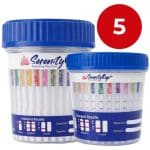
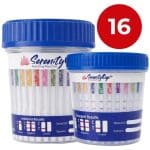
You cut false positives and false-positive disputes by controlling three things: policy, collection process, and test choice. A clear “screen, then confirm” rule supports fairness. A consistent chain of custody supports credibility. A panel that fits real-world risk protects your time and keeps decisions defensible. If you want a fast on-site screen that covers a wide range of substances while including specialized markers, the 16 Panel Drug Test with Kratom, ETG and Fentanyl from 12 Panel Now is a strong place to start.