Staying Ahead: How to Choose Drug Tests That Detect Fentanyl, Xylazine, and Emerging Substances

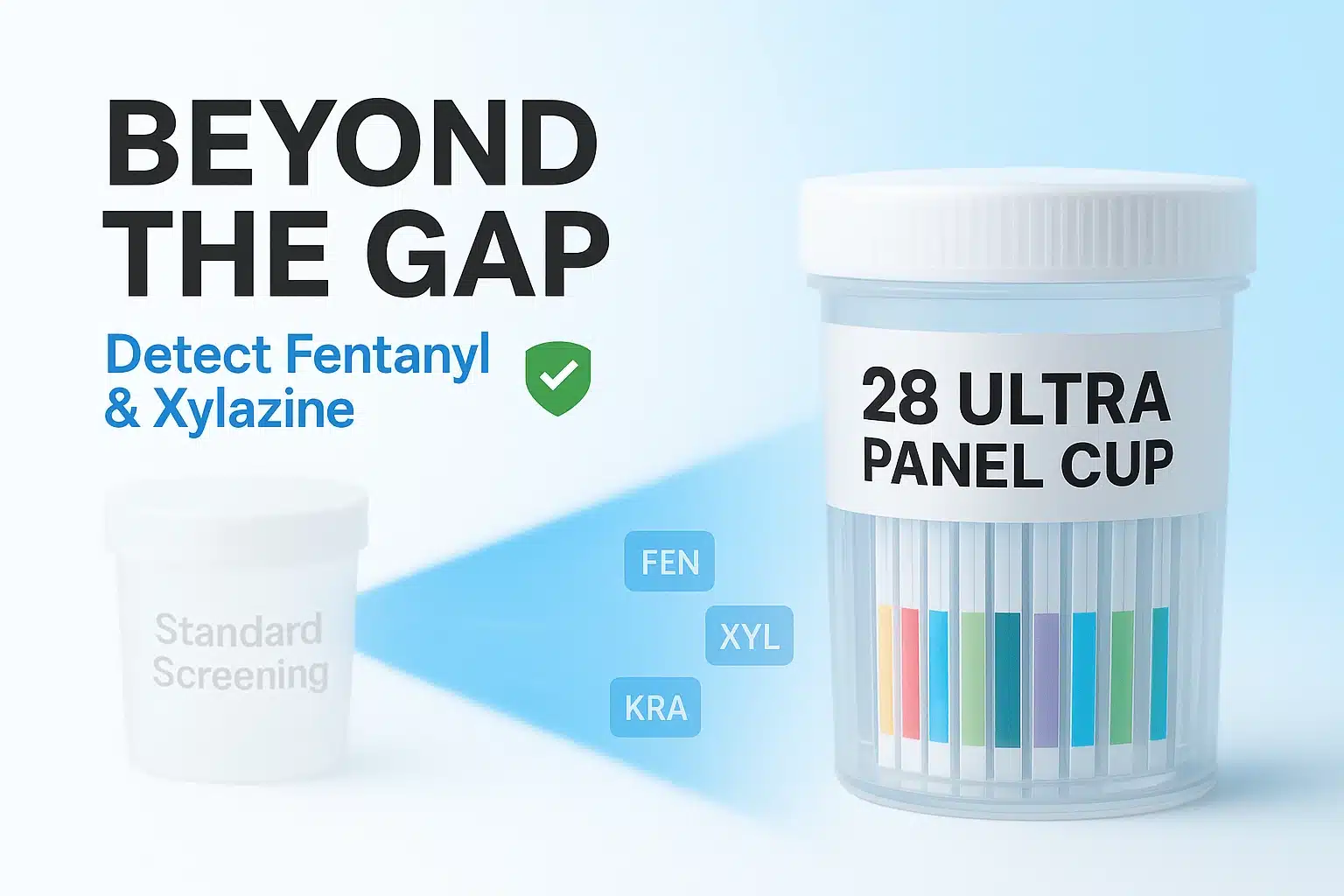
If you are managing safety protocols today, you likely have a nagging suspicion that the standard “5-panel” or “10-panel” drug tests is no longer telling you the whole story.
You aren’t wrong.
For decades, workplace and clinical drug testing relied on a predictable list of targets: cocaine, marijuana, PCP, amphetamines, and standard opiates. But the illicit drug supply has fundamentally shifted. We are currently facing a “Detection Gap.” While substances like heroin are declining, they are being replaced by synthetic compounds that traditional panels simply cannot see.
If your current drug testing protocol was designed five years ago, it is likely obsolete against today’s threats. This guide will walk you through the evaluation process for modern drug screening, helping you bridge the gap between compliance and actual safety.
The 2025 Reality Check: The “New Supply”
To choose the right test, we first have to acknowledge what we are actually testing for. The era of organic opioids is largely over, replaced by a synthetic market that is cheaper to produce and harder to detect.
The primary drivers of this shift are Fentanyl, Xylazine (Tranq), and “Grey Market” substances like Kratom and Delta-8.
Here is the critical evaluation metric for your decision-making: Standard Opiate (OPI) panels do not detect synthetic fentanyl. Many organizations believe they are covered because they screen for “opiates,” but without a specialized panel for Fentanyl (FEN), a user could drug test negative on a standard 10-panel cup while being actively under the influence of a lethal synthetic.
Furthermore, the threat of Xylazine—a non-opioid veterinary sedative—is complicating the landscape. Because Xylazine is often mixed with fentanyl to extend the “high,” it increases the risk of overdose significantly. Yet, because it is not an opioid, even a Fentanyl strip won’t detect it. It requires its own dedicated panel.
Why Random Testing Protocols Must Change
When evaluating which tests to procure, many organizations focus heavily on pre-employment screening. However, recent data suggests that the real risk lies elsewhere.
According to 2025 data analysis based on Quest Diagnostics reporting, Fentanyl positivity is over 700% higher in random workplace tests (1.13%) compared to pre-employment screens (0.14%).
What does this mean for your purchasing decision?
-
- Pre-employment filters are easily bypassed: Applicants can abstain long enough to pass a scheduled test.
- The “Safe” Employee Myth: Current employees, comfortable in their roles, are statistically more likely to use these substances than new hires.
If you are only using advanced panels for “for-cause” testing, you are reacting to accidents rather than preventing them. A robust random testing program utilizing comprehensive panels is the only way to capture this 7x positivity gap.
Evaluating Solutions: The “Total Specimen Intelligence” Approach
When comparing vendors, you will likely encounter providers offering 12, 14, or perhaps 16 panels. While these are improvements over the standard 5-panel, they often force you to choose between screening for Fentanyl or K2, or perhaps Xylazine or Kratom.
At 12 Panel Now, we recognize that you shouldn’t have to gamble on which drugs to exclude. This is why we champion “Total Specimen Intelligence”—the ability to screen for the widest possible range of threats in a single pass.
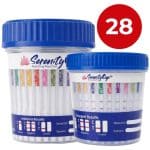
The 28 Ultra Panel Cup
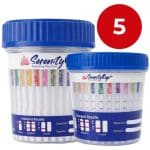
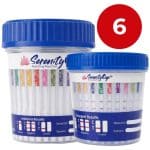
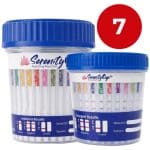
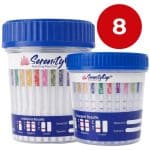
For high-stakes environments—such as probation, addiction treatment, and heavy machinery operations—the 28 Ultra Panel Cup has emerged as the premier risk mitigation tool. Starting as low as $3.29, this CLIA-waived solution covers the gaps competitors leave open, including:
-
- FEN (Fentanyl)
- XYL (Xylazine)
- K2 (Synthetic Marijuana)
- KRA (Kratom)
- TIA (Tianeptine)
- DELTA 8 (THC variant)
- a-PVP (Flakka)
- ETG (Alcohol up to 80 hours)
Targeted Screening
For organizations with stricter budget constraints or specific known risks, targeted intervention is a viable strategy. We offer individual Fentanyl Dip Cards for as low as $0.49. This allows you to add Fentanyl detection to your existing protocol without completely overhauling your inventory immediately.
Regulatory Foresight: Future-Proofing Your Compliance
One of the most common questions we hear is: “Do I really need to test for this? It’s not federally mandated yet.”
While that may be true for strictly regulated DOT positions today, the landscape is shifting rapidly. The Department of Health and Human Services (HHS) and the DOT are moving toward finalizing rules that will mandate the inclusion of opioids and synthetic opioids in federal testing programs by 2026.
By adopting a broader panel now, you are not just increasing safety; you are “future-proofing” your compliance strategy. You avoid the scramble to update policies and retrain staff when the mandates inevitably drop.
The Economic Justification: Cost vs. Risk
We understand that moving from a $1.69 12-panel cup to a $3.29 28-panel cup impacts the bottom line. However, this decision should be framed through the lens of risk liability, not just procurement cost.
Consider the cost of a single missed positive:
-
- Workplace Accident: The average cost of a medically consulted injury is over $40,000.
- Liability: Negligent hiring or retention lawsuits can run into the millions.
- Rehab/Treatment: A missed relapse in a clinical setting compromises the integrity of the entire program.
When you view the additional $1.60 per test as an insurance policy against a six-figure liability, the ROI becomes undeniable. The 28 Ultra Panel Cup offers comprehensive peace of mind that a standard test simply cannot provide.
Next Steps for Your Evaluation
If you aren’t testing for the new supply, you aren’t actually testing. The gap between what is in the standard cup and what is in the bloodstream has never been wider.
To modernize your screening process:
-
- Audit your current panels: Are you screening for Fentanyl and Xylazine?
- Review your policy: Does your drug-free workplace policy explicitly mention synthetic opioids and “legal” highs like Delta-8?
- Test the solution: Don’t just take our word for it. Experience the reliability of our FDA-approved, CLIA-waived technology.
Ready to close the detection gap? Explore the 28 Ultra Panel Cup or our cost-effective Fentanyl Dip Cards today and ensure your organization remains safe, compliant, and ahead of the curve. With same-day shipping and bulk pricing available, we are ready to support your safety goals immediately.
Frequently Asked Questions
Q: Will testing for Xylazine cause false positives with common medications?
A: This is a valid concern for HR managers. There are known instances of cross-reactivity with Lidocaine (a common anesthetic) in some Xylazine screenings. However, high-quality screenings like those provided by 12 Panel Now are designed to minimize this. We always recommend confirming non-negative results with LC/MS laboratory testing to ensure legally defensible accuracy.
Q: Why screen for Kratom or Delta-8 if they are technically legal in my state?
A: “Legal” does not mean “Safe.” Kratom has opioid-like effects, and Delta-8 is psychoactive. In safety-sensitive roles (forklift operators, drivers, medical staff), impairment is the metric that matters, not just legality. Employers have the right to enforce a drug-free workplace policy that prohibits impairing substances, regardless of their retail status.
Q: Can we customize our panels if we don’t need all 28?
A: Absolutely. As a family-owned business, we pride ourselves on flexibility. We offer custom configurations to meet the specific needs of your industry, whether you run a detox facility or a construction firm.