Why Adulteration Detection in Drug Test Cups Matters for Accurate Results

In the world of professional drug testing, a negative result is only valuable if it is genuine. For decision-makers in corrections, healthcare, and high-stakes recruitment, the landscape of substance abuse screening has shifted dramatically. It is no longer enough to ask, “Is this person using drugs?” You must now ask a preceding question: “Is this sample actually human urine?”
The rise of sophisticated synthetic urine and common household adulterants has turned drug testing into an arms race. If you are currently evaluating testing solutions that only screen for narcotics without verifying sample validity, your organization may be exposed to significant liability.
Here is why Specimen Validity Testing (SVT) is no longer an optional add-on, but a critical requirement for defensible drug testing.
The New Cheating Crisis: A 633% Surge in Tampering
The data is alarming. According to the 2024 Drug Testing Index by Quest Diagnostics, the rate of substituted urine specimens in the general workforce surged by 633% in 2023 compared to the previous year. Furthermore, the rate of “invalid” specimens—samples that are neither clearly positive nor negative due to tampering—hit a 30-year high.
This isn’t just about candidates drinking too much water. We are seeing a coordinated effort using synthetic urine kits designed to mimic the temperature and look of biological samples. Traditional “eyeball” inspections of color and temperature strips are no longer sufficient defenses against these engineered products.
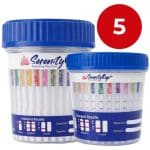
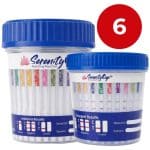
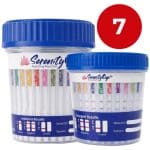
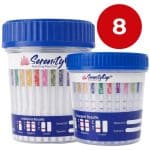
For organizations relying on rapid testing, this surge represents a massive blind spot. If your cup detects 12 different drugs but fails to detect that the liquid in the cup is synthetic, the test is a failure. This is why 12 Panel Now has integrated Adulteration/SVT panels directly into our premium testing cups, including our 12, 13, 14, 18, and the comprehensive 28 Ultra Panel configurations.
Anatomy of an Integrated Screen: How SVT Works
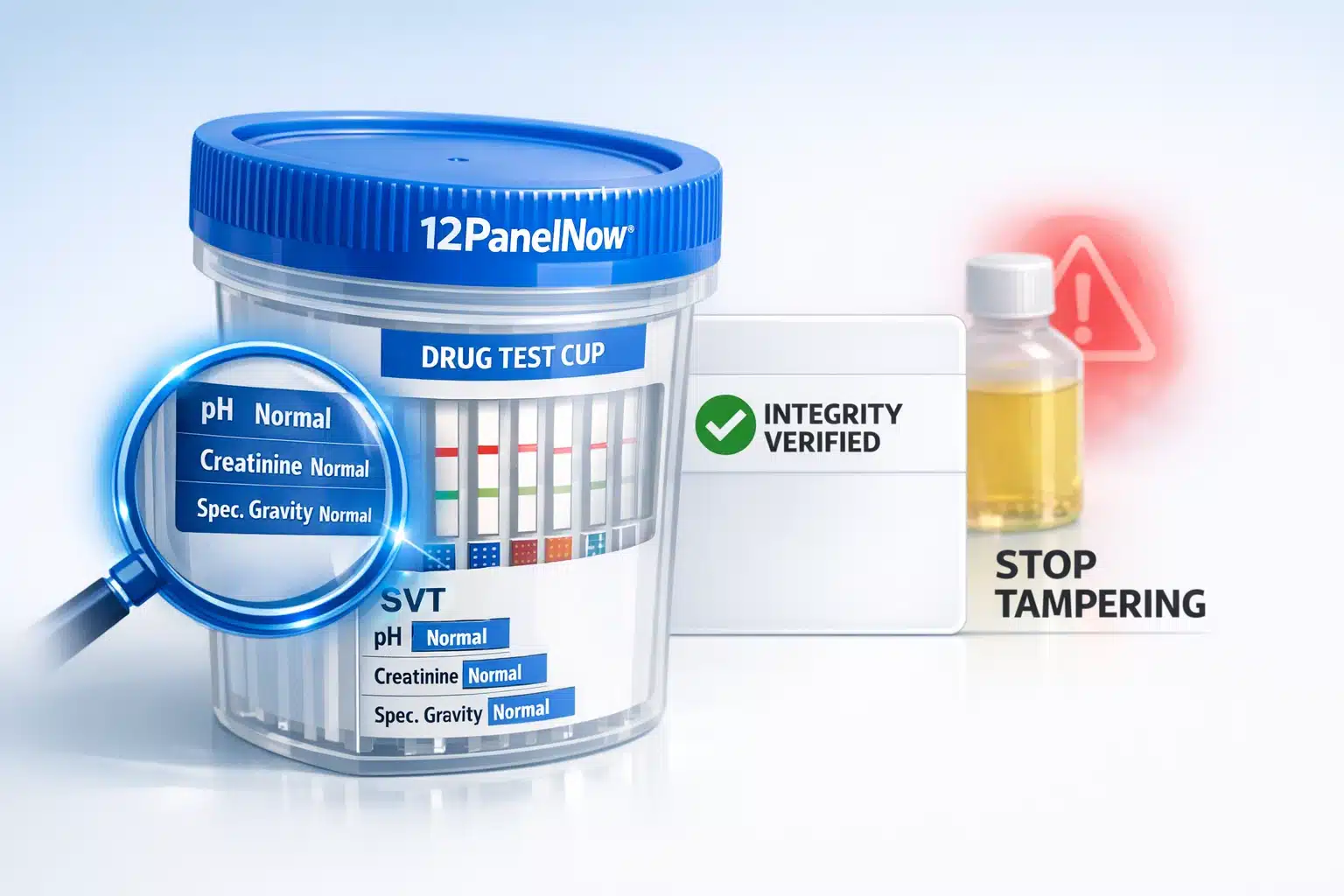
To combat this, modern drug test cups must act as mini-laboratories. Integrated SVT strips verify the biological integrity of the sample simultaneously with the drug screen. Understanding how these three specific markers work will help you choose the right configuration for your needs.
1. Creatinine (The Dilution Detector)
Creatinine is a waste product of muscle metabolism found naturally in human urine.
- The Science: Normal human urine contains creatinine. If a donor drinks excessive fluids to “flush” their system, creatinine levels drop.
- The Threshold: A level below 20 mg/dL is flagged as “dilute.” A level below 2 mg/dL is often flagged as “substituted” (water or non-biological liquid).
- Why It Matters: This catches the most common evasion tactic: water loading.
2. Specific Gravity (The Density Check)
This measures the density of urine compared to pure water.
- The Science: Human urine contains dissolved salts and minerals, making it denser than water.
- The Threshold: Normal human urine falls between 1.002 and 1.030.
- Why It Matters: Synthetic urine manufacturers struggle to match this range perfectly without throwing off pH levels. If a sample tests at 1.000, it is chemically identical to water, not urine.
3. pH (The Chemical Mask Detector)
pH measures the acidity or alkalinity of the sample.
- The Science: Human urine typically ranges from 4.5 to 8.0.
- The Detection: Donors often add household chemicals like bleach, vinegar, or drain cleaner to destroy drug metabolites.
- Why It Matters: These additives drastically shift pH. A pH below 3 or above 11 is biologically impossible for human urine and serves as immediate evidence of adulteration.
The Legal Defensibility Framework
For our clients in the justice system, probation, and corporate HR, the goal isn’t just accuracy—it is defensibility. If you take adverse action based on a drug test (revoking parole, denying employment), that decision must withstand scrutiny.
Implementing a robust Chain of Custody (CCF) protocol is the first step, but the hardware you use plays a vital role in that chain. Using a multi-panel drug test cup with built-in adulteration strips provides an extra layer of objective data.
Strengthening Your Audit Trail
When a test result is contested, documentation is your shield. By using cups that screen for validity, you can document:
- Temperature Verification: Was the sample between 90°F and 100°F within 4 minutes?
- SVT Verification: Did the sample pass the Creatinine, pH, and Specific Gravity checks?
- Result Interpretation: Did the drug panels show a negative or non-negative result?
Without the SVT verification step, a donor can argue that a “false positive” was due to medication or lab error. However, it is nearly impossible to explain away a sample containing bleach (pH 11) or a sample with zero creatinine.
Rapid vs. Lab SVT: The Efficiency Advantage
A common question we encounter during the evaluation phase is: “Can’t we just send everything to the lab for validity testing?”
While laboratories are the gold standard for confirmation, relying on them for initial screening creates two problems: cost and downtime.
- Operational Bottlenecks: Waiting 48-72 hours for a lab result to tell you a sample was diluted is lost time.
- Unnecessary Costs: You pay for shipping and accessioning on samples that could have been rejected immediately on-site.
By utilizing 12 Panel Now’s Ultra Panel Cups, you effectively bring the first line of lab defense to the point of collection. You can immediately identify invalid samples, require a re-test, or document the adulteration attempt without incurring lab fees. This allows you to reserve expensive lab confirmation only for samples that are biologically valid but non-negative for substances.
Frequently Asked Questions
Q: Do adulteration strips interfere with the drug test results?
No. The Adulteration/SVT panels are chemically distinct from the immunoassay strips used for drug detection. They operate independently within the same cup to provide a comprehensive profile of the sample without cross-reactivity.
Q: Which 12 Panel Now cups include adulteration testing?
We prioritize integrity across our product line. Adulteration screening (pH, Specific Gravity, Creatinine) is available on our 12 Panel Urine Drug Test Cups, as well as our more comprehensive 18 Panel and 28 Ultra Panel configurations.
Q: How do I interpret the adulteration colors?
Each box comes with a color chart specifically for the SVT strips. While drug test lines are interpreted by their presence or absence (a line is a negative), SVT strips are interpreted by color matching against the provided standard.
Q: Are these tests CLIA Waived?
Yes, our urine drug testing cups are CLIA Waived and FDA Approved, ensuring they meet the highest standards for accuracy and reliability in clinical and workplace settings.
Taking the Next Step in Risk Mitigation
As tampering methods evolve, your testing protocols must adapt. Continuing to use standard cups in an environment rife with synthetic urine is a liability your organization likely cannot afford.
Upgrading to cups with integrated Specimen Validity Testing ensures that when you get a result, you can trust it. Whether you need the standard-setting 12 Panel Cup or the extensive coverage of the 28 Ultra Panel, 12 Panel Now provides the tools necessary to maintain a safe, drug-free environment with same-day shipping and bulk pricing support.
Evaluate our full range of multi-panel cups today and secure your testing process against modern adulteration tactics.