



Shelf Life for Bulk ETG & Fentanyl Rapid Drug Tests


When you buy rapid drug tests in bulk, shelf life becomes a real cost factor. You want tests that still perform months from now—not cases that end up in the trash because they expired in storage. Here’s the typical shelf life for bulk rapid tests that include ETG (alcohol) and fentanyl panels, what reduces it, and how to store inventory so results stay reliable.
What is the typical shelf life for bulk rapid tests that include ETG and fentanyl?
Most sealed, unused rapid urine drug tests have a typical shelf life of about 18–24 months from the date of manufacture. Some lots run shorter or longer, but most bulk buyers plan around a 2-year window. The number that matters for your purchase is the expiration date printed on each cup/pouch and on the outer box.
ETG and fentanyl panels follow the same basic rule as other immunoassay rapid tests: use them before the printed expiration date and store them within the temperature and humidity range listed on the package insert. With proper storage and simple stock rotation, bulk purchasing is usually straightforward.
Why the expiration date matters more for ETG and fentanyl
ETG and fentanyl tend to feel higher-stakes than some other panels—and that’s reasonable. ETG is used to flag recent alcohol exposure. Fentanyl is a potent opioid where a missed detection can have serious consequences. Shelf life matters because rapid tests rely on reactive materials that slowly degrade over time, even when the package is sealed and untouched.
A rapid test doesn’t “go bad” overnight like food. Performance can drift gradually. You might notice weaker line development, longer time to read, or results that don’t behave the way you’re used to seeing. The expiration date is the manufacturer’s performance window, assuming the product was stored under the stated conditions.
What actually shortens shelf life in bulk storage?
Bulk buyers don’t usually lose shelf life because they ordered too many. They lose it because storage conditions quietly wear down stability. Most problems come down to heat, humidity, and habits that compromise packaging.
Heat exposure (the most common bulk-inventory problem)
Heat speeds up chemical degradation in immunoassay strips. Storing cases in a hot warehouse, a trailer, near a heater, or a non-climate-controlled back room in summer can shave months off usable life. Even if cartons stay sealed, repeated heat cycling (hot days, cooler nights) adds stress over time.
Humidity and moisture intrusion
Many test components are sensitive to moisture. If humidity gets into the packaging, it can affect flow and line formation. Storage areas that feel comfortable can still be humid enough to matter—especially basements, laundry-adjacent rooms, and coastal environments. Keeping product in its original sealed packaging until use is one of the simplest protections.
Opening and re-storing tests
A common mistake: a box gets opened, a few units are removed, and the rest sit loosely for months. That increases exposure to humidity, dust, and temperature swings. Keep cups in their sealed pouches (or sealed unit packaging) until the moment you run the test.
How to read “shelf life” correctly when you purchase in bulk
Shelf life isn’t a generic “good for two years” claim. You need lot-specific dates that match your testing volume and inventory habits.
Start with your monthly burn rate
Before placing a bulk order, estimate how many tests you use per month. Then compare that to how many months of inventory you’re buying. For example, if you use 100 tests per month and purchase 1,200 tests, that’s roughly 12 months of inventory—typically well within common expiration windows.
Check the expiration date on arrival
When the shipment arrives, spot-check cartons and confirm expiration dates match what you expected. If you run a compliance-focused program, record those dates in your inventory system so staff don’t accidentally pull older stock last.
Use FIFO rotation (first in, first out)
FIFO prevents the classic bulk problem: staff grab the nearest box while older inventory expires in the back. A simple routine fixes it:
- Label shelves by month/quarter of expiration.
- Place newer inventory behind older inventory.
- Train staff to pull the earliest expiration date first.
Best storage practices to get the full shelf life you paid for
You usually don’t need specialized equipment, but you do need consistency. A clean, stable, climate-controlled space protects accuracy and reduces waste.
Use a controlled room, not a “convenient” spot
Pick a storage area that avoids temperature extremes. Inventory often loses life when it’s kept where it’s easiest during daily workflow—vehicles, sheds, garages, or rooms with direct sunlight.
Keep tests sealed until use
Keep each unit sealed until collection. If you pre-stage supplies, stage the outer items (gloves, forms, labels), not opened test units.
Avoid freezing and avoid “refrigerator drift” unless the label requires it
Most rapid urine drug test cups are designed for room-temperature storage within the manufacturer’s listed range. Freezing can damage membranes and alter fluid behavior. Refrigeration can create condensation issues if product is moved in and out. Follow the package insert, and only refrigerate if the instructions explicitly allow it.

Can you use ETG and fentanyl rapid tests after the expiration date?
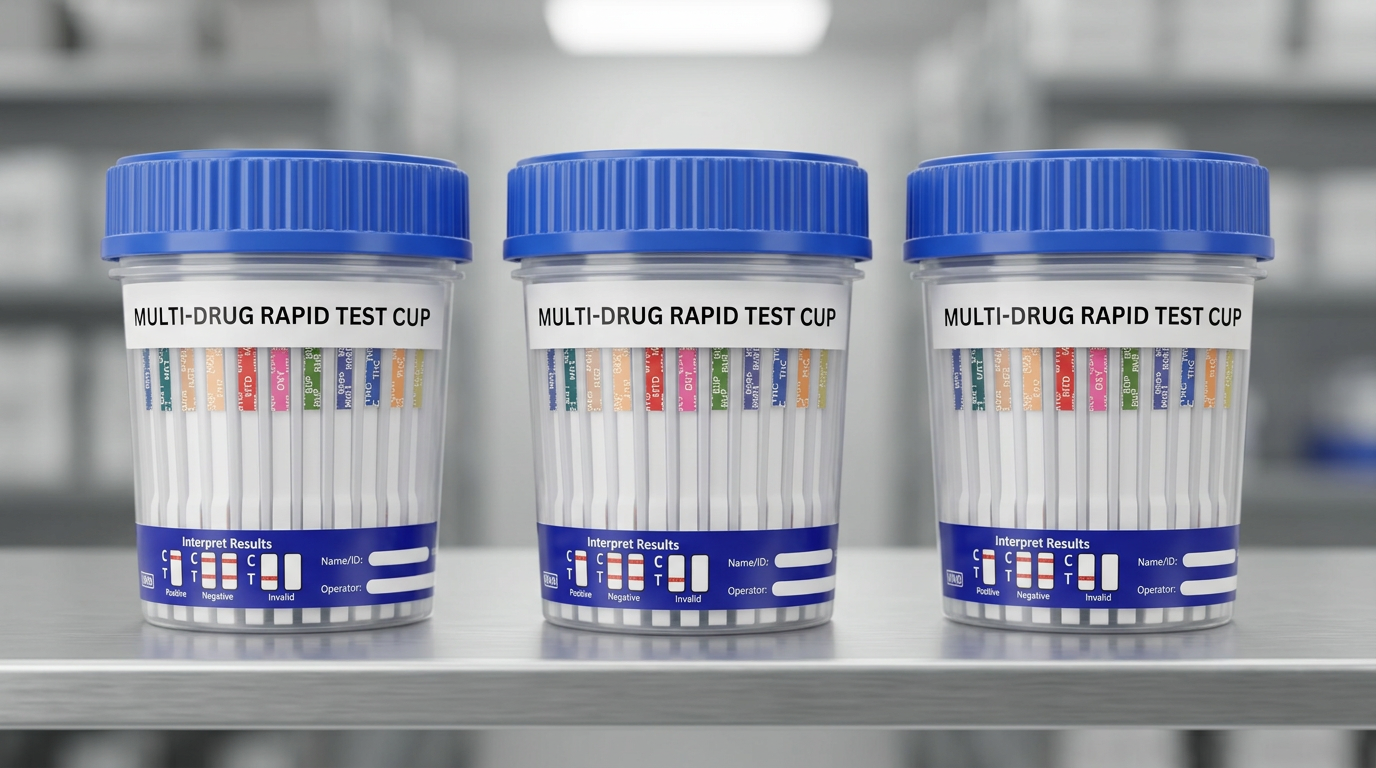
For workplace testing, clinical settings, probation programs, or any documented compliance process, treat expiration as a hard stop. Expired tests can create avoidable challenges, even if a result appears normal.
For personal use, an expired test might still show lines, but performance becomes uncertain after the expiration date—and the risk increases the longer it’s out of date. If the result needs to be trustworthy, don’t use an expired unit, especially for ETG or fentanyl.
Does bulk purchasing increase the chance of false results?
Bulk purchasing doesn’t cause false positives or false negatives. The risks come from expired inventory, poor storage, and reading results outside the stated time window. When you store properly, rotate stock, and follow timing instructions, bulk buying typically performs just as reliably as smaller purchases.
If you notice unusual patterns—faint lines across multiple tests, inconsistent control lines, or results that don’t match expectations—pause and check the basics:
- Are any units past their expiration date?
- Did cases experience significant heat exposure during shipping or storage?
- Were any units stored outside sealed packaging?
- Are results being read at the correct time (not too early, not too late)?
How far ahead should you buy if you need ETG and fentanyl coverage?
For many programs, the practical sweet spot is 3–12 months of inventory, depending on storage conditions and cash flow. That gives you breathing room for shipping delays and unexpected volume spikes without leaving you stuck with product that ages out.
If you’re high-volume and want to buy further ahead, do two things: confirm the expiration dates you’ll receive and tighten storage controls. Bulk purchasing works best when inventory moves like supplies—not like forgotten “warehouse stock.”
Optional FAQ
Do ETG and fentanyl panels expire faster than other panels?
Usually not. They follow the same expiration system as the rest of the cup. Treat the printed expiration date as the limit for every panel on that device.
What if my shipment arrives warm?
A brief warm period in transit doesn’t automatically ruin tests, but repeated or extreme heat exposure increases risk. If packaging is damaged, or if temperatures clearly exceeded labeled ranges, contact the seller and avoid using that lot for critical decisions.
How should I store opened boxes of test cups?
Store opened boxes in the same controlled area as sealed cases, but keep each test unit sealed until use. Close cartons to reduce exposure to dust and humidity.
Conclusion
Most bulk rapid drug tests that include ETG and fentanyl panels last about 18–24 months when stored correctly, but heat, humidity, and sloppy stock rotation can shrink that window fast. Track expiration dates, use FIFO rotation, and keep units sealed until use to keep bulk buying cost-effective and predictable. For bulk-friendly screening that includes ETG and fentanyl, 12 Panel ETG & FEN Cup from 12 Panel Now is a solid option.