Workplace Drug Testing: Is a CLIA-Waived 12-Panel Dip Card Sufficient for Compliance?


Employers face a real balancing act. They need a safe, productive workplace, lower liability, and a consistent approach to hiring and risk management. At the same time, they have to navigate changing drug laws, employee privacy concerns, and industry-specific regulations. That leads many organizations to a practical question: is a CLIA-waived 12-panel dip card enough to meet workplace drug testing compliance needs?
The short answer: a CLIA-waived 12-panel dip card can be a very effective part of a compliant workplace drug testing program. Whether it is enough depends on how the test is used, what rules apply to your workforce, and whether your policy includes the right confirmation and documentation steps.
For many employers, especially those outside federally regulated testing programs, a 12-panel dip card is an efficient and dependable screening tool. But compliance is not just about the device. It depends on the full process behind it.
Understanding What CLIA-Waived Means
CLIA refers to the Clinical Laboratory Improvement Amendments, the federal standards that govern laboratory testing on human specimens in the United States. When a drug test is CLIA-waived, it means the test has been classified as simple to use and low risk for error when used as directed.
That matters because it makes workplace screening more accessible. A CLIA-waived urine dip card can often be used in occupational health settings, clinics, and other point-of-care environments without the added complexity of high-complexity lab testing. For employers and collection sites, that can mean faster turnaround, simpler administration, and lower screening costs.
Still, CLIA-waived does not mean automatically compliant for every situation. It means the product meets a standard for point-of-care screening. Employers still need to make sure their policies, procedures, and legal obligations match how the test is being used.
What a 12-Panel Dip Card Typically Screens For
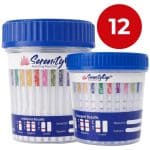
A 12-panel urine dip test is designed to detect a wide range of commonly misused drugs and drug classes. Panel configurations vary by product, but they often include substances such as marijuana, cocaine, amphetamines, methamphetamines, opiates, oxycodone, benzodiazepines, barbiturates, methadone, PCP, MDMA, and tricyclic antidepressants.
That broad coverage is a big reason employers choose 12-panel testing. It gives organizations a practical way to screen for a range of substance use concerns with a single test. For workplaces focused on general safety, pre-employment screening, random testing under internal policy, or post-incident protocols, that breadth can be especially useful.
The dip card format also allows for quick visual interpretation, which helps when employers need timely screening decisions. In many routine workplace settings, that can reduce delays while still supporting a structured process.
When a CLIA-Waived 12-Panel Dip Card May Be Sufficient
For many private employers, a CLIA-waived 12-panel dip card can be sufficient as an initial screening tool. That is especially true for organizations that are not subject to Department of Transportation regulations or other federal rules requiring lab-based procedures.
A well-designed workplace testing program may use a CLIA-waived dip test for:
- Pre-employment screening
- Reasonable suspicion testing
- Random testing under company policy
- Post-accident or post-incident screening
- Return-to-duty or follow-up screening in certain internal programs
In these situations, the dip card can provide a fast preliminary result that helps employers act consistently under an established policy. If the result is negative and the test is administered according to the manufacturer’s instructions, that may be enough for the employer’s immediate screening purpose.
The key word is preliminary. Compliance often turns on what happens next, especially when a non-negative result appears.
Screening Versus Confirmation: The Compliance Difference
One of the most important distinctions in workplace drug testing is the difference between screening and confirmation.
A CLIA-waived 12-panel dip card is a screening test. It is meant to identify presumptive positive, or non-negative, results. Those results suggest that a drug or metabolite may be present above the cutoff level, but they are not the same as a confirmed laboratory finding.
In many compliant workplace testing programs, any non-negative screening result should be sent to a certified laboratory for confirmatory testing, typically using more specific methods such as GC/MS or LC/MS. In some programs, a Medical Review Officer, or MRO, also reviews confirmed results before the employer takes action.
This matters because employment decisions based only on an unconfirmed rapid screening result can create legal and procedural risk. If an employer disciplines or refuses to hire someone based on a presumptive result without confirmation, that decision may be easier to challenge.
So, is the dip card sufficient for compliance? Often yes, as the front end of the testing process. Often no, if an employer expects the rapid screen alone to replace confirmation when confirmation is required by policy, law, or sound practice.
Industries Where Additional Requirements Apply
Not all employers operate under the same standards. Some industries face stricter testing requirements.
For example, employers regulated by the U.S. Department of Transportation must follow DOT drug testing rules, which require laboratory-based testing and chain-of-custody procedures that rapid point-of-care tests alone do not satisfy for official DOT testing. In those settings, a CLIA-waived 12-panel dip card is not a substitute for a DOT-compliant collection and lab confirmation process.
Employers in transportation, aviation, public safety, healthcare, corrections, and certain government contracting environments may also face state, federal, or contractual obligations that go beyond simple rapid screening.
That does not mean rapid tests have no value in those settings. They can still be useful for internal safety programs or non-regulated testing. But employers should clearly separate a convenient workplace screen from a formally regulated testing protocol.

The Importance of State Law and Workplace Policy

Compliance is also shaped by state law. Drug testing laws vary widely by jurisdiction. Some states regulate when employers can test, what notice must be given, whether confirmatory testing is required, and what rights employees have to retesting or explaining results.
Marijuana law is one of the clearest examples. Even in states where marijuana is legal for medical or recreational use, employers may still have the right to enforce drug-free workplace policies, particularly in safety-sensitive roles. But that authority is not the same everywhere. Some states limit adverse action based only on off-duty marijuana use or a positive cannabis test without evidence of impairment.
Because of that, the sufficiency of a 12-panel dip card is not just about federal product classification. It also depends on whether your testing policy is current, whether your panel fits your business needs, and whether your response process matches the law.
A compliant employer should have:
- A written drug testing policy
- Clearly defined testing circumstances
- Consistent procedures for all employees or applicants in covered categories
- A process for handling non-negative results
- Documentation and chain-of-custody practices appropriate to the testing purpose
- Legal review of state-specific requirements when needed
Why CLIA-Waived Rapid Testing Still Makes Sense
Even with these compliance considerations, CLIA-waived rapid testing remains a smart option for many employers. The reason is straightforward: speed and accessibility matter.
A 12-panel dip card offers several practical advantages:
Fast results
Rapid results help employers move quickly in time-sensitive situations, such as post-incident screening or pre-employment onboarding.
Broad drug coverage
A 12-panel format screens for a range of common substances, reducing the need for multiple separate tests.
Ease of use
CLIA-waived tests are designed to be simple when used as directed, making them a strong fit for point-of-care environments.
Cost control
Compared with sending every specimen to a laboratory, rapid screening can reduce routine testing costs while reserving lab confirmation for non-negative results.
Program flexibility
Employers can use rapid screens as part of a broader compliance framework tailored to their workforce and risk profile.
For many organizations, the better question is not whether a CLIA-waived 12-panel dip card replaces every other testing step. It is whether it helps create a more responsive, consistent, and practical drug testing program. In many cases, it does.
Best Practices for Using a 12-Panel Dip Card in a Compliant Program
If your organization plans to rely on a CLIA-waived 12-panel dip card, a few best practices can strengthen compliance and reduce risk.
1. Use the test only as directed
Follow the manufacturer’s instructions for storage, handling, specimen collection, timing, and interpretation.
2. Train the personnel administering the test
Even simple tests should be handled by staff who understand the procedure, result windows, and documentation requirements.
3. Treat non-negative results as preliminary
Do not treat a rapid screening result as final. Use laboratory confirmation when required by law, policy, or sound risk management.
4. Maintain clear records
Document collection details, result timing, lot information when appropriate, and the next steps taken after each test.
5. Review your panel selection
Make sure the 12-panel configuration matches your workplace risks, job categories, and state law considerations.
6. Update your policy regularly
Drug laws and workplace standards keep changing. Review your policy with counsel or compliance advisors so it stays current.
7. Distinguish regulated from non-regulated testing
If part of your workforce is subject to DOT or other formal testing mandates, keep those procedures separate from non-regulated rapid testing processes.
So, Is It Sufficient?
A CLIA-waived 12-panel dip card can absolutely be sufficient for many workplace drug testing needs, especially as a frontline screening tool in non-DOT, non-federally regulated environments. It offers speed, convenience, broad detection capability, and operational efficiency.
But compliance always depends on context. If your program requires confirmed results, MRO review, documented chain of custody, or adherence to industry-specific testing rules, the dip card should be one part of a broader process, not the entire process.
Put simply, the product can support compliance, but the employer’s policy and procedures are what make the program complete.
FAQ
Can a CLIA-waived 12-panel dip card be used for pre-employment drug screening?
Yes. Many private employers use it for pre-employment screening, especially in non-regulated environments. The employer should still follow a written policy and confirm non-negative results when appropriate.
Is a rapid dip card enough for DOT drug testing?
No. DOT testing requires specific laboratory procedures, chain of custody, and other compliance steps that a rapid dip card alone does not meet.
What should an employer do with a non-negative result?
A non-negative result should generally be treated as preliminary and sent to a certified laboratory for confirmation, especially before making an employment decision.
Does CLIA-waived mean legally compliant in every state?
No. CLIA-waived refers to the test’s classification for point-of-care use. Employers still have to comply with state laws, workplace policies, and any industry-specific requirements.
Why do employers choose a 12-panel dip card?
Because it offers broad drug coverage, fast results, ease of use, and lower routine screening costs compared with sending every sample to a lab.
Conclusion
For employers building a practical, professional workplace drug testing program, a CLIA-waived 12-panel dip card is often an excellent starting point. It can streamline screening, improve turnaround time, and provide broad substance coverage in a user-friendly format. The strongest compliance approach pairs rapid screening with a clear written policy, proper training, and confirmatory testing protocols when needed. If you want a dependable option for point-of-care workplace screening, 12 Panel Dip Test – FDA approved and CLIA waived is a strong choice for employers who value speed, simplicity, and a compliance-minded testing process.